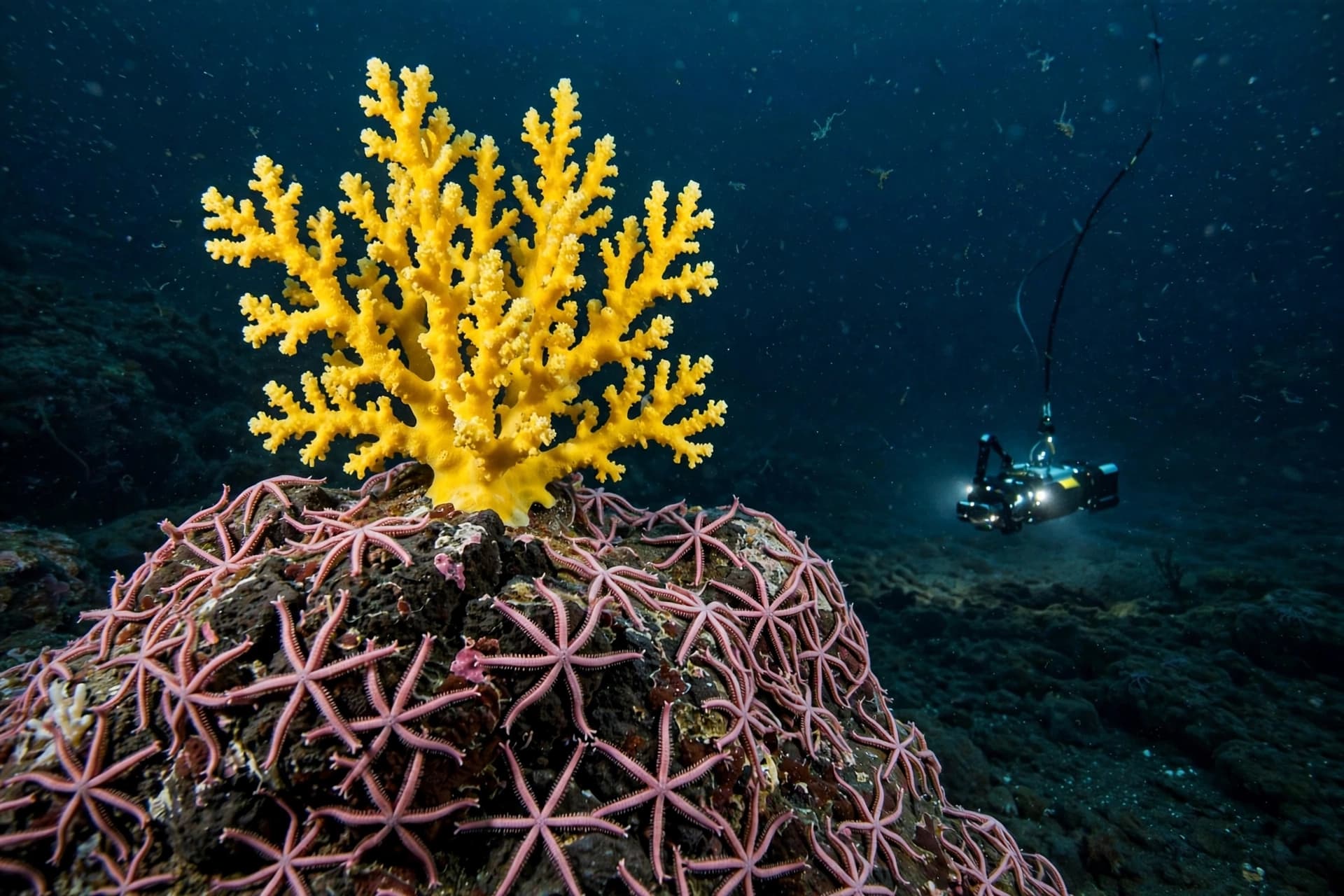
There are currents in the ocean that carry more than salt and memory. They carry fragments of us—thin wrappers, drifting bottles, broken nets softened by waves. What was once fashioned for convenience now moves like an artificial tide, weaving quietly into coral branches and sandy seabeds. Beneath the surface, life adapts as it always has. But adaptation, in this era, increasingly means learning to live among our leftovers.
A recent study reported by outlets such as BBC News and Reuters suggests that marine plastic pollution is altering predator-prey encounters involving octopuses. The findings add a subtle yet significant layer to our understanding of how synthetic debris reshapes marine ecosystems—not only physically, but behaviorally.
Octopuses are often described as masters of disguise and intelligence, capable of problem-solving and rapid learning. In healthy reef or coastal habitats, their interactions with prey such as crabs and small fish follow patterns shaped by camouflage, ambush strategy, and environmental structure. Yet researchers observing octopus behavior in areas dense with plastic debris found that the presence of artificial materials can modify how these encounters unfold.
Plastic waste introduces new textures, shadows, and shelters into marine environments. Some octopuses have been documented using discarded containers or fragments as improvised dens. While this demonstrates behavioral flexibility, scientists caution that such shifts may influence hunting efficiency and risk exposure. Artificial cover can both conceal predators and provide refuge for prey, potentially changing the balance of detection and escape.
The study indicates that plastic debris may disrupt natural sensory cues. Octopuses rely on a combination of vision, touch, and chemical signals to track prey. Floating or settled plastics can interfere with water flow patterns and obscure scent trails, subtly altering the choreography of pursuit. In some observations, prey species appeared to exploit plastic clutter as temporary shelter, complicating predation attempts.
There is also the question of ingestion and contamination. Microplastics, increasingly present in marine food webs, can accumulate in both predator and prey. While the study focuses primarily on behavioral dynamics, it exists within a broader body of research—frequently highlighted by National Geographic and The Guardian—showing that plastic pollution carries chemical and physiological implications as well.
What emerges is not a dramatic collapse of marine interaction, but a quiet reshaping. Predator-prey relationships are among the most fundamental ecological exchanges. When altered, even subtly, ripple effects can move outward through food webs. Changes in hunting success rates may influence population dynamics over time, particularly in regions already stressed by warming waters and habitat degradation.
Researchers involved in the study emphasize that octopuses remain adaptable and resilient. Their intelligence allows them to exploit new structures and navigate altered habitats. Yet adaptability should not be mistaken for immunity. The long-term ecological consequences of persistent plastic presence remain uncertain.
In closing, scientists report that further monitoring is underway to examine how widespread these behavioral shifts may be across different marine regions. As global efforts to reduce plastic waste continue, studies like this offer additional perspective on the interconnectedness of pollution and living systems. The ocean’s currents may carry our debris far from shore, but their effects often circle back into the delicate exchanges that sustain marine life.
AI Image Disclaimer Images in this article are AI-generated illustrations, meant for concept only.
Sources
BBC News Reuters The Guardian National Geographic Science
Published by Banx Network. This article is part of the Banx decentralized media programme, powered by the BXE token on the XRP Ledger.