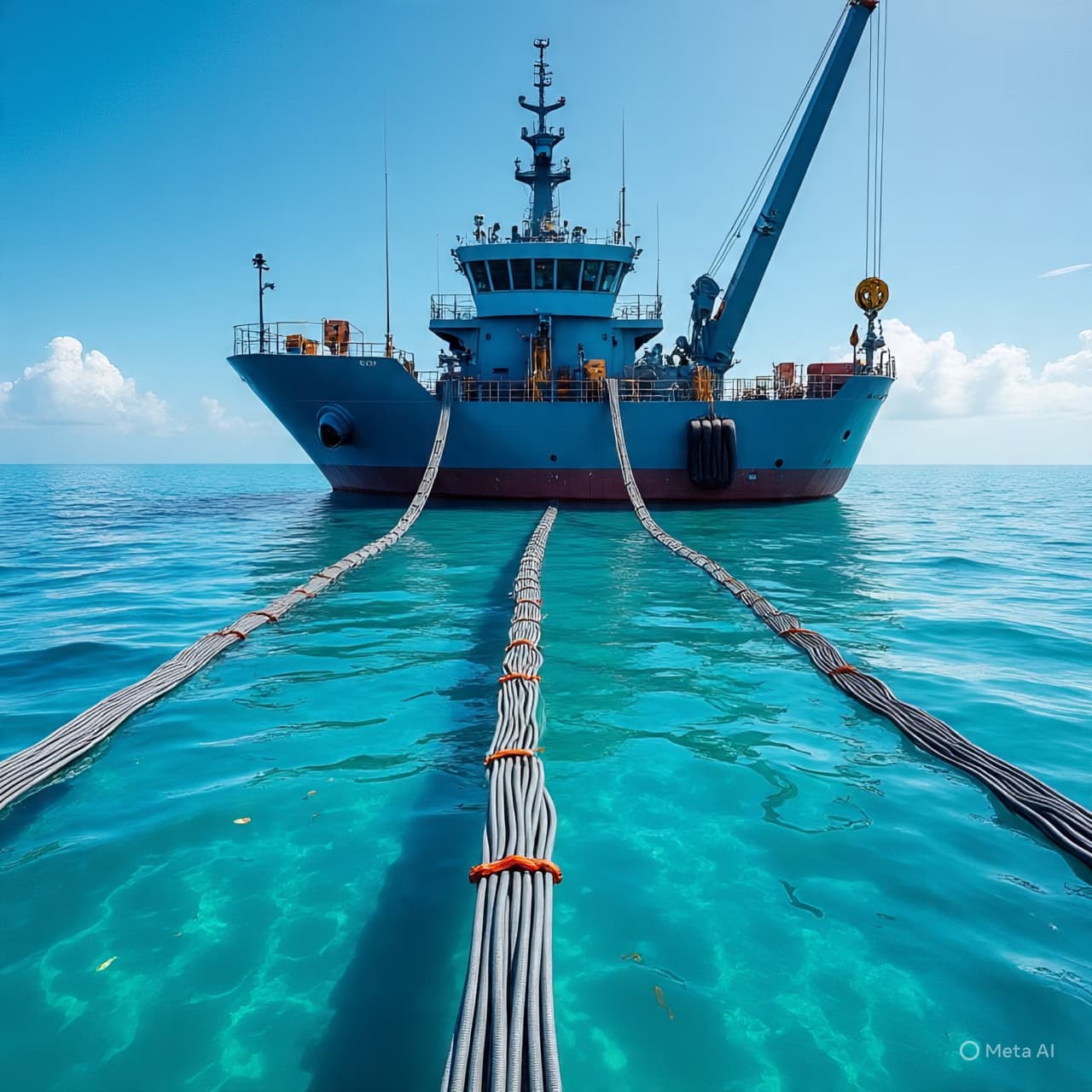
Across vast oceans and digital highways, the pulse of modern life increasingly depends on strands of glass thinner than a human hair—fiber-optic cables that carry data at the speed of light. Yet beneath this technical current lies a story of global connection, economic ambition, and the expanding reach of artificial intelligence. At a major technology summit in New Delhi this week, Google unveiled an ambitious plan to build new international fiber-optic routes between the United States and India, part of a broader initiative to deepen digital ties and support the next wave of AI-driven services worldwide.
Speaking at the India AI Impact Summit 2026 alongside leaders and industry peers, Google’s Chief Executive Officer Sundar Pichai framed the project as a cornerstone of the “America-India Connect Initiative,” designed to strengthen connectivity between the two democracies and beyond. The initiative encompasses new subsea cable routes that will link Visakhapatnam on India’s east coast with the U.S. and multiple southern hemisphere destinations via fiber-optic pathways beneath the sea. This is paired with an expansion of other terrestrial routes to improve network capacity and resilience across continents.
The technical significance of these cables is straightforward: subsea and strategic fiber-optic links form the backbone of the internet, carrying the vast majority of international data traffic. By creating additional, direct routes between the U.S. and India, Google aims to reduce latency, improve reliability, and support the massive data flows required for AI services, cloud computing, and digital platforms. Amid rising demand for faster and more dependable connectivity—especially for enterprise and AI workloads—these investments help build redundancy into global networks and reduce reliance on existing routes.
For India, the project dovetails with the country’s broader push to become a global tech hub. The fiber initiative complements Google’s $15 billion investment in establishing an AI and cloud infrastructure hub in Visakhapatnam, which includes data centers and a new subsea cable gateway. Leaders at the summit stressed that infrastructure alone isn’t enough; skilling programmes, from AI professional certifications to partnerships with educational institutions, are being introduced to ensure that human capital grows alongside physical networks.
Yet beneath the optimism lies a reminder of the complex realities of global digital infrastructure. Building subsea cables is an intricate, capital-intensive process that involves international cooperation, regulatory approvals, and long timelines before systems are ready to carry traffic. Moreover, strategic fiber routes carry geopolitical as well as economic importance: they embed technological influence into global communication flows, and strengthen ties between nations at a time when digital sovereignty and data security remain key policy concerns.
As these cables take shape beneath the waves, they are more than physical links; they are symbols of a shared vision for a connected future, where data, ideas and innovation can cross borders with greater speed and resilience. Whether this vision leads to a more inclusive global AI ecosystem—and how it shapes economic opportunity for millions in both countries—will unfold in the years to come, along every strand of light that pulses through these new routes.
AI IMAGE DISCLAIMER Visuals are created with AI tools and are not real photographs.
SOURCES BASED ON SOURCES ROLE India Today The Financial Express NDTV Profit The Indian Express The Economic Times
Published by Banx Network. This article is part of the Banx decentralized media programme, powered by the BXE token on the XRP Ledger.