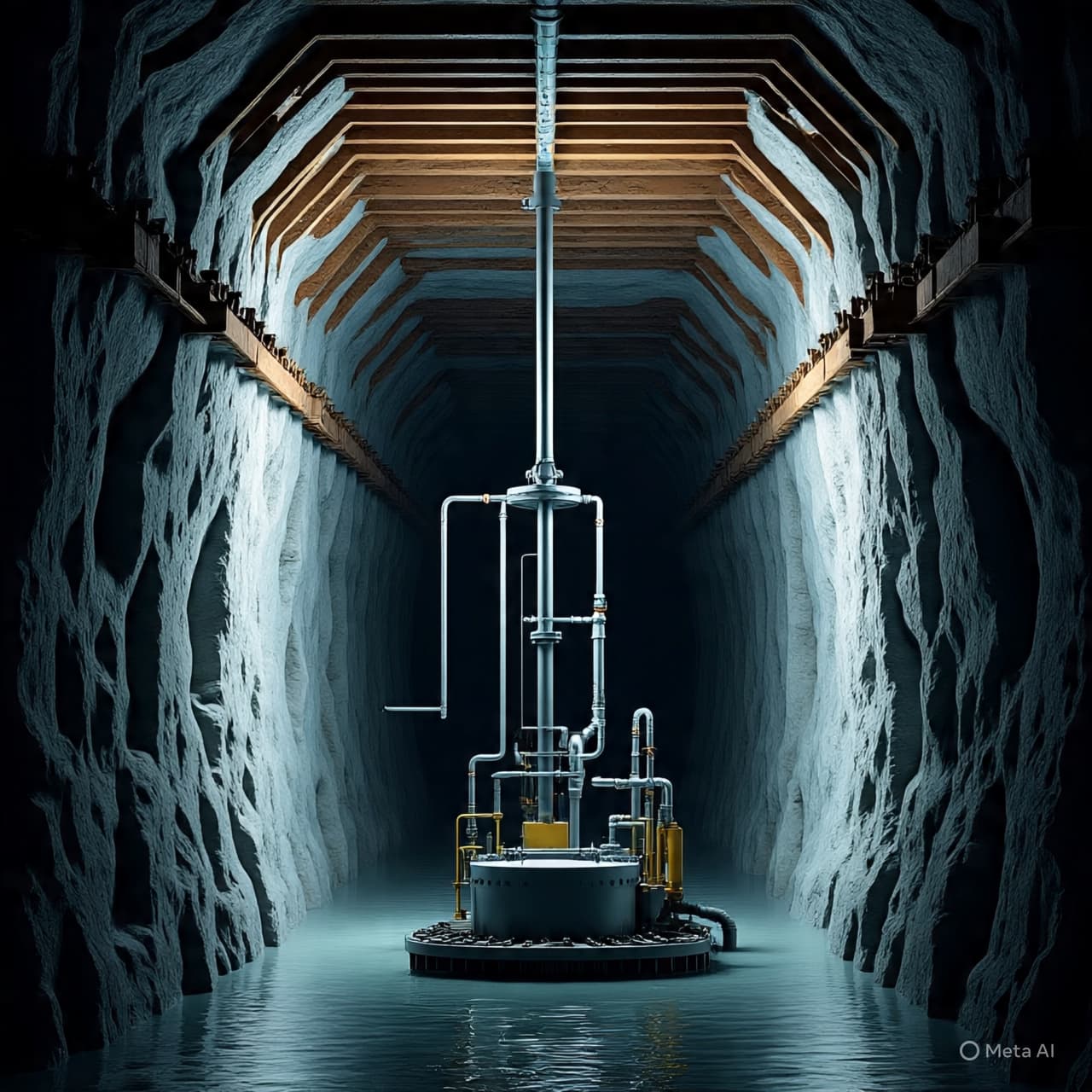
Long after the last cart of coal was hauled to the surface, many mines were left to fill slowly with water. Shafts that once echoed with machinery now hold vast underground reservoirs, warmed gently by the Earth itself. For decades, these flooded tunnels were regarded as relics of a fossil-fuel past — industrial scars sealed off and forgotten.
Now, researchers say they may represent a surprisingly practical source of clean energy.
Across former coal regions in countries such as the United Kingdom, the Germany, and the United States, engineers are tapping into mine water geothermal systems. The concept is straightforward: water pooled deep underground absorbs natural geothermal heat, often reaching temperatures between 12°C and 20°C (54°F to 68°F), depending on depth and local geology. While not hot enough for conventional geothermal power generation, it is ideal for heating and cooling buildings through heat pump technology.
The science relies on stable underground temperatures. At sufficient depths, the Earth maintains a relatively constant thermal profile year-round. Flooded mines, with their extensive networks of shafts and galleries, act as large thermal reservoirs. By circulating water to the surface through boreholes, heat exchangers can extract warmth in winter and, in some systems, dissipate excess heat back underground in summer.
In the UK, the government-backed Coal Authority has mapped thousands of abandoned mines to assess their geothermal potential. Pilot projects in former mining towns are already supplying low-carbon heating to homes, universities, and municipal buildings. Similar initiatives are underway in Germany’s Ruhr Valley and in parts of Pennsylvania, where old anthracite mines are being studied as district heating sources.
Unlike coal combustion, which releases carbon dioxide and particulate pollution, mine water geothermal systems produce no direct emissions at the point of use. When paired with renewable electricity to power the heat pumps, their carbon footprint can be minimal. They also repurpose existing infrastructure, reducing the need for extensive drilling required in traditional geothermal developments.
The appeal extends beyond emissions reductions. Former coal communities often face economic decline after mines close, with job losses and environmental legacies. Converting abandoned mines into energy assets offers a form of industrial afterlife — turning liabilities into local resources. Engineers, drill operators, and maintenance crews can find employment in constructing and operating the new systems.
There are challenges. Water chemistry must be carefully managed, as mine water can contain dissolved minerals and metals that corrode pipes and equipment. Flow rates and long-term thermal sustainability require monitoring to ensure the underground reservoir does not cool excessively over time. Each site demands detailed geological surveys and feasibility studies.
Still, the scale is significant. In the UK alone, it is estimated that water within disused coal mines could potentially provide heating for millions of homes. Similar assessments in parts of the United States suggest that regions with dense mining histories hold substantial untapped geothermal capacity.
The symbolism is difficult to ignore. Coal powered the Industrial Revolution, fueling factories, railways, and power stations — and contributing heavily to global carbon emissions. Now, the same mines may help decarbonize heating systems, one of the more challenging sectors to electrify.
In the quiet darkness beneath former mining towns, water circulates slowly through tunnels carved generations ago. It absorbs the planet’s steady warmth, indifferent to the history above. What was once extracted to burn may now be used to conserve.
The transformation is not instantaneous, nor universal. But in the depths of old coal mines, the future of clean energy is emerging from the remnants of the past — a reminder that even industrial legacies can be reimagined.
Published by Banx Network. This article is part of the Banx decentralized media programme, powered by the BXE token on the XRP Ledger.