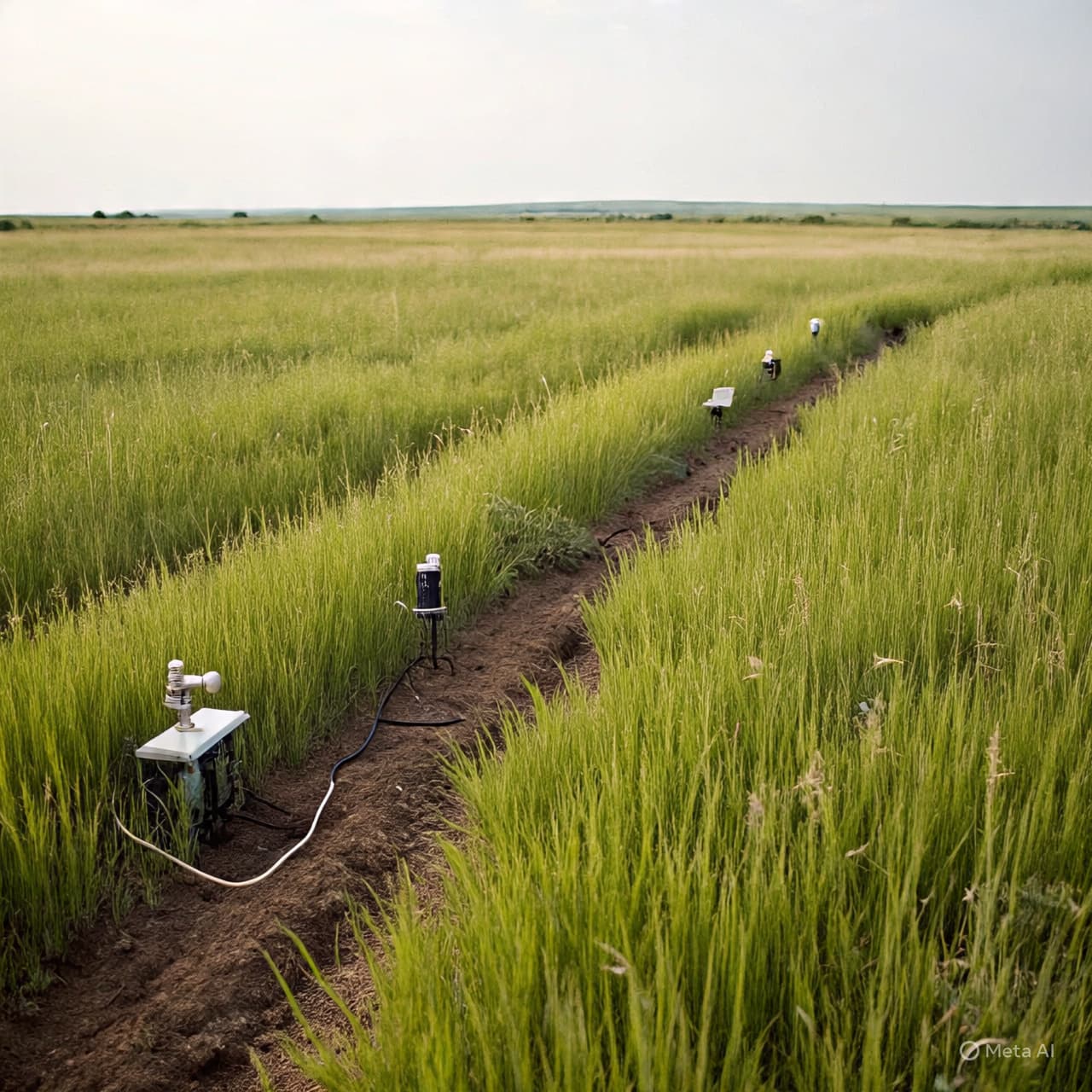
In a stretch of grassland in Colorado, the story of climate change has been unfolding slowly, almost invisibly. The wind passes through the grasses as it has for generations, and the soil appears much the same as it did decades ago. Yet beneath the surface, in a world too small for the eye to see, a quiet transformation has been taking place.
This hidden world is home to fungi—microscopic networks that weave through the soil like threads beneath a tapestry. They break down organic matter, nourish plants, and help sustain the delicate balance that supports life above ground. Though often unnoticed, these organisms are among the most important caretakers of the Earth’s ecosystems.
For nearly three decades, scientists have been observing what happens when this underground community experiences a steady rise in temperature.
The experiment began in the mid-1990s at research plots in Colorado’s grasslands. There, scientists created a long-term warming study designed to simulate the gradual temperature increases expected from climate change. By gently heating sections of soil over many years, researchers could watch how ecosystems respond not just in the short term, but across generations of living organisms.
As the years passed, the results revealed a quiet but meaningful shift.
The communities of soil fungi began to change. Certain fungal species that once thrived in cooler conditions became less dominant, while others better suited to warmer environments slowly expanded their presence. Over time, the balance of fungal life in the soil rearranged itself, reflecting the new climate conditions created in the experiment.
What makes the finding particularly valuable is the length of the study. Many ecological experiments last only a few years, offering snapshots of change. This project, however, followed the soil ecosystem for twenty-nine years, allowing scientists to observe gradual processes that might otherwise remain hidden.
In ecosystems, time often moves at a different pace. Some changes unfold slowly, shaped by decades of temperature shifts, rainfall patterns, and plant growth cycles. By maintaining the warming experiment for nearly three decades, researchers were able to capture how the fungal community responded across a much longer timeline.
Fungi are not merely passive inhabitants of soil. They play central roles in nutrient cycling and carbon storage, influencing how ecosystems respond to climate change. Some fungi help plants absorb nutrients from the soil, while others break down organic matter, releasing carbon back into the atmosphere.
When the composition of fungal communities changes, the ripple effects can reach far beyond the soil itself.
In the Colorado experiment, scientists observed that warming altered not only which fungi were present, but also how they functioned within the ecosystem. These shifts may influence how efficiently soil stores carbon or supports plant growth in the future.
The research highlights a broader truth about climate change: its effects do not appear only in melting glaciers or rising sea levels. Sometimes they unfold quietly underground, within ecosystems that operate far from public attention.
Soil fungi, though microscopic, are powerful engineers of the natural world. Their networks stretch through forests, grasslands, and agricultural fields across the planet. By helping regulate nutrients and carbon cycles, they contribute to the stability of ecosystems that humans depend upon.
The Colorado study suggests that as temperatures rise, these underground communities may gradually reorganize themselves. Some species will adapt and flourish, while others may decline, reshaping the ecological balance beneath the soil.
Researchers emphasize that such findings are not predictions of sudden collapse but rather observations of long-term adaptation within living systems. Nature often responds to environmental change through slow adjustment, with ecosystems shifting in subtle ways over time.
As the study continues to inform climate science, it provides a rare glimpse into the patience of ecological processes.
Nearly thirty years after the experiment began, the grassland still sways in the Colorado wind, and the soil appears much the same from the surface. Yet within that soil, countless microscopic threads are quietly rearranging their world—responding, adapting, and reminding scientists that the story of climate change is also being written beneath our feet.
In the coming years, long-term experiments like this one may help researchers better understand how ecosystems respond to warming. And in those insights, scientists hope to gain a clearer picture of how the planet’s smallest organisms participate in shaping the future of Earth’s environment.
AI Image Disclaimer Visuals are created with AI tools and are not real photographs.
Sources
Nature ScienceDaily The Guardian Phys.org Smithsonian Magazine
Published by Banx Network. This article is part of the Banx decentralized media programme, powered by the BXE token on the XRP Ledger.