Food does not begin at the supermarket or at the kitchen table. Long before chicken, eggs or milk reach consumers, there are farms, feed supplies, breeding facilities, transportation routes and processing systems working quietly behind them.
Indonesia is preparing a broader livestock ecosystem designed to connect those stages more closely. The Ministry of Agriculture has allocated about Rp17 trillion for the development of integrated livestock areas across several regions, with the initial phase focused on five locations. (bisnis.com)
The five initial areas are located in Lampung, East Java, South Sulawesi, West Nusa Tenggara and Gorontalo. Around Rp2.2 trillion has been prepared for development in those five areas, with completion targeted for 2027. (bisnis.com)
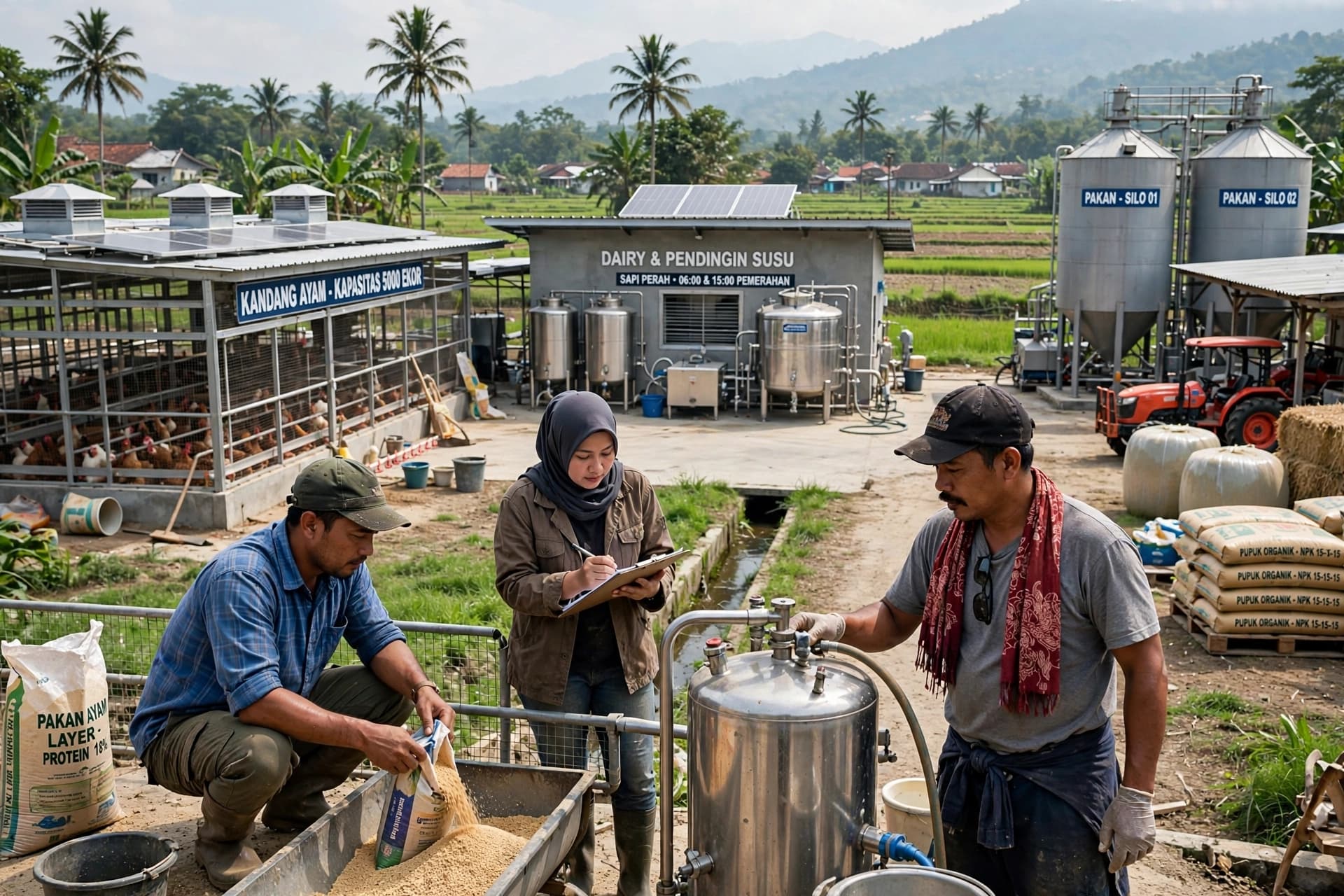
The planned system is intended to cover multiple stages of production. These include animal-feed facilities, breeding operations, poultry production, egg production and dairy cattle development. The idea is to bring several parts of the supply chain closer together rather than treating each stage as an isolated activity.
Feed is one of the important links. Poultry production requires reliable access to feed ingredients, including corn. Locating feed production closer to agricultural areas can reduce some transportation requirements and create additional demand for crops produced by farmers in surrounding regions.
South Sulawesi provides one example of the planned development. A livestock area in Bone covers approximately 150 hectares and is expected to become part of the wider production network. The location connects agricultural activity with livestock production and supporting infrastructure. (bloombergtechnoz.com)
The integrated approach also places attention on the final destination of agricultural products. The government has linked the development with demand for chicken, eggs and milk, including requirements associated with the national free-meals program.
For farmers and local communities, a larger production ecosystem can create connections beyond the farm itself. Feed producers, breeding facilities, transportation providers, processing businesses and distributors can become part of the same regional economic network.
The scale of the investment means implementation will depend on more than funding. Construction schedules, agricultural productivity, animal health, logistics and market demand will all influence how effectively the planned areas operate once facilities are completed.
There is also a long-term dimension to livestock development. Increasing production is only one part of food security. Consistency of supply, affordability, distribution and the ability to maintain production through changes in feed prices and other conditions are equally important.
The planned livestock areas therefore represent an attempt to bring different pieces of Indonesia’s agricultural system closer together. From corn fields to feed mills, from breeding facilities to farms, and from farms to consumers, the chain is being designed as one connected landscape rather than a series of separate points.
IMAGE DISCLAIMER
These visuals are AI-generated conceptual illustrations and are not photographs of the actual livestock development projects.
SOURCES
Bisnis Indonesia Bloomberg Technoz IDX Channel Kementerian Pertanian Republik Indonesia
Published by Banx Network. This article is part of the Banx decentralized media programme, powered by the BXE token on the XRP Ledger.