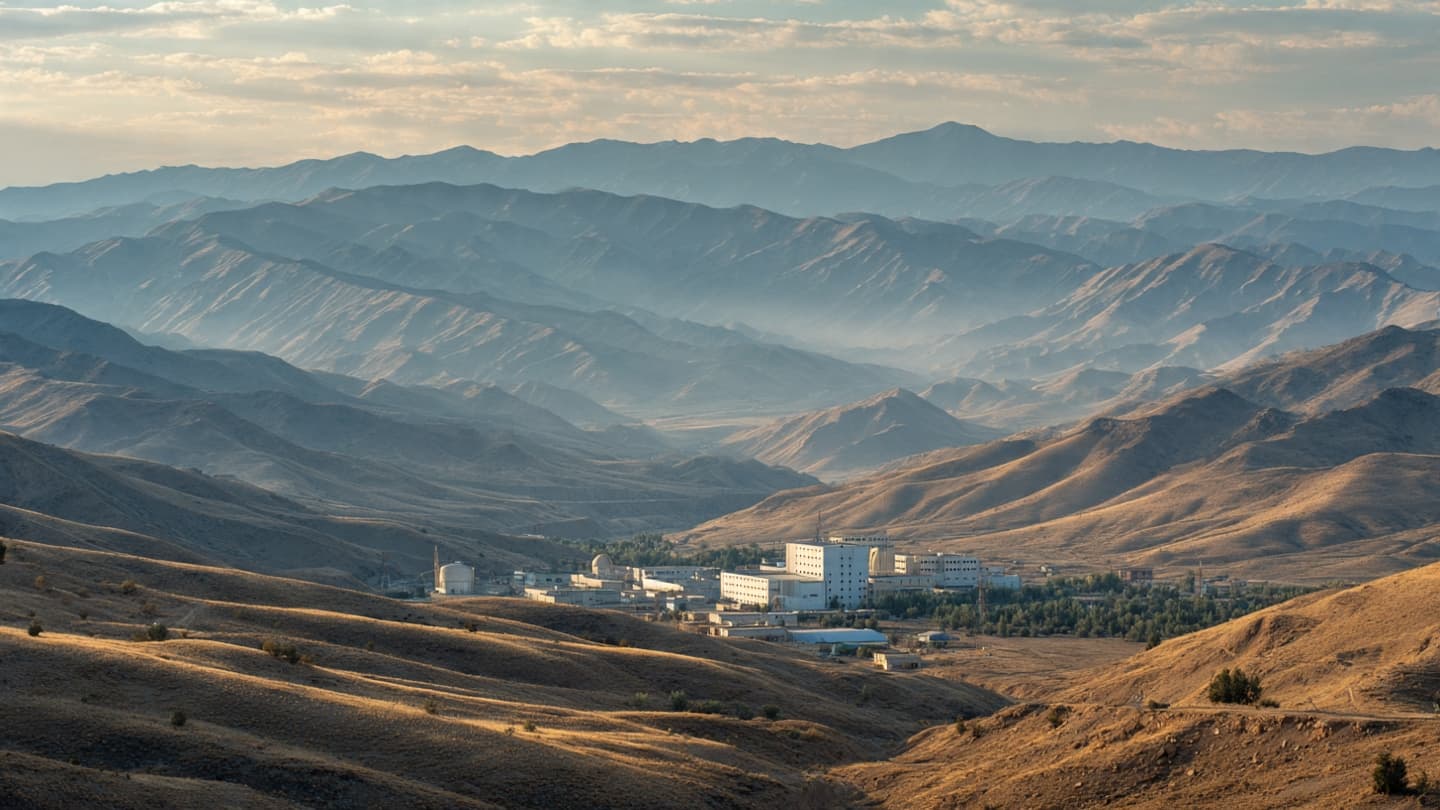
Morning light reaches the mountains of central Iran slowly. Jagged ridges catch the first rays of the sun while valleys remain wrapped in shadow, their silence broken only by distant roads winding toward industrial complexes that have long stood at the center of international attention. In landscapes shaped by ancient stone, the greatest mysteries often lie far beneath the surface.
Those hidden spaces returned to the global spotlight after reports that Israeli intelligence believes Iran has moved thousands of uranium-enrichment centrifuges into the underground tunnel complex known as Pickaxe Mountain, located near the Natanz nuclear site. According to U.S. and Israeli officials cited by The Wall Street Journal, the assessment was shared with Washington and suggests the relocation occurred after military strikes damaged several of Iran's principal nuclear facilities.
The reported transfer has not been independently verified. Public evidence confirming the presence of centrifuges inside the mountain has not been released, and the International Atomic Energy Agency (IAEA) has not inspected the underground complex. Iran has consistently maintained that its nuclear program is intended solely for peaceful civilian purposes and has denied seeking nuclear weapons.
Pickaxe Mountain has attracted growing international attention because of its depth and construction. Analysts estimate that parts of the tunnel network extend hundreds of feet beneath solid rock, making any equipment housed there considerably more difficult to destroy through conventional airstrikes. Satellite imagery reviewed by independent researchers has shown continuing excavation, tunnel reinforcement, and construction activity around the site over recent months.
Centrifuges themselves are essential components of uranium enrichment, spinning uranium hexafluoride gas at extremely high speeds to increase the concentration of fissile material. Such technology can support civilian nuclear energy when enrichment remains at low levels, but it can also become part of a weapons program if enrichment reaches much higher concentrations. For that reason, the location and monitoring of centrifuges remain central issues in international nuclear oversight.
The reported intelligence assessment has added another layer of complexity to an already tense regional environment. U.S. President Donald Trump has publicly suggested that Pickaxe Mountain could become a future military target, while Israeli officials continue expressing concern that deeply buried facilities may allow Iran to preserve or rebuild elements of its nuclear infrastructure despite previous attacks.
International inspectors and diplomats continue emphasizing the importance of verification. The IAEA has repeatedly argued that inspections and transparency remain essential for assessing the status of Iran's nuclear activities. Without direct access, questions surrounding the reported relocation remain matters of intelligence assessment rather than independently confirmed fact.
History often remembers mountains as symbols of permanence, standing unchanged while generations come and go. Yet beneath their quiet slopes, tunnels, laboratories, and strategic calculations remind the world that modern security concerns are often hidden from public view, revealed only through fragments of intelligence and careful observation.
As evening settles across central Iran, Pickaxe Mountain remains outwardly still, its entrances guarded and its interior largely unknown. Whether the reported movement of centrifuges is ultimately confirmed or disproven may depend on future inspections and diplomatic engagement. Until then, the mountain continues to symbolize both the physical depth of modern nuclear infrastructure and the enduring uncertainty surrounding one of the world's most closely watched security questions.
AI Image Disclaimer: Illustrations were created using AI to conceptually depict the reported subject and do not represent actual photographs.
Sources: The Wall Street Journal, Reuters, International Atomic Energy Agency (IAEA), Institute for Science and International Security, Associated Press.
Published by Banx Network. This article is part of the Banx decentralized media programme, powered by the BXE token on the XRP Ledger.