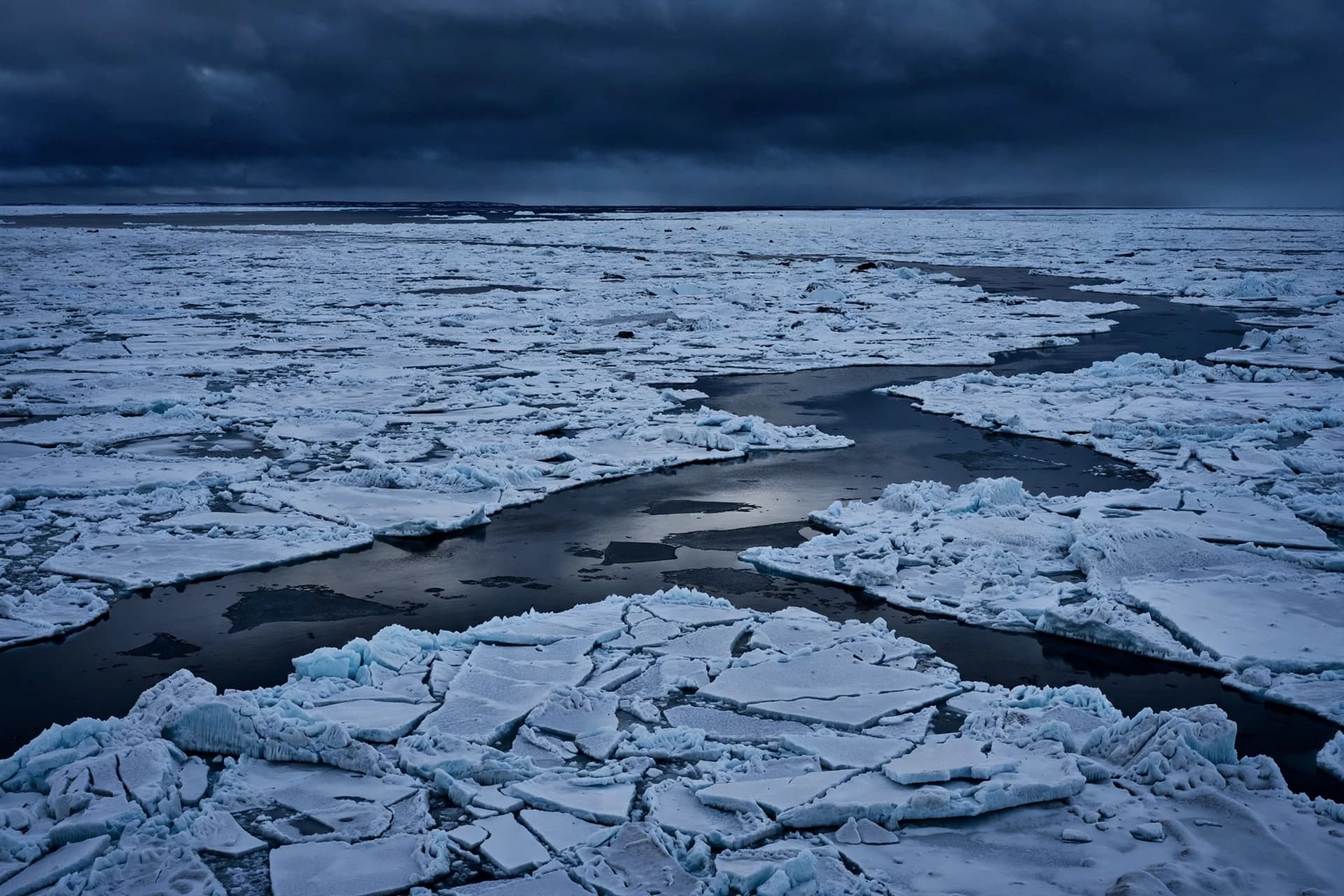
In the hush of Antarctica’s frozen expanse, where silence blankets the world’s oldest ice like a whispered secret, a team of scientists recently ventured into depths rarely touched by human curiosity. To drill beneath the ice sheet is to peer backward in time — like opening a long-sealed diary of Earth’s deep past, page by frozen page. This year, researchers have breached a remarkable frontier: penetrating more than half a kilometer of ice and tapping into sediments laid down millions of years ago, uncovering a record that reshapes how we think about the frozen continent’s history.
At Crary Ice Rise on the Ross Ice Shelf in West Antarctica, an international scientific consortium successfully drilled through 523 meters of ice and extracted a 228-meter sediment core — the longest of its kind ever recovered from beneath an ice sheet. The achievement represents years of planning, engineering ingenuity, and perseverance in some of the most inhospitable terrain on Earth. Scientists describe the process as a blend of precision and patience, a slow unwinding of time that demands both human endurance and technological excellence.
What emerged from that deep frozen archive was more than rock and mud. Embedded within the sediment were remnants of marine life — shell fragments and traces of organisms that thrive only in sunlight-lit waters, materials that would have formed in open ocean conditions before being buried beneath advancing ice. These ancient clues provide direct evidence that, at least at times in the distant past, parts of the West Antarctic Ice Sheet may have been open ocean — a revelation that helps refine our understanding of how the ice sheet responded to periods of global warmth.
For researchers, the drill core is a time machine of sorts, offering snapshots of environmental conditions spanning millions of years. The deeper layers can tell stories of epochs when Earth’s average temperatures were higher than what scientists now warn could trigger rapid ice loss in the future. By comparing these ancient conditions to contemporary warming trends, climate scientists hope to sharpen predictions of how quickly the ice sheet might melt as the planet warms and how much sea levels could rise as a result.
The drilling achievement also marks a milestone in collaborative Antarctic science. The expedition united researchers from more than a dozen countries under the international SWAIS2C project umbrella, illustrating how collective effort and shared expertise can unlock insights far beyond any one team’s reach. In such remote reaches of the Southern Ocean, cooperation is not just ideal — it is essential to overcoming the logistical challenges of deep cold, shifting ice, and isolation from the world’s civilization.
Yet it is the story the sediments tell that most captivates scientists. Findings suggest episodes when the ice sheet was not the monolithic frozen blanket it is today but instead showed significant retreat — times when ocean waters once lapped where ice now stands thick and still. Those past warm periods may hold critical clues for the future, offering real analogs of how ice might behave as modern climate change pushes temperatures upward.
The work is not complete: core samples are now being transported to laboratories where detailed chemical and biological analyses will continue for months or years to come. Each layer of sediment will be scrutinized for clues about past climates, ocean temperatures, and the biological ecosystems that once existed. Together, these ancient threads may eventually weave a more complete narrative of Antarctica’s dynamic past.
In the meantime, the basic facts stand as both science news and a testament to human curiosity: scientists have set a new record for drilling beneath Antarctic ice, and what they found could reshape scientific understanding of the ice sheet’s history and future.
AI IMAGE DISCLAIMER Graphics are AI-generated and intended for representation, not reality.
SOURCE CHECK
Reuters ScienceAlert (AFP) IFLScience Imperial College London news Swissinfo.ch
Published by Banx Network. This article is part of the Banx decentralized media programme, powered by the BXE token on the XRP Ledger.