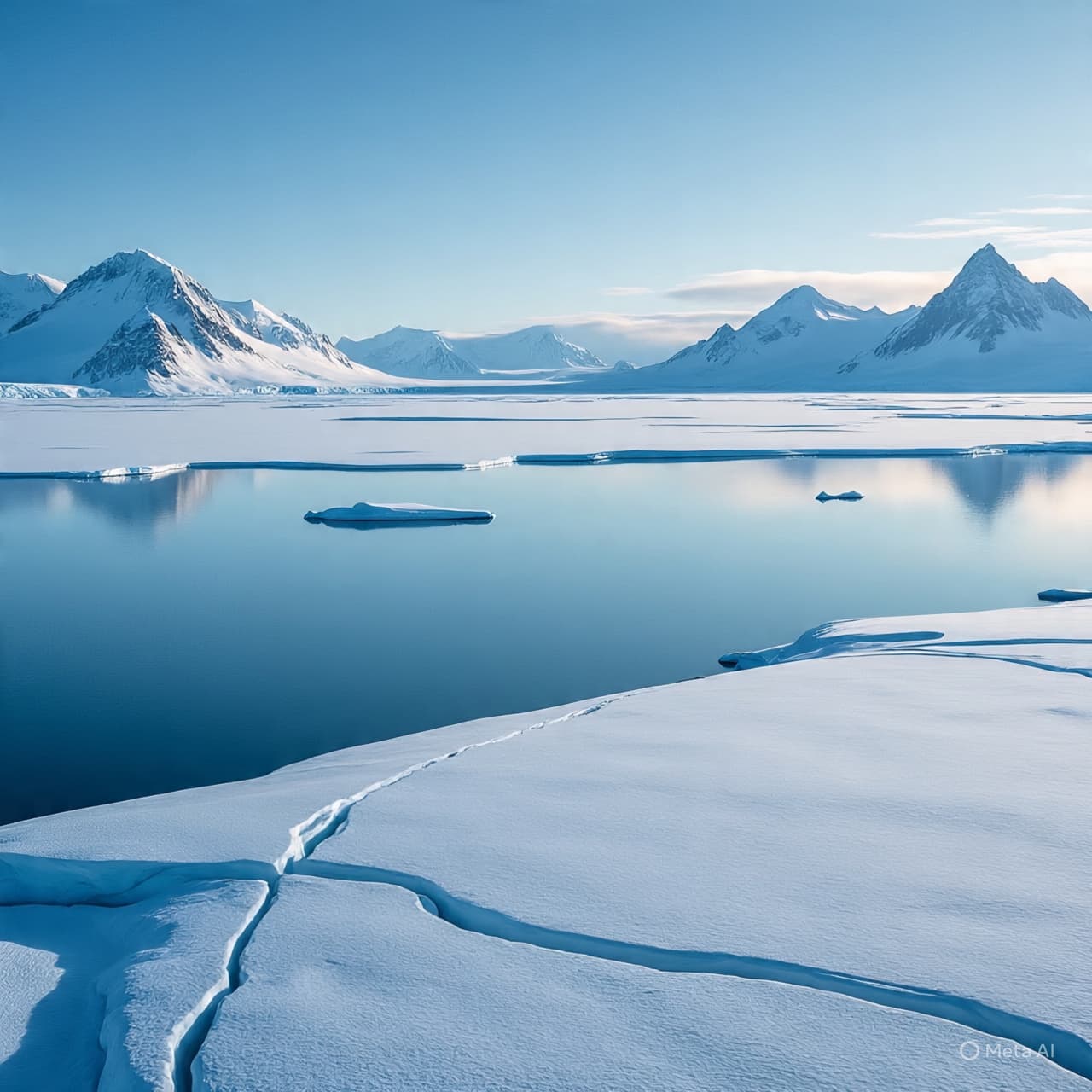
In Antarctica, silence carries a different weight. It is not simply the absence of sound, but the presence of time—layered, compressed, and preserved within vast expanses of ice that stretch far beyond the horizon.
Here, change does not announce itself. It unfolds slowly, measured not in years, but in cycles that span tens of thousands of years. Scientists studying this environment have begun to uncover connections that reach deep into Earth’s climatic history.
Recent research points to a relationship between the planet’s orbital patterns and the growth of Antarctic ice sheets. Subtle variations in Earth’s tilt and orbit influence the distribution of solar energy, shaping climate systems in ways that are both gradual and profound.
These cycles, often referred to in scientific terms as Milankovitch cycles, affect not only polar regions but global systems. Changes in ice volume can alter ocean currents, influence atmospheric patterns, and even impact biological productivity in distant regions.
The implications are not immediate, but they are significant. Understanding these long-term processes provides context for present-day climate observations, offering insight into how natural variability and human influence intersect.
Fieldwork in Antarctica remains challenging. Researchers drill deep into ice cores, extracting samples that contain records of past atmospheres—trapped air bubbles that reveal conditions from thousands of years ago. Each layer tells a story, contributing to a broader narrative of planetary change.
In this environment, the past is not distant. It is preserved, waiting to be read.
Antarctica does not speak loudly, but its message is clear: Earth’s systems operate on scales that extend far beyond immediate perception. And in understanding those scales, a deeper awareness of the present begins to emerge.
Published by Banx Network. This article is part of the Banx decentralized media programme, powered by the BXE token on the XRP Ledger.