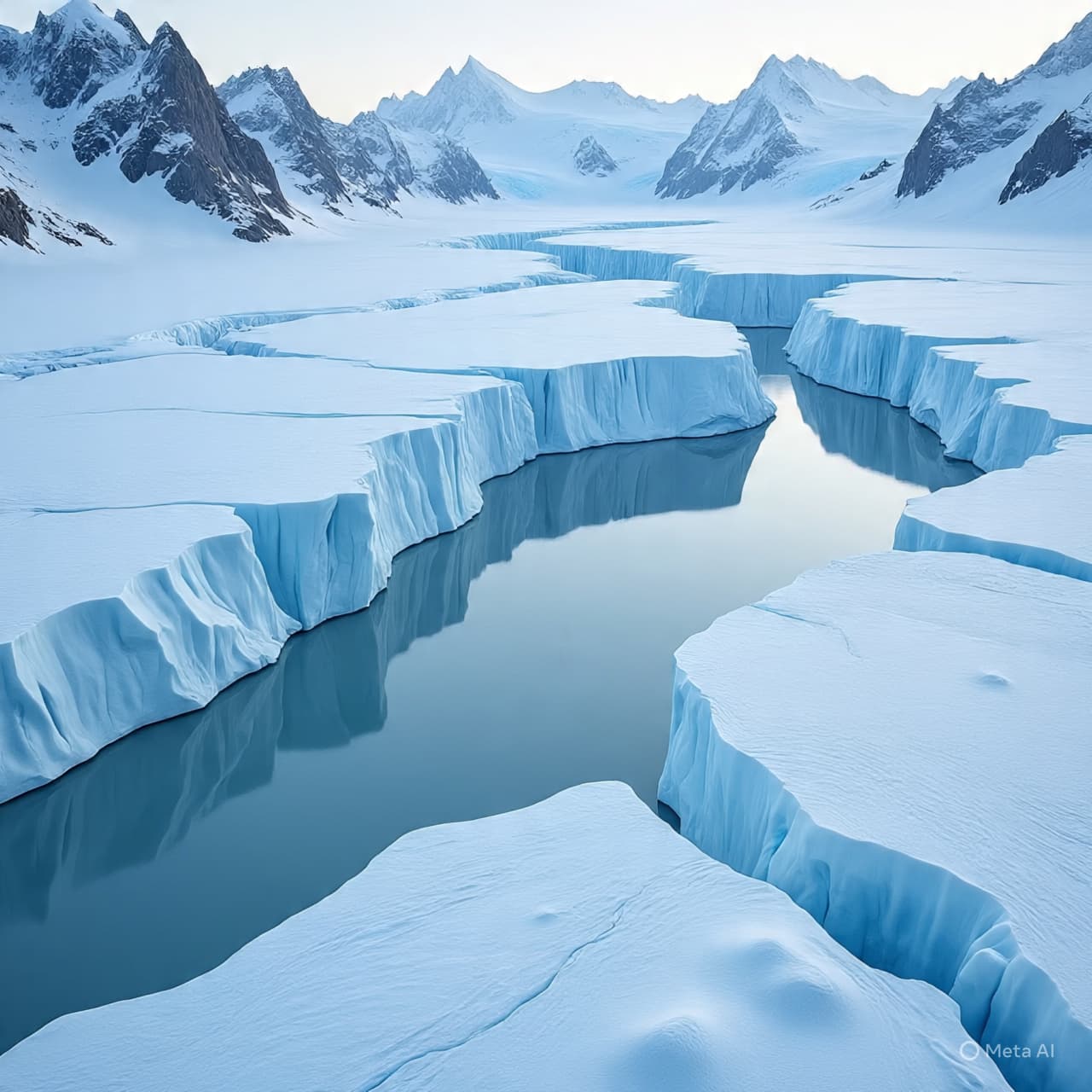
Underneath the vast, gleaming white of Antarctica’s ice, a silent world waits—its valleys, mountain ranges, and rivers locked away for eons beneath miles of frozen crystal. Like discovering the contours of a buried planet, scientists have now unveiled this secret terrain in unprecedented detail, revealing not just a hidden surface but a geological tapestry that tells stories of ancient climates and forces that shaped our world.
For decades, explorers imagined what lay beneath Antarctica’s colossal ice sheet—an expanse that blankets more than 14 million square kilometers and holds the vast majority of Earth’s freshwater. Until recently, much of that landscape was speculative, sketched by sparse radar readings or inferred from the ice above. Now, thanks to cutting‑edge satellite observations and sophisticated modeling techniques, researchers have stitched these faint signals into a high‑resolution map that depicts subterranean valleys, buried mountains, and hidden lake basins with a clarity once thought impossible.
This map, born from the fusion of satellite data, ice thickness measurements, and advanced analysis of ice flow physics, is like peeling away a planetary veil. Subsurface features that once lay obscured—deep channels, extensive fluvial networks, and abrupt transitions between peaks and lowlands—now emerge with astonishing precision. Some of these topographic details reach 2 to 30 kilometers in scale, hinting at landscapes that predate the modern ice sheet and preserving relics of geological epochs before Antarctica was locked in ice.
Beyond its scientific allure, this revelation carries practical weight. Understanding how the bedrock shapes ice movement is essential to improving models of ice sheet evolution and forecasting how rapid climate warming might accelerate ice loss. The terrain beneath, once hidden, plays a decisive role in guiding ice flow, influencing stability, and thus shaping projections of sea‑level rise that affect communities and ecosystems around the globe.
In this age of exploration, the unveiling of Antarctica’s hidden landscape reminds us that even on our own planet there remain vast domains concealed from direct view—worlds waiting patiently beneath the ice, still whispering their ancient histories.
AI Image Disclaimer “Images in this article are AI‑generated illustrations, meant for concept only.”
Sources Space.com Live Science Yahoo News British Antarctic Survey Scientific Data journal (Bedmap3)
Published by Banx Network. This article is part of the Banx decentralized media programme, powered by the BXE token on the XRP Ledger.