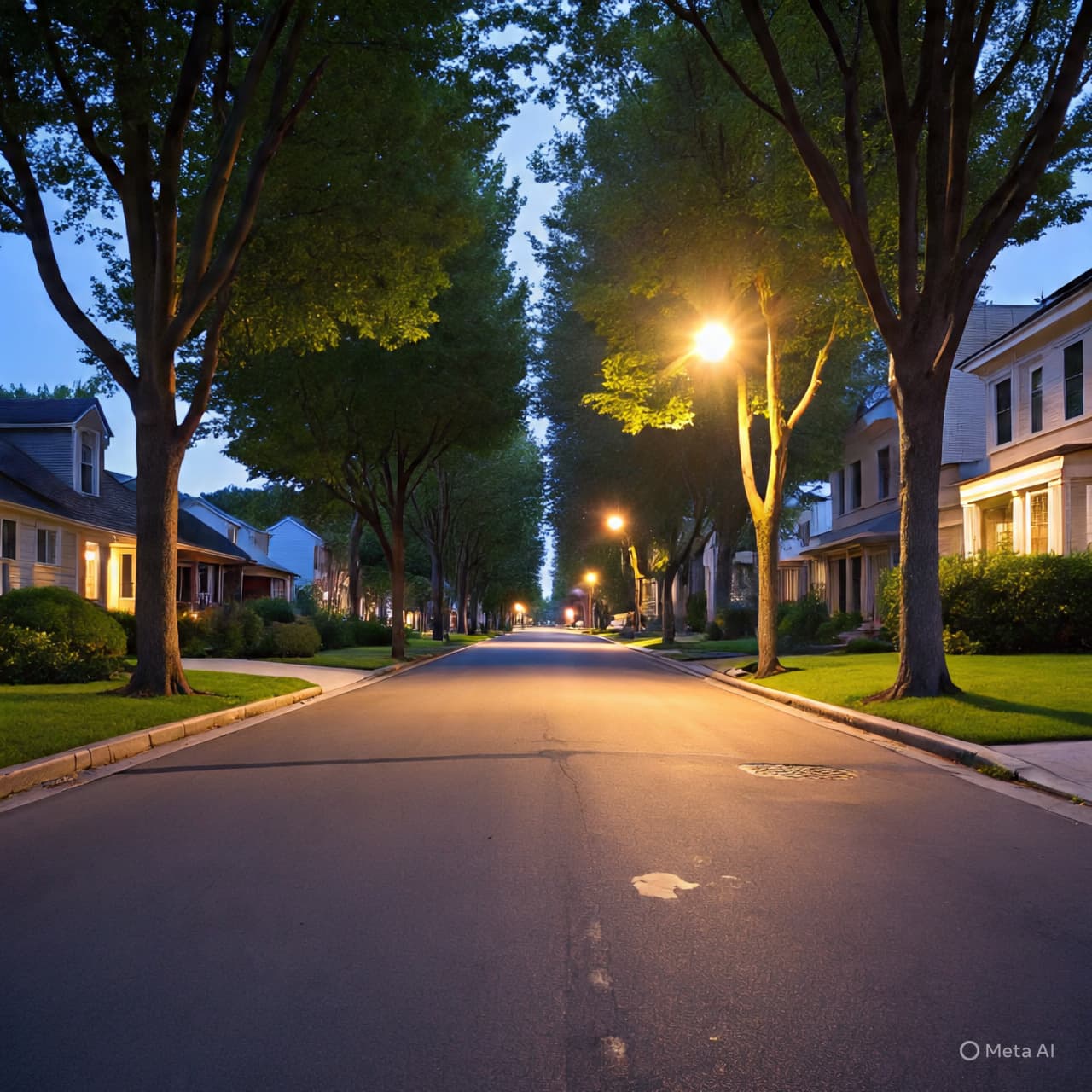
They say that every city hides a story beneath its pavements — a whisper pressed into concrete. Chicago’s sidewalks have carried many tales, but few as curious as the so-called “Rat Hole,” a small imprint in a slab of Roscoe Village pavement that once captured the city’s imagination. For years, people passed by and smiled at it, some leaving offerings, others simply taking photos of the faint outline of what seemed like a fallen rat, immortalized in stone.
But as time has proven, even concrete can lie. What looked like a rat may not have been one at all.
Recent scientific scrutiny has rewritten the tale. Researchers examined high-resolution photographs of the impression — since the original slab was removed — and compared its proportions against those of common Chicago species. They studied limb length, tail width, and body contour with the patience of detectives reading a fossilized clue. The results pointed to an unexpected revelation: the imprint fits better with a squirrel than a rat.
The finding challenges what we thought we saw. It was easy to imagine a rat — the eternal companion of every city’s mythology. The “rat” carried symbolism, too: resilience, dirt, mischief. Yet the science suggests otherwise. The imprint’s limbs are longer, the body broader, and the head more in line with a squirrel’s silhouette. Its narrow tail impression, once thought “too thin” for a squirrel, may simply reflect how fur fails to press into wet concrete.
It’s a small correction, perhaps, but one that feels symbolic. Cities are full of assumptions, of stories built from glances. A blot on a wall becomes a ghost; a stain becomes a sign. Here, a rough shape in cement became a rodent legend. And when evidence suggests otherwise, we are reminded how lightly we must hold our certainties.
The city itself has moved on. The original slab, after drawing crowds and camera flashes, was lifted from the sidewalk in 2024. It now rests in storage, a piece of modern folklore preserved for history. For a moment, it was a neighborhood shrine — candles, trinkets, and jokes piled around a tiny indentation in the ground. Then, as all curiosities do, it returned to silence.
Perhaps that’s how it should end. Whether rat or squirrel, the imprint remains a mark of wonder — a playful intersection of biology, myth, and civic affection. It began as laughter and ended as science. And beneath it all, the story of a city that still finds magic in the mundane.
AI Image Disclaimer: “Graphics are AI-generated and intended for representation, not reality.”
Sources: The Guardian; NBC Chicago; LiveScience; AP News.
Published by Banx Network. This article is part of the Banx decentralized media programme, powered by the BXE token on the XRP Ledger.