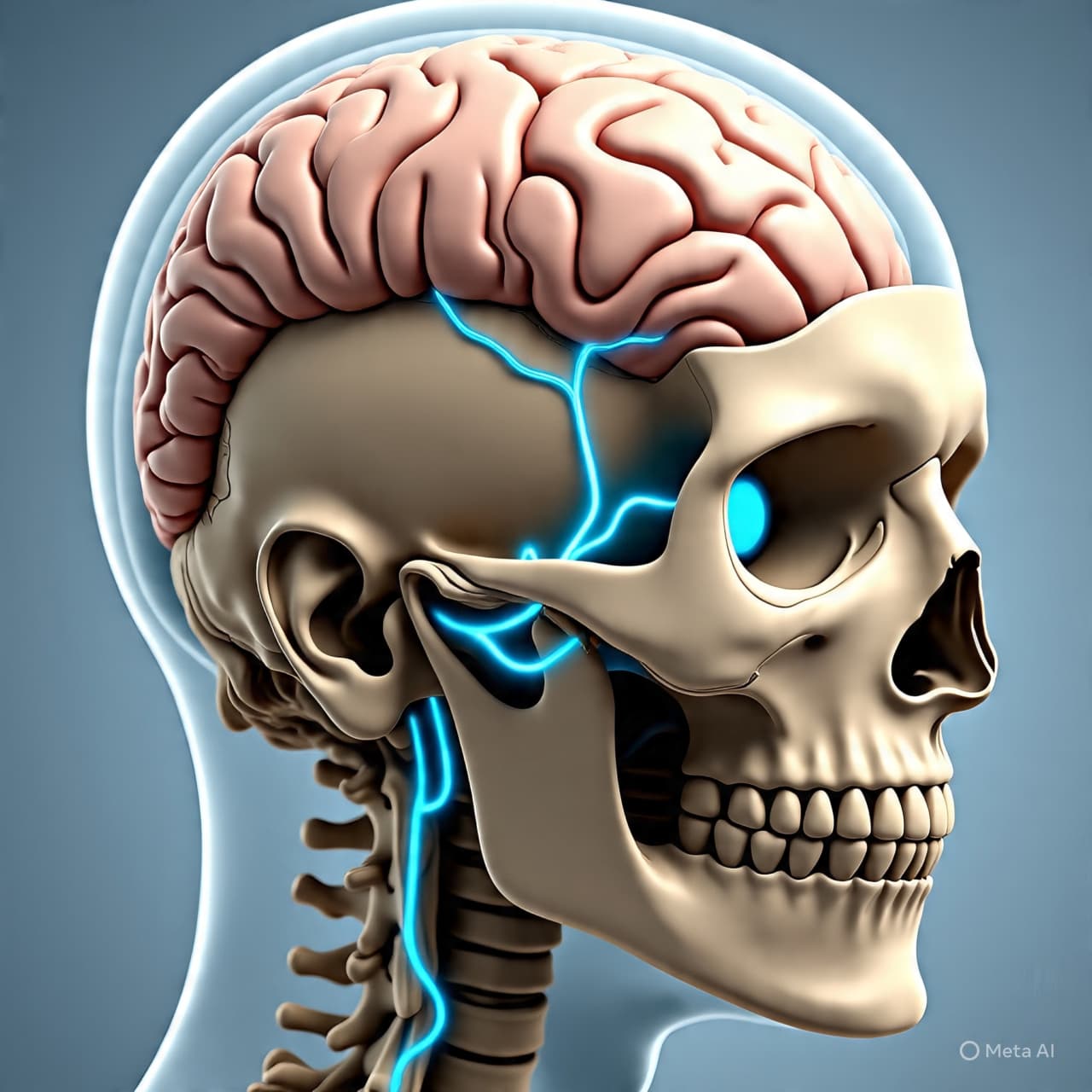
There is a quiet architecture within us that we rarely consider — a hidden network working tirelessly beneath the shelter of bone. The skull, often imagined as a rigid fortress, turns out to be more porous and dynamic than once believed. Beneath its curved surface lies a subtle drainage system, one that helps protect the brain not only from pressure but from pathogens that might otherwise find a dangerous foothold. In recent years, scientists have uncovered growing evidence that tiny channels within the skull — sometimes described as “skull drains” — serve as vital passageways connecting bone marrow directly to the brain’s protective layers.
For generations, biology textbooks depicted the brain as largely isolated, guarded by the blood-brain barrier and buffered by cerebrospinal fluid. Yet research now suggests that immune activity around the brain is more locally coordinated than previously thought. Microscopic vascular channels running through the skull appear to allow immune cells produced in bone marrow to travel directly into the meninges — the membranes that encase the brain. Rather than relying solely on distant immune responses circulating through the bloodstream, the brain may call upon nearby reinforcements through these tiny conduits.
These skull channels act as both highways and drainage routes. They help regulate immune surveillance while also contributing to the removal of waste products. Infections, inflammation, and injury can trigger rapid mobilization of immune cells through these passageways, enabling a faster and more targeted response. The discovery reframes how scientists understand conditions such as meningitis, stroke, and even neurodegenerative diseases, where inflammation plays a defining role.
The idea that bone marrow in the skull participates directly in brain immunity reshapes long-standing assumptions. Instead of being merely structural, the skull emerges as an active participant in neurological health. Studies in animal models have shown that immune cells from skull marrow can reach the brain’s outer coverings without first entering the general bloodstream. This localized pathway may help limit systemic inflammation while delivering precisely tuned defense mechanisms.
Beyond infection control, these drainage systems may also help regulate intracranial pressure. The brain exists in a delicately balanced environment where swelling can quickly become dangerous. Efficient fluid movement and immune regulation are essential to preventing damage. Researchers are now exploring how disruptions in these skull channels might contribute to chronic inflammatory conditions or impaired recovery after trauma.
The findings also hint at therapeutic potential. If scientists can better understand how these drains function — and how they become blocked or dysregulated — future treatments might aim to enhance or modulate this natural pathway. Targeted drug delivery through these routes, or strategies to strengthen local immune response without triggering widespread inflammation, could represent new frontiers in neuroimmunology.
Importantly, much of this research remains in its early stages. While imaging technologies and laboratory studies have illuminated the presence and function of these microscopic channels, clinical applications are still being evaluated. Yet the broader message is clear: the skull is not a sealed vault but a living structure, intimately involved in the brain’s defense and maintenance.
In straightforward terms, researchers have identified tiny vascular channels within the skull that connect bone marrow to the brain’s protective membranes, enabling localized immune responses and contributing to waste drainage. Ongoing studies are examining how these pathways influence infection, inflammation, and neurological disease.
AI Image Disclaimer Illustrations were produced with AI and serve as conceptual depictions.
SOURCE CHECK
ScienceDaily BBC The Guardian New Scientist Nature
Published by Banx Network. This article is part of the Banx decentralized media programme, powered by the BXE token on the XRP Ledger.