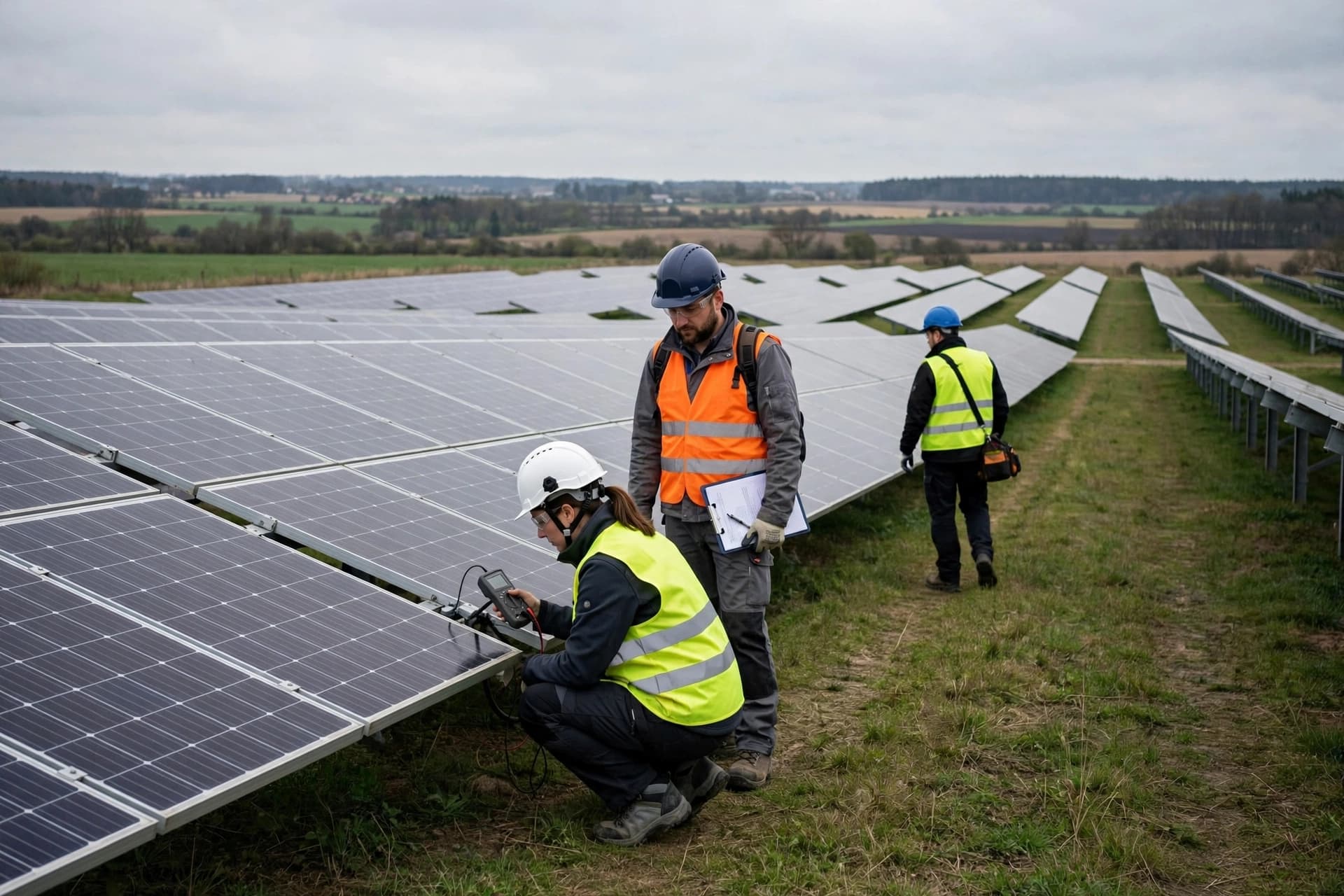
Across Poland’s open countryside, energy infrastructure is gradually taking on a different shape. Fields that once carried only crops or grazing land can now become part of a wider network designed to capture sunlight and turn it into electricity.
One of the latest developments involves Polish renewable energy developer PAD RES, which has secured PLN192.5 million in long-term financing from UniCredit for three solar farms. The projects have a combined installed capacity of 133 megawatts.
The financing represents another step in the development of utility-scale solar capacity in Poland. Rather than a single large installation, the portfolio brings several projects together under one financing arrangement, linking investment capital with infrastructure designed to generate electricity from renewable sources.
PAD RES has become an active participant in Poland’s renewable-energy market, where solar power has expanded rapidly over recent years. The new financing provides a longer-term financial structure for projects that will operate as part of that growing electricity system.
UniCredit’s involvement also illustrates the role of commercial banks in the expansion of renewable infrastructure. Solar projects require substantial capital before producing electricity, making financing arrangements an important part of turning development plans into operating assets.
The 133 MW combined capacity gives the portfolio a meaningful scale. The actual electricity produced will vary with sunlight, weather and operating conditions, but the projects add another source of renewable generation to Poland’s evolving energy mix.
For investors, renewable-energy projects are increasingly evaluated not only through their environmental characteristics but also through construction schedules, grid connections, financing structures and long-term power-market conditions. Securing project finance is therefore an important stage between planning and eventual operation.
Poland’s solar market is developing alongside other forms of renewable generation. Wind power remains another major part of the country’s transition, while grid infrastructure and energy-storage capacity are becoming increasingly important as variable renewable sources take a larger role.
The financial backing for PAD RES arrives as companies across the sector continue building portfolios rather than relying on individual facilities. That approach can spread operational and geographic exposure while allowing developers to manage several projects within a broader investment framework.
The significance of a solar farm is rarely visible all at once. There is first the land, then engineering, financing, construction and connection to the grid. Only after those stages does sunlight become electricity flowing into the system.
For Poland’s renewable sector, the PAD RES financing adds another piece to that longer process. Three solar farms, 133 MW of planned capacity and PLN192.5 million in financing now form part of a wider effort to expand renewable generation, with the eventual contribution of the projects depending on their construction, grid integration and operation.
Published by Banx Network. This article is part of the Banx decentralized media programme, powered by the BXE token on the XRP Ledger.

.jpg&w=3840&q=75 "Helion Energy: Can Fusion Power Move From Prototype to the Grid?")