Ancient Earth continues to reveal creatures that seem to blur the line between science and imagination. From fossil beds hidden beneath deserts to bones preserved deep within stone, paleontology often uncovers animals that challenge familiar ideas about prehistoric life. In New Mexico, researchers have now announced the discovery of a strange ancient reptile nicknamed the “witch croc,” a creature whose appearance has drawn comparisons to dinosaurs.
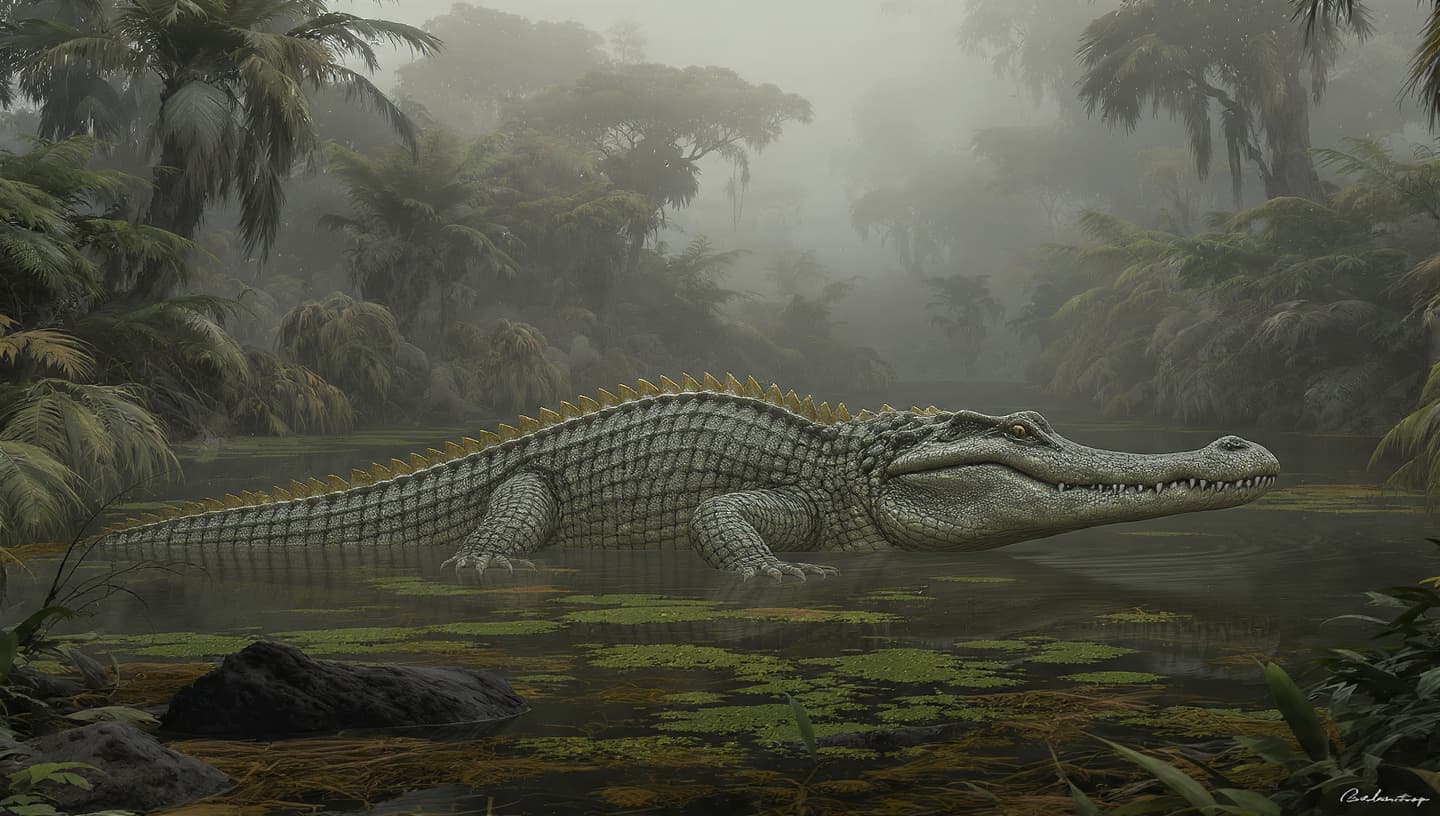
Scientists say the fossilized remains belong to an unusual crocodile relative that lived millions of years ago during a period when ancient ecosystems were filled with diverse reptilian species. The animal reportedly possessed features unlike those seen in modern crocodiles, including skeletal characteristics that gave it a more dinosaur-like appearance.
The discovery was made in New Mexico, a region known for rich fossil deposits that continue to provide insight into prehistoric North America. Paleontologists working in the area have uncovered evidence of ancient rivers, forests, and ecosystems that once supported a wide range of species long before human history began.
Researchers believe the reptile occupied a unique ecological role within its environment. Ancient crocodilian relatives evolved into many different forms across prehistoric eras, with some adapting to land-based hunting while others became highly specialized aquatic predators. The newly studied species adds another example of how diverse these lineages once were.
Nicknames such as “witch croc” often emerge because unusual fossil discoveries capture public imagination more effectively through vivid descriptions. Scientists, however, continue focusing on anatomical analysis, fossil dating, and evolutionary relationships to better understand where the species fits within reptilian history.
The fossil also highlights how prehistoric life was often far stranger than many simplified popular depictions suggest. Modern crocodiles represent only a small surviving branch of a once far more varied evolutionary group that included creatures with dramatically different sizes, behaviors, and body structures.
New Mexico’s fossil landscapes remain important for ongoing scientific study because they preserve records from periods of major ecological change. Each new discovery helps researchers better understand how ancient animals evolved, adapted, and disappeared as climates and environments shifted across millions of years.
As scientists continue analyzing the remains, the “witch croc” serves as another reminder that Earth’s prehistoric past still contains many unanswered questions. Beneath quiet desert rock formations, fragments of ancient ecosystems continue waiting to reshape humanity’s understanding of life long before the modern world emerged.
AI Image Disclaimer: Some prehistoric visual reconstructions in this article were created using AI-generated imagery for editorial illustration.
Sources: Live Science, Scientific American, Reuters, New Scientist, Smithsonian Magazine
Published by Banx Network. This article is part of the Banx decentralized media programme, powered by the BXE token on the XRP Ledger.