Summer in Japan brings a particular brightness to industrial cities, where factories continue their routines beneath humid skies and long daylight. Behind those walls, another kind of weather can be measured through surveys of confidence, investment plans, and expectations for the months ahead.
Japanese business confidence among major manufacturers improved in August, supported in part by stronger demand for semiconductors. The improvement came as the global technology cycle continued to provide support for companies involved in electronics and related manufacturing. (reuters.com)
The movement is important because Japan’s manufacturing economy remains deeply connected to global supply chains. Automobiles, machinery, electronics, components, and semiconductor-related equipment move between Japan and markets across Asia, North America, and Europe.
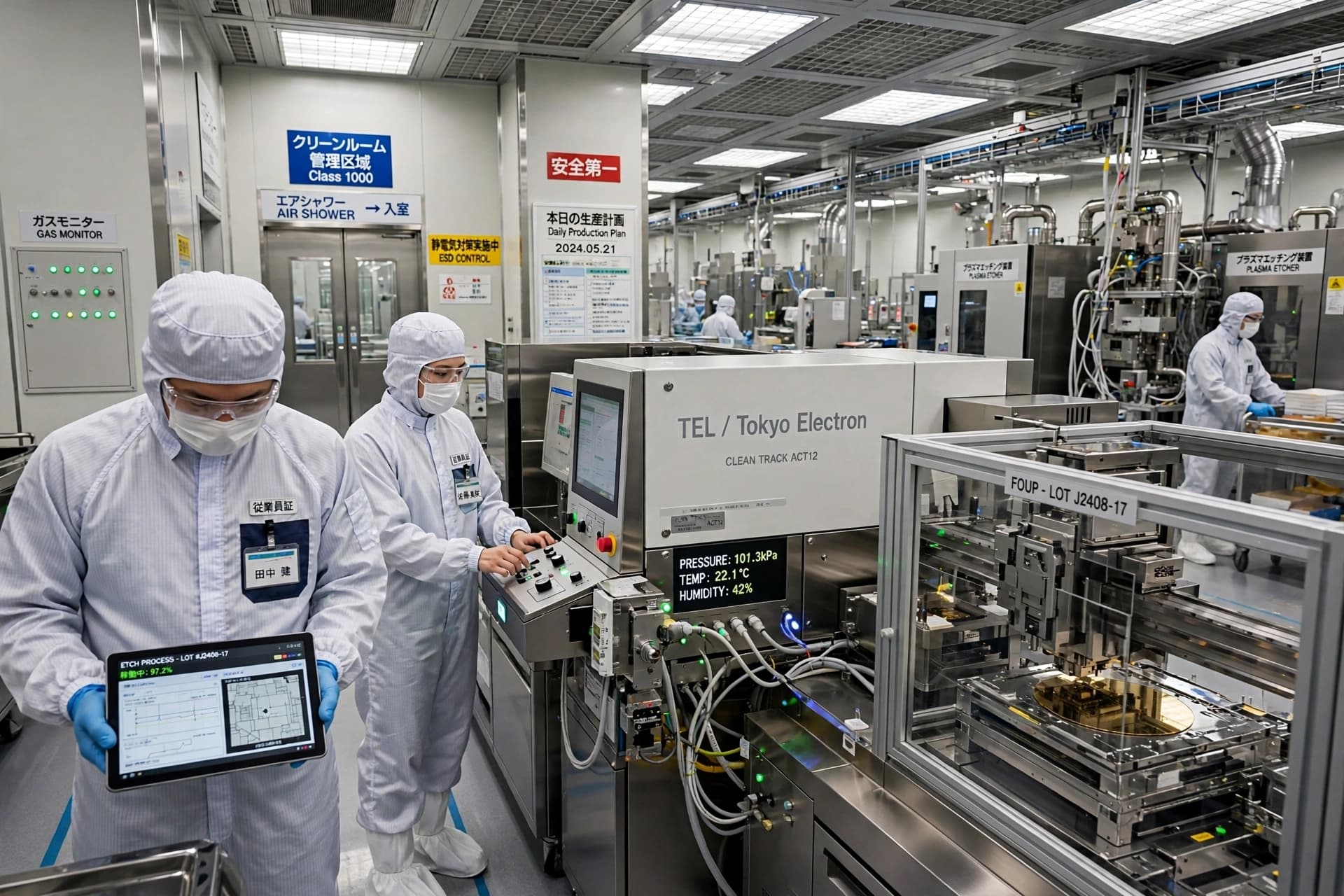
Semiconductors have become particularly influential. Demand for chips used in artificial intelligence systems, data centers, advanced electronics, and industrial applications has encouraged investment throughout the technology supply chain. Japanese manufacturers are positioned in several parts of that chain, from materials and equipment to specialized components.
The improvement in sentiment therefore reflects more than one industry. When semiconductor demand strengthens, companies supplying production equipment, chemicals, precision machinery, and electronic components can also experience increased activity. The effect can gradually spread through manufacturing networks.
Yet the broader economic environment remains mixed. Companies continue to face changing costs, currency movements, global trade conditions, and uncertainty surrounding demand in major markets. Business confidence can rise while executives remain cautious about the months ahead.
The August improvement nevertheless offers a useful indication of how technology demand is influencing Japanese industry. The country has long maintained a strong position in high-precision manufacturing, and the semiconductor boom has created another period of opportunity for firms with specialized knowledge and production capabilities.
Japan is also investing heavily in semiconductor capacity and related infrastructure. Domestic and international companies have been expanding manufacturing operations, while government-backed initiatives have sought to strengthen the country’s position within the global semiconductor supply chain.
For manufacturers, the challenge is to turn temporary demand into durable investment. Semiconductor cycles can rise quickly and then soften, meaning companies must balance additional production capacity with the possibility of changing market conditions.
For now, August’s improvement in Japanese manufacturer sentiment provides another indication that the semiconductor boom continues to influence the country’s industrial economy. Strong chip demand is supporting confidence even as businesses continue to monitor costs, global demand, and the wider economic environment. (reuters.com)
AI Image Disclaimer These visuals were generated using artificial intelligence to provide conceptual representations of Japan’s manufacturing and semiconductor industries.
Sources Reuters Bank of Japan Nikkei Asia Japan Times Trading Economics
Published by Banx Network. This article is part of the Banx decentralized media programme, powered by the BXE token on the XRP Ledger.