Across Indonesia, the rhythm of everyday commerce can often be heard before it appears in economic statistics. It is present in the movement of shoppers through markets, the flow of customers into stores and the quiet decisions made at household counters. During the middle of 2026, that rhythm became somewhat more restrained as retail activity and consumer confidence both showed signs of softness.
Bank Indonesia's retail sales survey indicated that real retail sales contracted 3.9 percent year over year in May, following a 3.7 percent decline in April. The central bank said May's performance was affected by seasonal patterns, although sales were supported by categories including spare parts and accessories, automotive fuels, and cultural and recreational goods.
The figures did not represent a uniform decline across every part of the retail economy. Some categories continued to record positive annual growth, while others were more exposed to changes in household demand. Retail activity is shaped by many factors at once, including holidays, school schedules, income, prices, financing conditions and consumer expectations.
Consumer confidence also softened during June. Bank Indonesia's consumer confidence index declined to 117.8 points from 120.9 in May, according to data reported by The Jakarta Post. The newspaper noted that the combination of weaker confidence and retail sales suggested households were becoming more cautious following recent interest-rate increases.
The movement is important because household consumption remains a central part of Indonesia's economic structure. When consumers feel more confident, spending can support retailers, manufacturers, transportation providers and service businesses in a chain that extends well beyond the original purchase. When households become more careful, the effects can gradually spread across those same sectors.
Yet the retail picture cannot be separated from Indonesia's broader economic performance. The country's economy grew 5.29 percent year over year in the second quarter, according to Statistics Indonesia, although that represented a slowdown from 5.61 percent in the first quarter. Household consumption also slowed to 5.06 percent from 5.52 percent in the previous quarter.
At the same time, the Bank Indonesia survey pointed toward a more complicated price environment. Retailers expected inflationary pressures to build in August, with the Price Expectations Index rising to 178.0 from 175.8 in July. Higher raw-material costs were cited as one factor behind those expectations. Such pressures can influence both business pricing decisions and the purchasing power of households.
For retailers, the environment creates a need to balance inventory, pricing and customer demand carefully. Stronger sales in selected categories can provide support, but weaker overall traffic can make it more difficult for businesses to predict how quickly products will move. The result is a retail landscape in which individual sectors can experience very different conditions at the same time.
The longer-term picture remains open. Indonesia's population, expanding cities and developing digital economy continue to provide a broad consumer base, while investment and infrastructure development can create new commercial opportunities. But those possibilities do not eliminate short-term pressures on household budgets or businesses facing higher operating costs.
For now, the latest indicators suggest a consumer economy moving with greater caution. Retail sales weakened in the months reported by Bank Indonesia, consumer confidence declined in June, and household consumption slowed during the second quarter. These developments do not describe a halt in Indonesia's economic activity, but they do provide a quieter signal about the pace at which households are spending.
The retail sector therefore remains an important window into the country's economic mood. Behind every monthly index are millions of individual choices about what to buy, what to postpone and what to prioritize. As the second half of 2026 unfolds, those choices will remain closely connected to the wider path of Indonesia's growth.
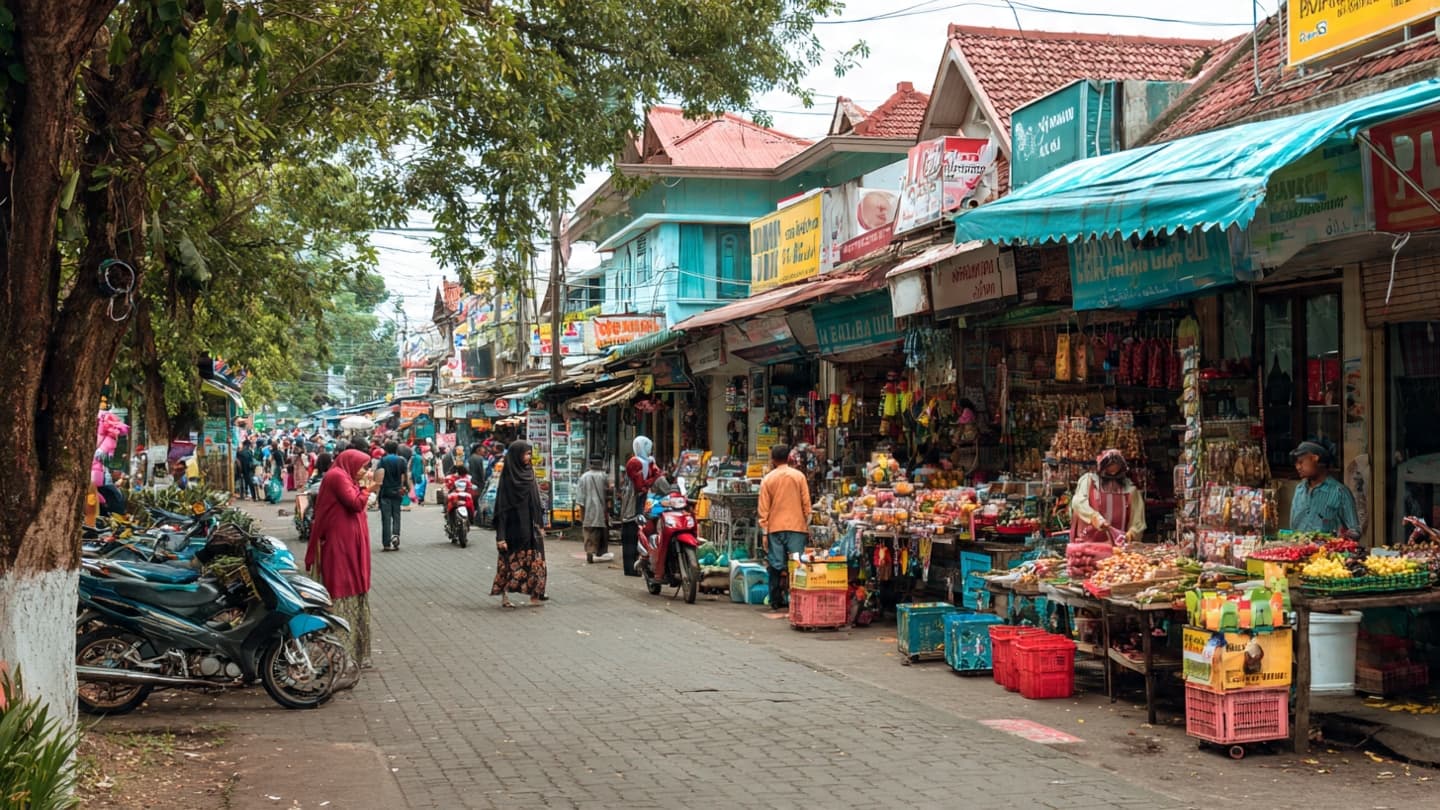
Image Disclaimer AI-generated imagery accompanies this article as a conceptual representation of Indonesia's retail and consumer environment.
Sources Bank Indonesia The Jakarta Post Statistics Indonesia Reuters ANTARA News Investing.com
Published by Banx Network. This article is part of the Banx decentralized media programme, powered by the BXE token on the XRP Ledger.