Inside a factory, recovery can be measured in movements that rarely make headlines: machines running longer, orders arriving, shipments leaving warehouses, and production schedules slowly filling again. In Germany, those movements continued through September.
Germany's manufacturing sector sustained its upward momentum during the month, with production and new orders both registering growth despite renewed pressure from global energy markets.
The final S&P Global Purchasing Managers' Index for German manufacturing stood at 53.9 in September, slightly below August's 54.3 but above the preliminary reading of 53.8. A reading above 50 indicates expansion.
Production increased for a ninth consecutive month. The pace was slightly softer than in August, when German factories recorded their strongest production expansion in more than four and a half years.
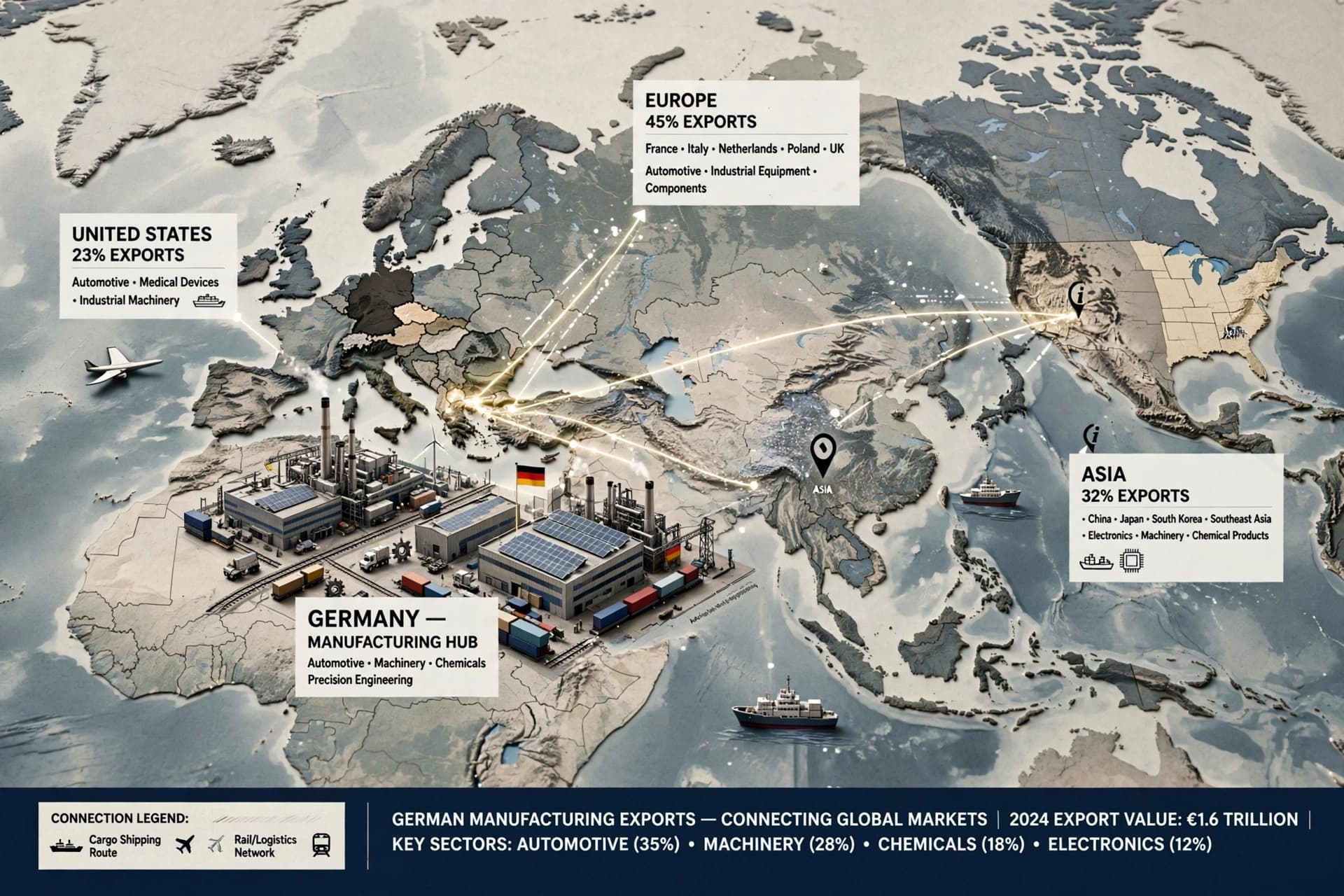
New orders also increased for a fourth consecutive month. Export demand contributed to the improvement, with German manufacturers reporting stronger demand from customers in Asia, Europe, and the United States.
The composition of demand provides another window into the industrial recovery. Investment goods producers recorded particularly strong activity, while intermediate-goods manufacturers also reported gains in production and orders.
Yet the path forward is not without friction. Input-cost inflation accelerated in September, reaching its highest level since June. Output-price inflation also moved higher, reaching a three-month high.
Those pressures matter because manufacturers must balance growing demand against the cost of producing and transporting goods. Rising energy prices can eventually work their way through supply chains, affecting companies and consumers well beyond the factory gate.
Even so, business expectations improved. Manufacturers' expectations for output over the following 12 months reached their highest level since February, according to the survey.
September's numbers therefore present a picture of an industrial sector moving forward while carrying additional weight. Production is rising, orders are returning, and export demand remains active, but higher costs continue to follow closely behind. Germany's manufacturing recovery is consequently not a straight line—it is a measured movement through an environment where opportunity and pressure remain present at the same time.
SEO SLUG
germany-manufacturing-upturn-september-2026
HASHTAGS
#Germany #Manufacturing #Industry #Business #PMI #Exports #GermanEconomy #EconomicRecovery
IMAGE DISCLAIMER
This AI-generated image is a conceptual representation of Germany's manufacturing sector and does not depict a specific factory, company, or production facility.
SOURCES
Reuters S&P Global Euronext
Published by Banx Network. This article is part of the Banx decentralized media programme, powered by the BXE token on the XRP Ledger.