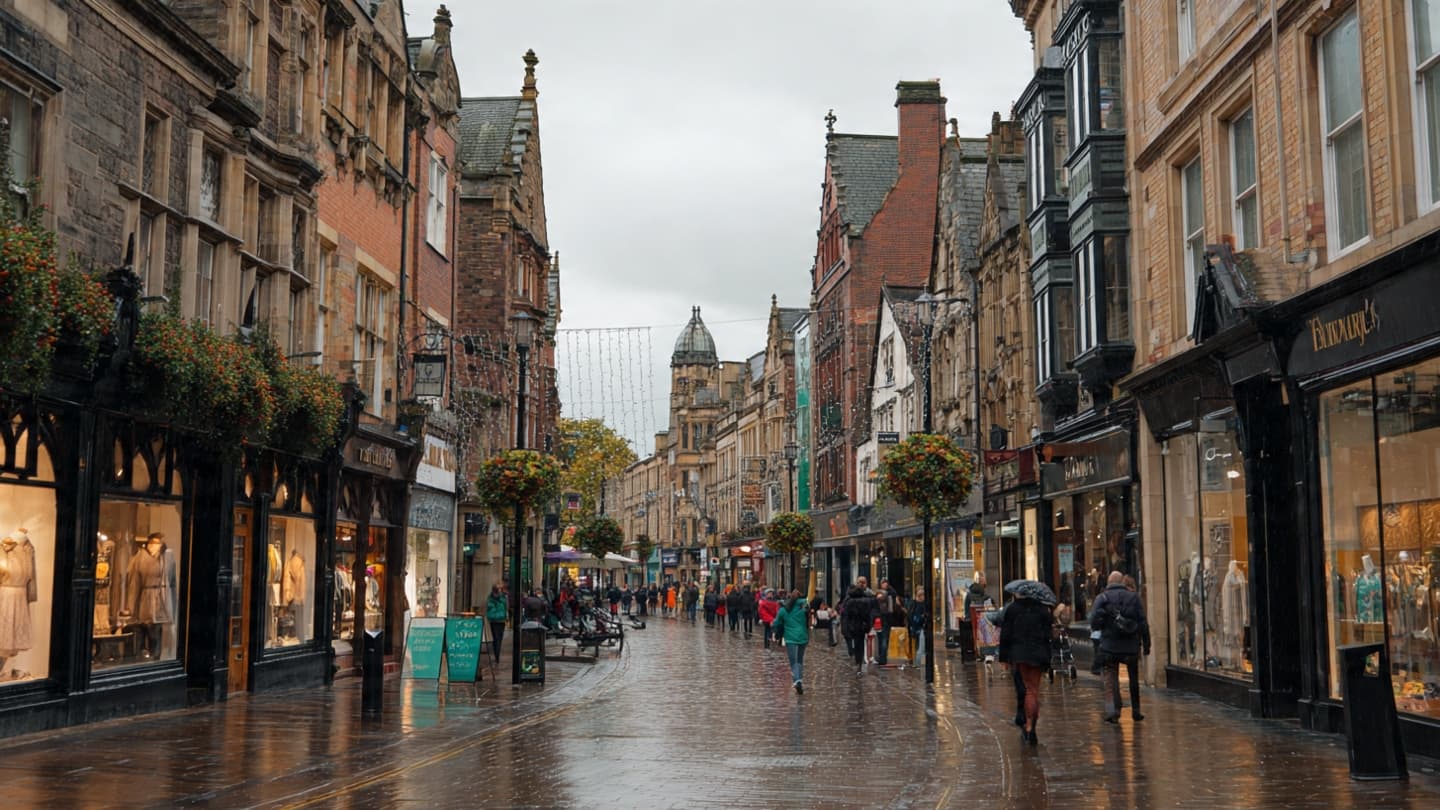
Across Britain's high streets, the rhythm of shopping can reveal something about the wider economy. A busy café, a quiet department store, or a crowded supermarket may each offer a small glimpse of how households are responding to prices and income. As summer gives way to autumn, retailers are watching those patterns closely.
Consumer spending remains an important component of Britain's economy, but households have faced several pressures in recent years. Inflation, housing costs, energy bills, borrowing expenses, and food prices have all influenced the amount of money available for discretionary purchases.
Recent economic indicators suggest that the consumer environment remains mixed. Retail activity can strengthen in some periods while weakening in others, reflecting changes in weather, seasonal spending, promotions, and household confidence.
Food and essential goods continue to account for a significant share of household spending. When prices for everyday necessities rise, consumers can have less flexibility for clothing, restaurants, entertainment, and other non-essential purchases.
Interest rates also influence household behavior. Higher borrowing costs can increase the expense of mortgages, credit, and other forms of financing, encouraging some consumers to delay larger purchases or reduce discretionary spending.
For retailers, this creates a competitive environment in which pricing has become particularly important. Discounts and promotions can attract customers, but companies must balance those strategies against the need to protect margins.
Online shopping adds another dimension. British consumers have become accustomed to comparing prices across multiple retailers, making it easier to shift purchases when another seller offers a lower price or more convenient delivery.
The transition toward autumn can be an important period for businesses. Back-to-school spending, clothing purchases, household goods, and preparations for the final months of the year can influence retail performance before the crucial holiday shopping season arrives.
Large retailers and smaller independent businesses experience these conditions differently. Bigger companies can often spread costs across extensive networks, while smaller shops may depend more heavily on local customers and narrower product ranges.
Britain's retail economy therefore enters the autumn with several forces moving at once. Household budgets remain sensitive to prices and borrowing costs, while retailers continue adjusting their strategies to changing consumer behavior. The coming months will show how strongly spending responds as the year moves toward its final quarter.
AI IMAGE DISCLAIMER
The accompanying visuals were produced using AI and are conceptual representations of Britain’s retail environment, not real photographs.
SOURCES
Reuters Office for National Statistics British Retail Consortium
Published by Banx Network. This article is part of the Banx decentralized media programme, powered by the BXE token on the XRP Ledger.