
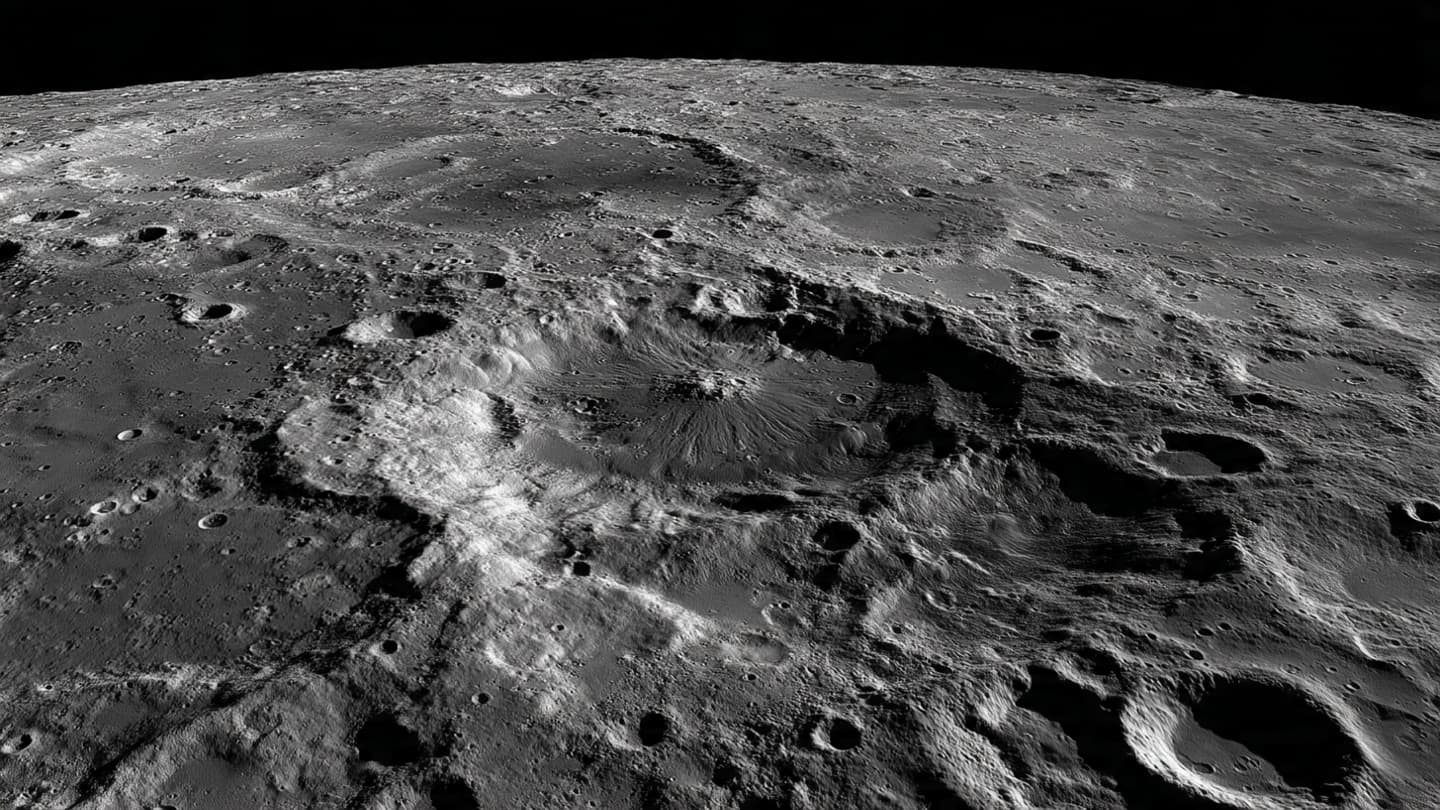
The Moon has long appeared as a familiar lantern in the night sky, yet its quiet plains continue to hold stories waiting to be uncovered. Among its many regions, Mare Vaporum, a basaltic plain shaped by ancient volcanic activity, is drawing renewed scientific attention as researchers examine its potential resource value.
Exploration of the lunar surface has increasingly shifted from simple observation toward understanding how local resources might support future missions. In that effort, scientists are studying several lunar regions for materials that could prove useful for sustained exploration.
Mare Vaporum lies between larger lunar basins and contains geological formations that offer clues to the Moon's volcanic history. The region's composition has become a subject of interest because mineral deposits and volcanic materials may provide insights into both scientific questions and practical applications.
Researchers are analyzing orbital data and remote sensing observations to identify concentrations of potentially valuable elements and minerals. Such studies help determine whether certain lunar locations could contribute to future exploration infrastructure.
The concept of in-situ resource utilization has become increasingly important in lunar planning. Rather than transporting every necessary material from Earth, future missions may rely on extracting local resources for construction, manufacturing, or life-support systems.
Mare Vaporum's geological features provide a natural laboratory for understanding how volcanic processes shaped the Moon. Ancient lava flows preserved across the surface continue to reveal information about the Moon's internal evolution and thermal history.
Scientists emphasize that identifying a promising resource region is only the first step. Detailed surveys, sample analysis, and eventual surface missions would be required before any practical use could be considered.
As international interest in lunar exploration continues to grow, studies of regions such as Mare Vaporum contribute to a broader effort to understand how the Moon's natural resources may support future scientific and exploration goals.
AI Image Disclaimer: This article includes an AI-generated illustration created for visual interpretation of lunar exploration themes.
Published by Banx Network. This article is part of the Banx decentralized media programme, powered by the BXE token on the XRP Ledger.



