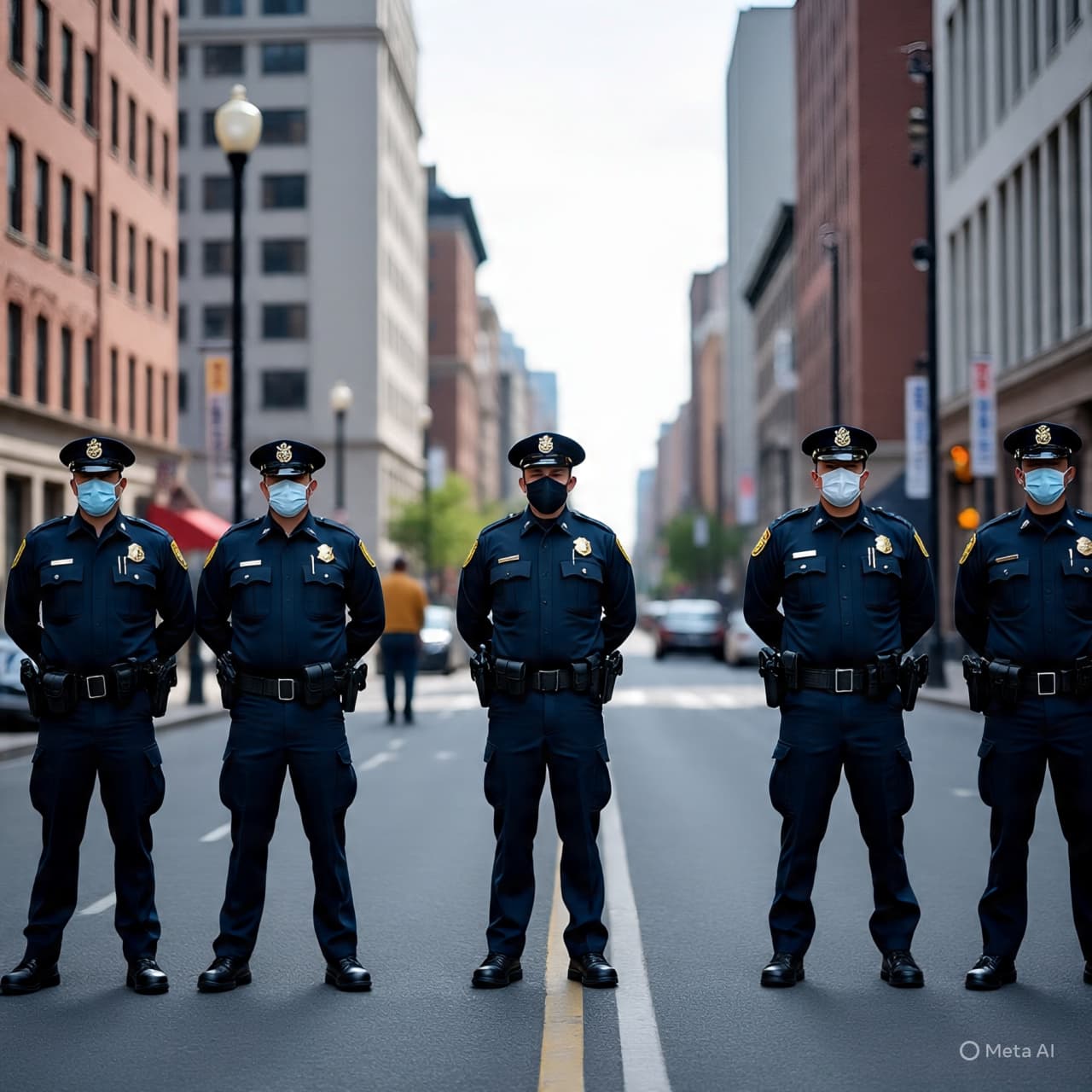
There are moments in governance when visibility becomes more than a principle—it becomes a quiet demand from the public, like light pressing through a drawn curtain. In an age where authority often arrives in uniform but not always in clarity, questions begin to gather: who stands behind the badge, and how should power present itself in the public square?
In New Jersey, that question has taken on a more concrete form. A recent directive has moved to prohibit law enforcement officers—including federal immigration agents—from wearing masks while conducting operations, unless there are specific safety or health justifications. The decision unfolds not as a sudden rupture, but as part of a broader, ongoing conversation about transparency, accountability, and public trust.
At the heart of the policy lies a simple premise: that those who enforce the law should remain identifiable to the communities they serve. Supporters of the move suggest that visible faces reinforce a sense of accountability, particularly in tense or sensitive encounters. In situations involving immigration enforcement, where fear and uncertainty often linger, the presence of masked officers has been described by some advocates as intensifying anxiety rather than ensuring safety.
The policy does not dismiss the complexities faced by law enforcement. There are allowances for circumstances where masks may still be necessary—health risks, environmental hazards, or specific operational needs. Yet the broader intention appears to gently shift the balance toward openness, suggesting that authority, when seen clearly, may carry a different kind of weight.
Federal agencies, including Immigration and Customs Enforcement, have not always operated under uniform state-level expectations. This creates a layered dynamic, where state directives intersect with federal practices. Legal observers note that such measures may invite further examination, particularly regarding jurisdictional boundaries and the extent to which states can influence federal enforcement conduct.
Still, beyond legal frameworks, there is a quieter narrative unfolding—one that speaks to perception as much as policy. In communities where trust in institutions can feel fragile, visibility becomes symbolic. A face, unobscured, can signal presence rather than distance, engagement rather than anonymity.
Critics of the measure, however, caution against oversimplification. They point to the practical realities faced by officers, including concerns about personal safety and the potential for targeted backlash. In an era of heightened tensions, anonymity can sometimes be seen not as concealment, but as protection.
As the policy begins to take shape in practice, its full impact remains to be seen. It may alter how enforcement is perceived, or it may simply become another layer in the evolving relationship between authority and the public. What remains clear is that the conversation it reflects—about visibility, trust, and responsibility—continues to unfold, quietly but persistently, beneath the surface of everyday governance.
In the end, the question is not only about masks, but about what it means to be seen—and how that visibility shapes the delicate bond between power and the people it touches.
AI Image Disclaimer Graphics are AI-generated and intended for representation, not reality.
Source Check (Credible Media Outlets): Reuters Associated Press The New York Times The Washington Post CNN
Published by Banx Network. This article is part of the Banx decentralized media programme, powered by the BXE token on the XRP Ledger.