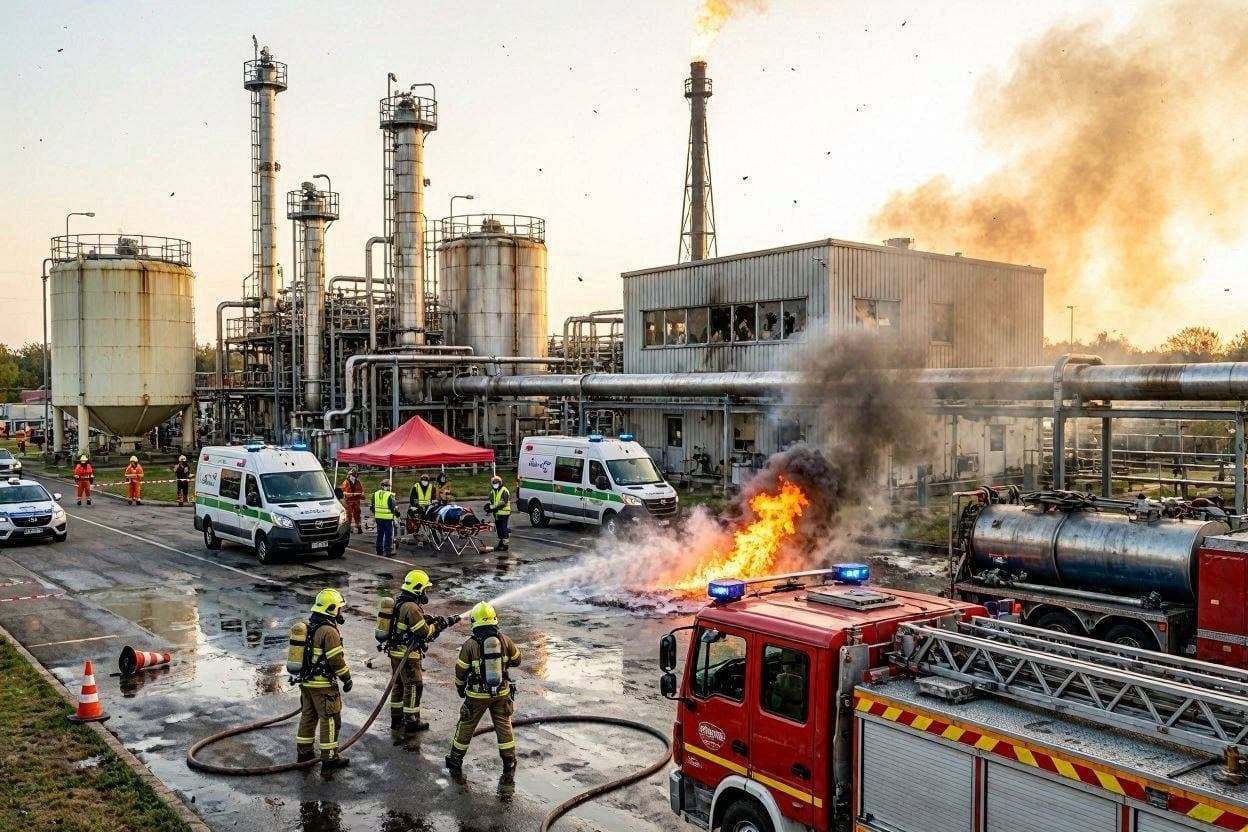
Every industrial complex is built upon a quiet promise: that technology, engineering, and careful planning will work together to provide energy while safeguarding the people who make it possible. When that promise is disrupted, attention quickly turns toward both those affected and the lessons that may emerge. Such was the case following a deadly explosion at Qatar's Ras Laffan Industrial City, one of the world's largest natural gas processing hubs.
The explosion occurred at the Barzan gas processing facility in Ras Laffan, an industrial complex that plays a significant role in Qatar's liquefied natural gas industry. Emergency services responded immediately after the blast, deploying firefighters, medical teams, and industrial safety specialists to secure the area and assist injured personnel.
Initial reports indicated that dozens of workers had been injured and that several individuals were unaccounted for during the early rescue effort. As search operations progressed, Qatari authorities confirmed that 13 people lost their lives while 66 others sustained injuries, providing a clearer picture of the tragedy. Officials emphasized that casualty figures were updated as rescue teams completed systematic searches throughout the affected facility.
Authorities stated that there was no evidence of a broader threat to surrounding communities following the incident. Emergency crews successfully contained the affected area, while environmental monitoring teams assessed air quality and nearby industrial infrastructure. Officials reported that there was no significant off-site gas leak requiring public evacuation.
Investigators have launched a comprehensive inquiry into the cause of the explosion. Engineering experts are examining processing equipment, maintenance records, operational procedures, and safety systems to determine the sequence of events that led to the accident. Authorities have not released conclusions and continue to caution against speculation while technical analysis remains underway.
The incident has drawn international attention because Qatar is among the world's leading exporters of liquefied natural gas. Energy analysts are closely monitoring whether the accident could influence production or export schedules, although government officials have indicated that broader LNG operations continue while safety inspections are conducted where necessary.
Industrial safety specialists note that large gas processing facilities operate under extensive engineering standards designed to reduce operational risks. Nevertheless, complex industrial environments require continuous maintenance, equipment monitoring, and strict adherence to safety protocols. Investigations following major incidents often contribute to improvements in industry-wide operational practices.
As recovery efforts continue, authorities remain focused on supporting the families of those affected while completing a thorough technical investigation. Officials have pledged transparency throughout the review process, emphasizing that understanding the precise cause of the explosion will be essential for strengthening safety measures across the energy sector.
AI Image Disclaimer: The accompanying illustrations are AI-generated visual representations intended to depict an industrial emergency response and are not actual images from the incident.
Sources: Reuters; QatarEnergy; Associated Press; Gulf Times
Published by Banx Network. This article is part of the Banx decentralized media programme, powered by the BXE token on the XRP Ledger.