In the cool light of an Italian winter morning, authorities in Genoa moved decisively and quietly to unravel a complex thread of financial transactions that spanned from neighbourhood centres to the Middle East. Nine people were arrested on suspicion of raising millions of euros in funds that prosecutors assert were diverted to the Palestinian militant group Hamas, all under the guise of charitable work in Italy. The operation has drawn attention not only for its scale, but for the uneasy intersection of solidarity, law, and security that it reveals in contemporary Europe.
According to prosecutors, the suspects are linked to three charitable organisations based in Italy. While these groups ostensibly collected donations to support humanitarian efforts in Gaza, the contention by law enforcement is that more than €7 million — roughly $8.2 million — was funnelled instead to entities in Gaza, the Palestinian territories, or Israel that are associated with or controlled by Hamas, an organisation designated as a terrorist group by the European Union.
Among those arrested is Mohammad Hannoun, described by prosecutors as the president of the Palestinian Association in Italy and the alleged head of an Italian cell of Hamas. Investigators say that a significant portion of the funds collected was redirected through a system of international bank transfers and other financial mechanisms, sometimes described as “triangulation operations,” to groups linked to the militant movement.
In a statement, Italy’s Interior Minister Matteo Piantedosi said the arrests had “lifted the veil” on activities that masqueraded as initiatives in favour of Palestinian populations but, authorities allege, concealed support for a terrorist organisation. Police also seized assets worth more than €8 million amid the investigation, which involved collaboration with Dutch authorities and coordination through the EU judicial agency Eurojust.
This operation unfolds against a broader backdrop of political and civic debate in Italy. The country has witnessed widespread, repeated protests over its government’s support for Israel amid the ongoing war with Hamas in Gaza — a conflict that erupted with the militant group’s attack on Israel on October 7, 2023, and has since led to tens of thousands of deaths in the enclave, according to local health authorities.
The arrests have raised questions in public discourse about the boundaries between legitimate humanitarian fundraising and illegal support for designated extremist groups. For many Italians, the notion of charitable giving for civilians in distress resonates deeply, particularly within communities with strong ties to global causes. Yet the authorities stress the importance of rigorous oversight and adherence to laws designed to prevent the funding of terrorism.
Italian prosecutors say the investigation stemmed from reports of suspicious financial activity flagged by law enforcement, prompting deeper scrutiny of bank transactions and international financial flows. The picture that emerged, they assert, links individual organisers and affiliated associations to a larger network of funding that, in their allegation, benefited Hamas beyond what could be accounted for by declared humanitarian aims.
The individuals arrested now face legal proceedings that will determine whether the funds were knowingly diverted to support activities beyond legitimate humanitarian work. Meanwhile, the government’s response, including the seizure of significant assets, underscores the continuing challenge European nations face in balancing civil society’s philanthropic impulses with obligations to enforce anti-terrorism laws.
As Italy’s courts begin to sift through complex evidence and competing narratives, this episode stands as a reminder of the delicate terrain between charity and security — and the vigilance required when public generosity intersects with the law.
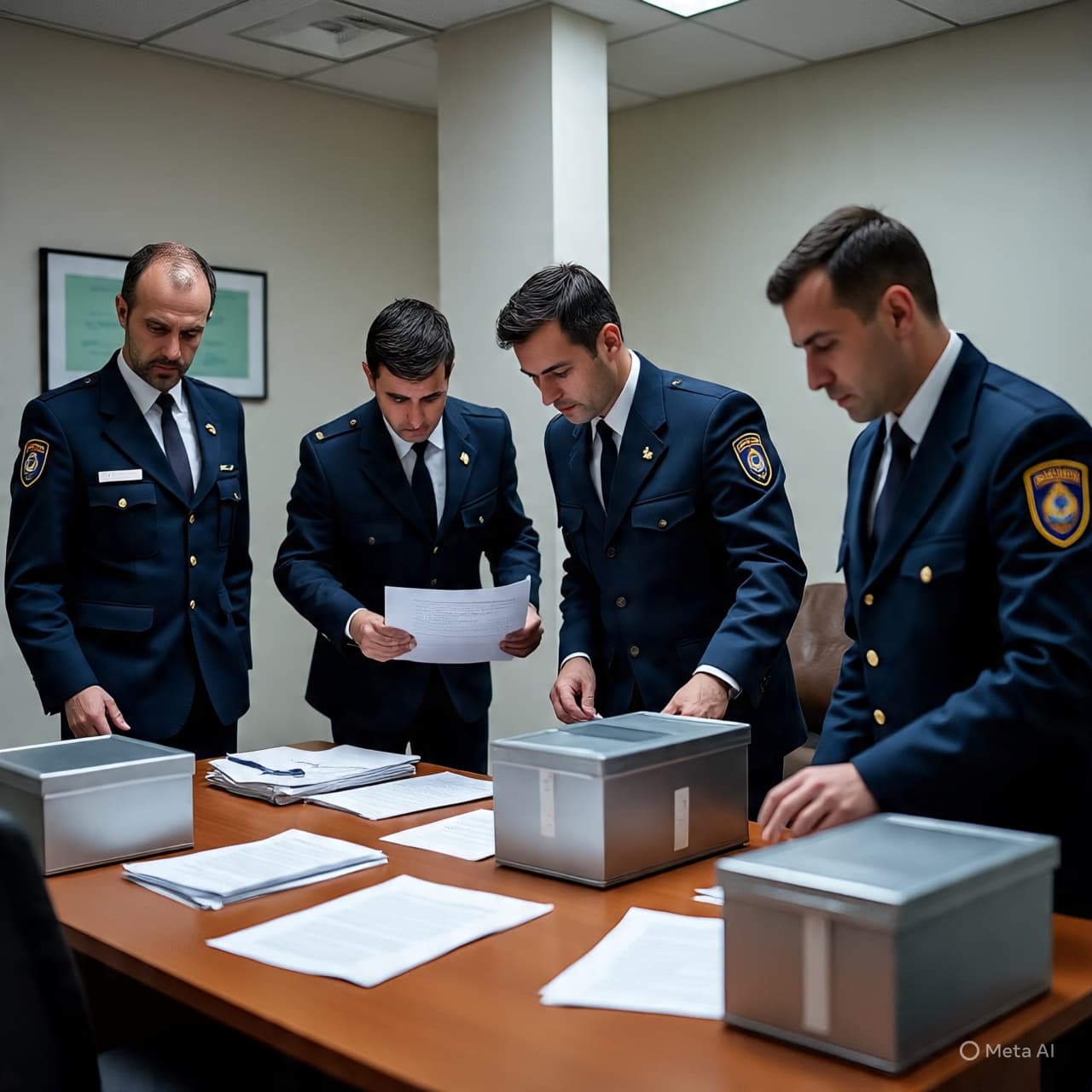
AI Image Disclaimer Visuals are created with AI tools and are not real photographs.
Sources Reuters Associated Press South China Morning Post The Independent Euronews
Published by Banx Network. This article is part of the Banx decentralized media programme, powered by the BXE token on the XRP Ledger.