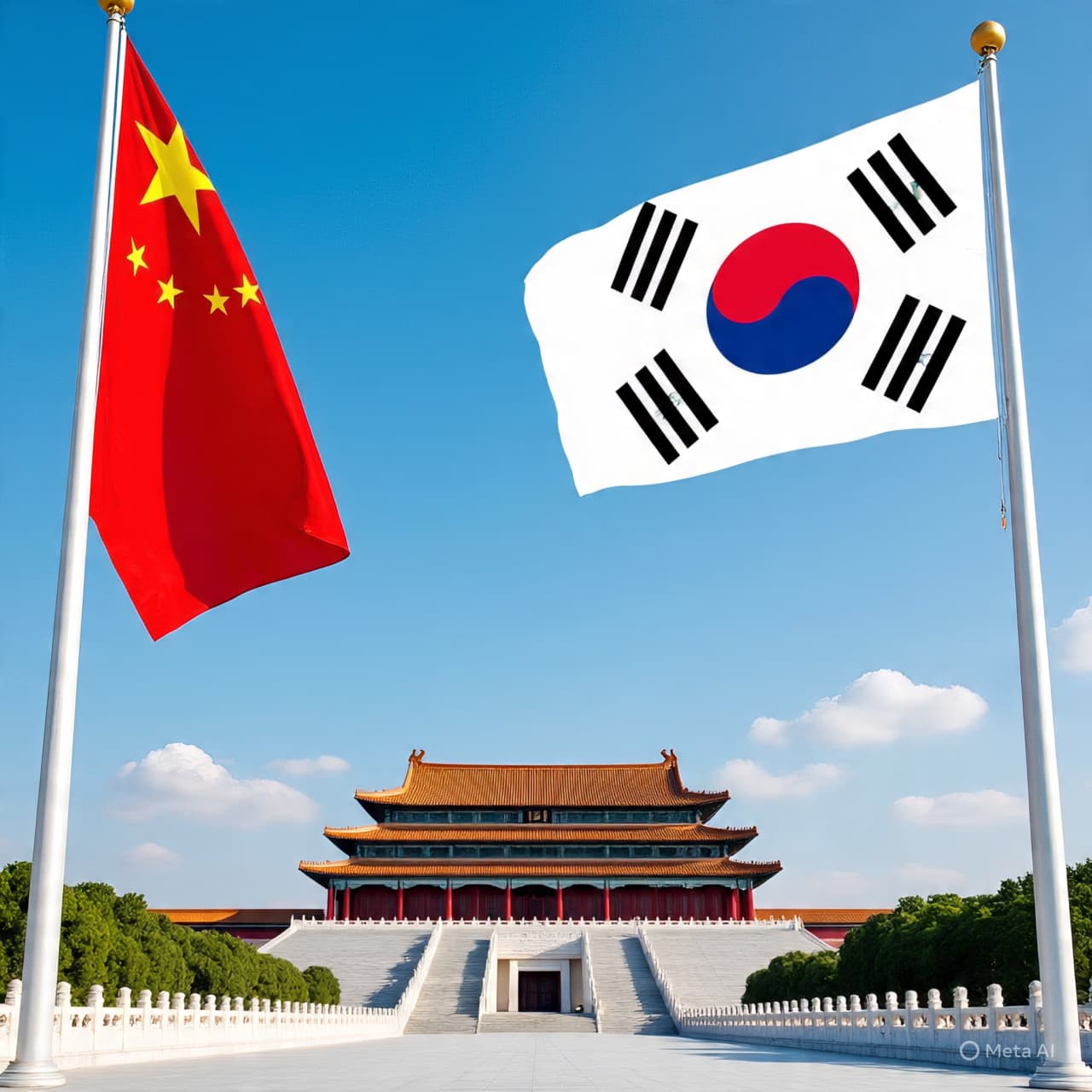
Just as winter’s quiet settles across East Asia, a familiar rhythm of diplomatic choreography is set to unfold in Beijing. On Sunday, Chinese President Xi Jinping will welcome South Korean President Lee Jae Myung for a state visit — a meeting that reads less like routine protocol and more like a carefully composed passage in a shifting regional narrative. In the subtle interplay of schedules and speeches, the capitals of Seoul and Beijing are sending signals not just to each other, but across borders — particularly toward Tokyo, where tensions over Taiwan have frayed ties. In diplomacy’s silent language, who visits whom and when often matters more than the words exchanged.
President Lee’s visit to Beijing — his second meeting with Xi in just two months — begins Sunday and comes at a moment of rising strains in China‑Japan relations, especially over discussions of Taiwan’s security. Analysts say China’s invitation is a clear step to reinforce bilateral ties with South Korea before Lee travels on to Japan later in the month.
Beijing’s eagerness reflects both strategic and economic imperatives. China remains South Korea’s largest trading partner, and Seoul sources nearly half of its rare earth minerals — crucial for semiconductors — from Chinese supply chains. In recent months, officials from both countries have signaled plans to boost cooperation in technology, green industries, and supply chain stability.
Beyond commerce, the leaders face a complex security landscape. Lee has expressed the desire to “restore” relations with China after a period of cooler ties under his predecessor, while also navigating Seoul’s alliance with Washington and ongoing concerns about North Korea’s unpredictable behavior. China, for its part, has cultivated a relationship with Pyongyang, complicating Seoul’s diplomatic balancing act.
The timing of the visit — coming before Lee’s scheduled talks in Japan — also underscores South Korea’s effort to maintain neutrality in a region where tensions over Taiwan’s future have sharpened. Japanese politicians’ remarks about potential military responses to a Chinese attack on Taiwan have chilled ties with Beijing, and Seoul’s diplomacy this week appears aimed at striking a careful balance.
Analysts say the absence of a joint communiqué after the planned Xi‑Lee talks suggests both sides are focused on substance over symbolism, aiming to deepen practical cooperation even as they manage differences. Seventeen shared agreements on economy, business, and climate cooperation are reportedly in the works, though formal announcements are expected to be modest.
This state visit, more frequent than many in recent memory, marks a phase of deliberate engagement between Seoul and Beijing. As both capitals look to recalibrate alliances and trade partnerships in a rapidly evolving Indo‑Pacific landscape, Lee’s trip to China offers a lens on how middle powers like South Korea navigate great‑power competition — and how diplomacy often advances in parallel streams of cooperation and caution.
As President Lee prepares to touch down in Beijing this Sunday, observers will watch not just what agreements are signed, but how each gesture fits into a broader pattern of regional alignment. With Japan, the United States, and North Korea all close by on the geopolitical horizon, this visit underscores how intricate and interwoven diplomacy has become in Northeast Asia.
AI Image Disclaimer “Illustrations were produced with AI and serve as conceptual depictions, not actual photographs.”
Sources Reuters The Japan Times France24 The Straits Times ModernDiplomacy
Published by Banx Network. This article is part of the Banx decentralized media programme, powered by the BXE token on the XRP Ledger.