There was a time when life had only just begun to experiment.
The continents were arranged in unfamiliar shapes, the oceans thick with microscopic organisms, and the air itself unlike anything we would recognize. No birds crossed the sky. No trees reached upward. The planet moved through its cycles quietly, bearing only the earliest architectures of living complexity beneath shallow seas.
It was in this distant world — more than 440 million years ago — that Earth experienced what scientists have long called its first mass extinction. Known as the Late Ordovician extinction, the event reshaped life in ways once thought severe but comprehensible, a dramatic contraction in biodiversity followed by gradual recovery.
Now, new research suggests that this early catastrophe may have been far worse than previously understood.
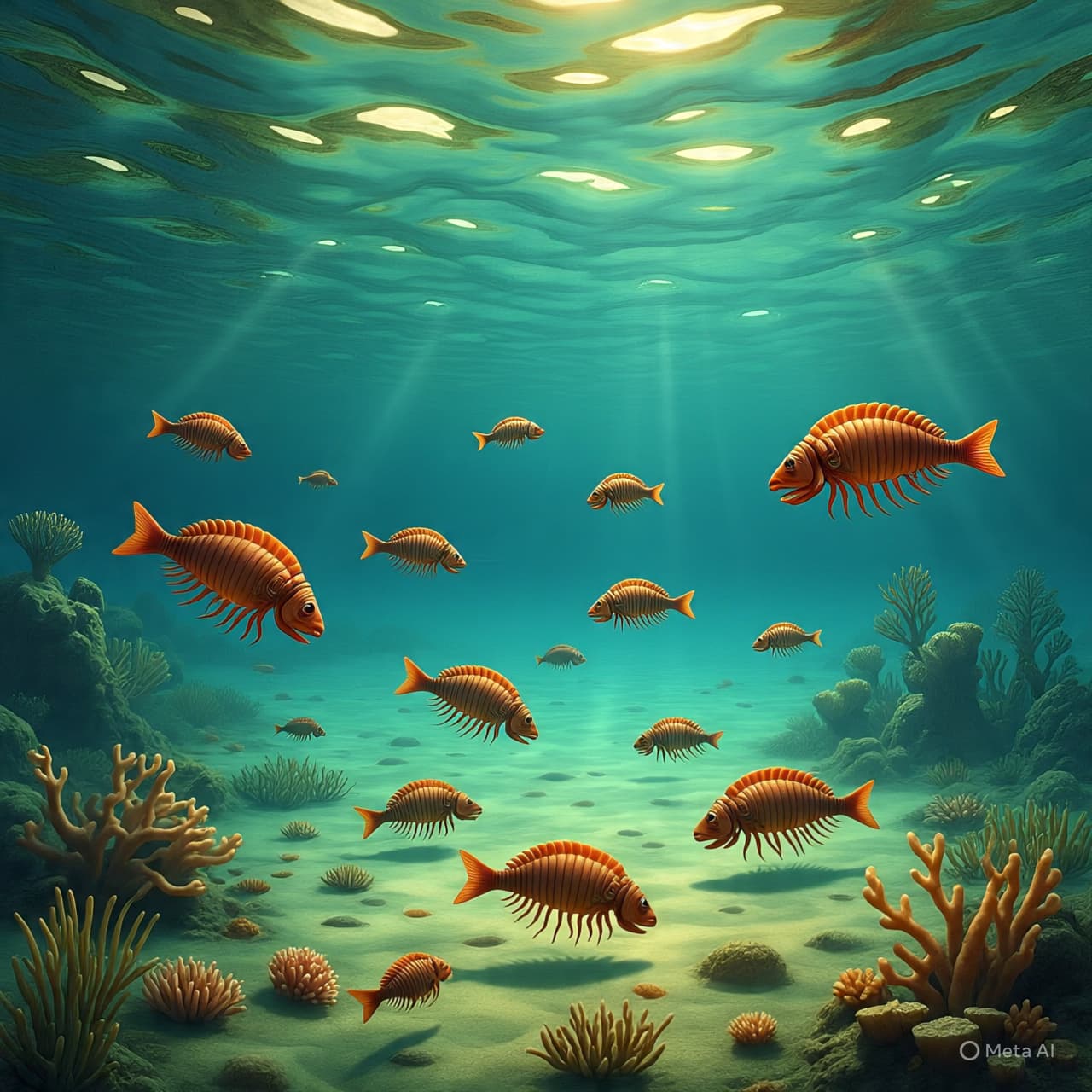
The extinction occurred during the Ordovician Period, a time when marine life flourished. Trilobites, brachiopods, and reef-building organisms populated ancient oceans. For decades, paleontologists estimated that roughly 85 percent of marine species disappeared during the crisis, largely attributed to rapid global cooling and the formation of extensive ice sheets across the southern supercontinent of Gondwana.
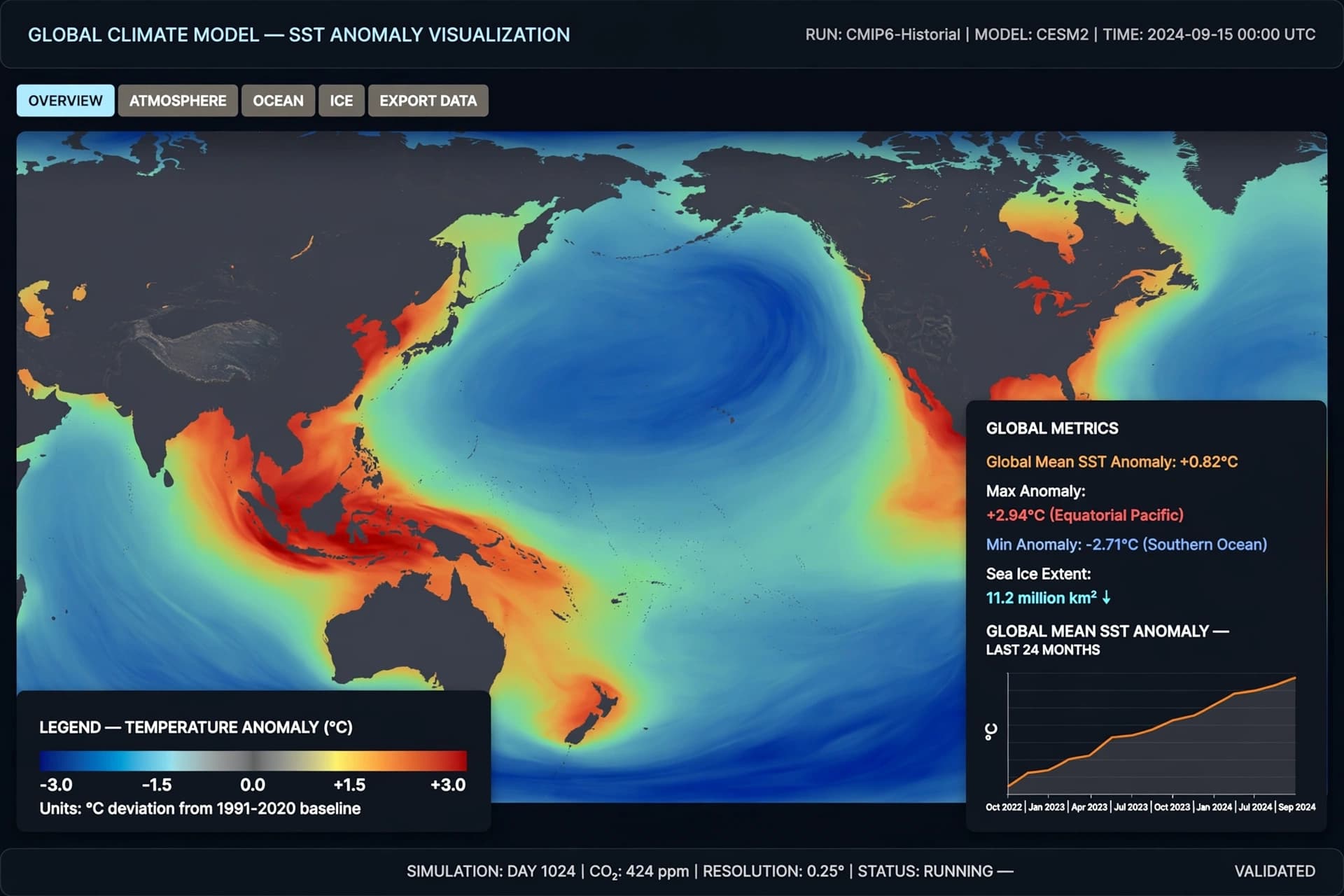
Recent analyses, however, drawing on expanded fossil databases and refined climate modeling, indicate that biodiversity loss may have been even more extensive — and more prolonged — than earlier reconstructions suggested. Some researchers argue that previous estimates underestimated the scale of ecological collapse, particularly among less easily preserved organisms and entire marine communities whose disappearance left faint traces in the geological record.
The trigger appears tied to dramatic climate instability. As global temperatures dropped, sea levels fell sharply, draining shallow marine habitats where much of Ordovician life thrived. Entire ecosystems would have been stranded or compressed into narrower environmental bands. Ocean chemistry also shifted, likely reducing oxygen levels in deeper waters and compounding stress on surviving species.
What makes this reassessment striking is not only the number of species lost, but the structural upheaval implied. Rather than a single, abrupt pulse, evidence suggests a more complex sequence of extinction waves, potentially separated by intervals of partial recovery. The biological fabric of the oceans may have unraveled in stages, each contraction altering evolutionary trajectories in ways still being mapped today.
Scientists rely on fossil assemblages preserved in sedimentary rock to reconstruct these distant events. As more global data become integrated into digital repositories, patterns once obscured by regional gaps are coming into clearer focus. The emerging picture points to an extinction event that rivaled — and perhaps exceeded — earlier assumptions about its severity.
This reexamination also reframes how we think about the fragility of early life. The Ordovician biosphere was rich but comparatively simple, dominated by marine organisms with limited mobility and narrow environmental tolerances. When climate shifted rapidly, resilience may have been thinner than once believed.
Earth has endured five major mass extinctions, each reshaping the evolutionary landscape. The Late Ordovician event stands as the first of these global crises. If current findings hold, it was not merely an early setback but a profound biological reset — one that erased much of the planet’s first great diversification of complex life.
The research, reported in leading scientific journals and covered by major science publications, draws on updated fossil records and advanced climate simulations to reassess extinction magnitude. While estimates continue to evolve, the consensus among researchers is that Earth’s earliest mass extinction was likely more devastating and ecologically disruptive than once calculated.
In the deep past, there are no eyewitnesses — only stone, chemistry, and pattern. Yet as evidence accumulates, the ancient oceans speak more clearly. Long before dinosaurs vanished, long before mammals rose, life faced its first great reckoning — and the silence that followed may have been deeper than we ever knew.
Visuals are AI-generated and serve as conceptual representations.
Sources (Media Names Only)
Nature Science New Scientist Live Science Smithsonian Magazine
Published by Banx Network. This article is part of the Banx decentralized media programme, powered by the BXE token on the XRP Ledger.