In the stillness before sunrise, military bases often exist in a suspended hour—lights humming softly, boots tracing familiar paths across gravel, radios murmuring in low tones. Beyond the perimeter fences, the landscape keeps its own counsel, sand and stone holding the night’s coolness as if reluctant to surrender it to day.
It was in such hours that an operation unfolded, one thread in the widening tapestry of confrontation between the United States and Iran. By the time daylight reached Washington, officials confirmed that American troops had been killed during the mission. Details emerged carefully, measured in phrases that balanced clarity with restraint. The names were withheld pending notification of families, a pause that speaks to the intimate gravity behind public statements.
The operation, according to defense officials, was part of a broader campaign aimed at Iranian-linked targets in the region. Aircraft moved across contested airspace; defensive systems stood ready in anticipation of reprisal. In the exchange that followed, U.S. forces came under fire. The Pentagon later confirmed that service members had lost their lives amid the escalation.
Such moments compress vast geopolitical tensions into singular events. Maps marked with arrows and coordinates suddenly narrow to the dimensions of a convoy route or a fortified compound. The language of strategy—deterrence, response, proportionality—meets the quieter vocabulary of duty and loss.
Iranian officials characterized the confrontation as resistance to foreign military pressure, while U.S. leaders described their actions as necessary to protect personnel and regional stability. Between those positions lies a region long accustomed to indirect conflict—proxy engagements, shadow operations, and calibrated signals. Yet in recent days, the exchanges have grown more overt, less easily confined to the margins.
Military analysts note that the presence of U.S. troops across parts of the Middle East has always carried inherent risk, particularly during periods of heightened tension. Bases are fortified, intelligence networks active, and contingency plans rehearsed. Still, unpredictability is an enduring feature of such deployments. A single strike, a miscalculation, or a shift in tempo can alter the course of events in an instant.
For families at home, the confirmation of casualties travels differently than for policymakers or strategists. It arrives not as a headline, but as a knock at the door, as uniforms in quiet formation, as words delivered with solemn precision. The distance between a desert outpost and a suburban street is measured less in miles than in the space between routine and rupture.
In Congress, lawmakers from both parties expressed condolences and called for briefings on the scope and objectives of the ongoing operation. Some urged caution against further escalation; others emphasized resolve. Markets watched for signs of prolonged instability, mindful of the region’s role in global energy flows. Diplomats in allied capitals renewed calls for restraint, aware of how quickly localized clashes can widen.
As evening returns to the bases where the operation began, the routines resume in altered form. Flags may lower. Units gather. Equipment is checked and rechecked. The horizon looks much as it did before—flat, expansive, indifferent. Yet something intangible has shifted.
The deaths of U.S. troops during the Iran operation mark more than a tactical development; they represent a human cost etched into a landscape already layered with history. As officials weigh next steps and statements circulate across time zones, the deeper reckoning unfolds quietly—in households, in barracks, in the shared recognition that even distant conflicts leave near and lasting traces.
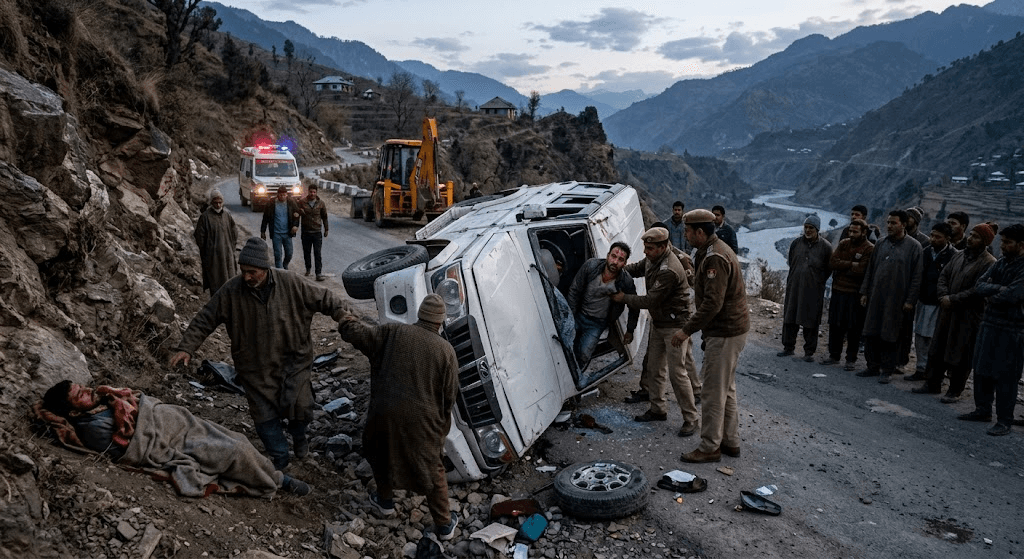
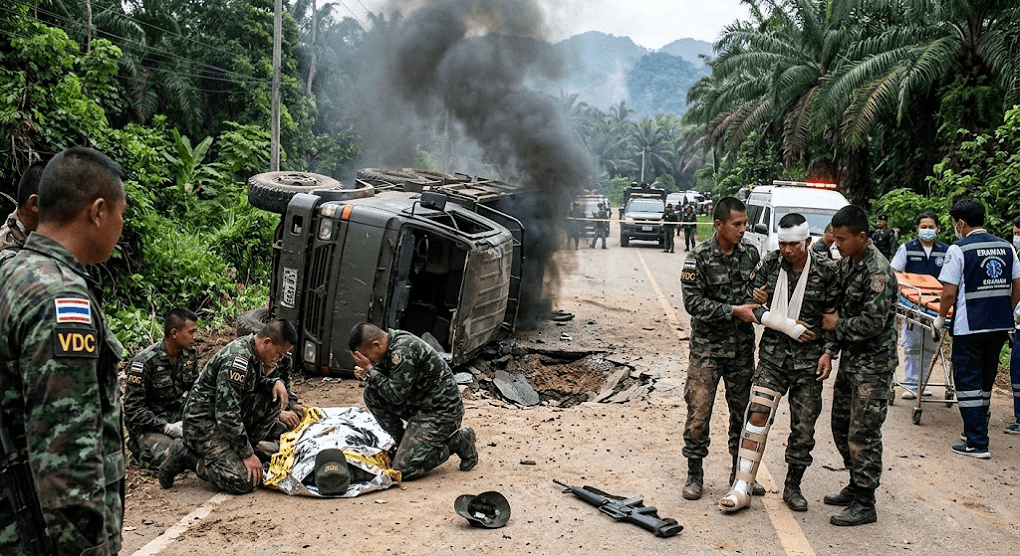
AI Image Disclaimer Visuals are AI-generated and serve as conceptual representations.
Sources U.S. Department of Defense Reuters Associated Press BBC News The New York Times
Published by Banx Network. This article is part of the Banx decentralized media programme, powered by the BXE token on the XRP Ledger.