The Great American Biotic Interchange is often taught as a singular event, triggered by the formation of the Isthmus of Panama three million years ago. This land bridge supposedly allowed animals to migrate freely between North and South America for the first time. However, new paleontological findings are rewriting this timeline. Evidence suggests that mammals were crossing between the two continents long before the isthmus fully formed, using island chains and temporary land connections. This earlier exchange reshapes our understanding of continental drift and biological migration, revealing a more porous boundary between the Americas.
Geological records indicate that the gap between North and South America was not always an impassable ocean. During periods of lower sea levels, volcanic islands and shallow reefs created stepping stones for adventurous species. Fossils of procyonids (raccoon relatives) and caviomorph rodents found in North America date back to the Oligocene epoch, millions of years before the final closure of the seaway. These discoveries imply that intermittent crossings were possible and perhaps even common.
The implications for evolutionary biology are significant. If mammals could cross earlier, then the distinct faunas of North and South America were not as isolated as once thought. Genetic mixing may have occurred in waves, influencing the development of species on both continents. This gradual interchange challenges the idea of a sudden, dramatic swap of ecosystems, suggesting instead a slow, continuous flow of life.
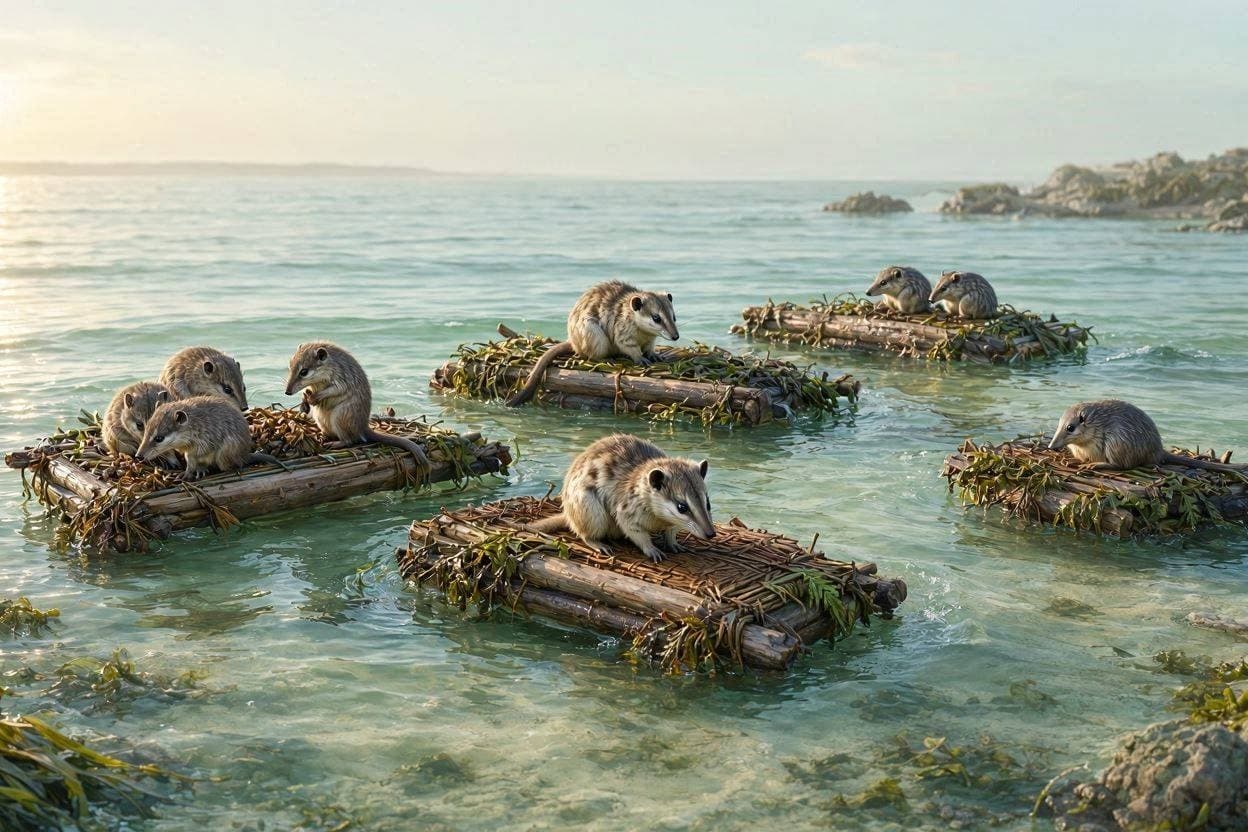
Marine mammals and swimming capabilities also played a role. Some small mammals may have rafted on vegetation mats, drifting across narrow straits during storms. While risky, this method of dispersal has been observed in modern times and likely contributed to the early colonization of islands. The resilience of these travelers underscores the determination of life to expand its range.
The final formation of the Isthmus of Panama certainly accelerated migration, leading to the well-documented exchange of large mammals like sloths, armadillos, and cats. But this event was the culmination of a process that had already begun. Recognizing the earlier crossings provides a more nuanced view of biogeography, where barriers are relative and opportunities are seized by those willing to take the risk.
Climate change also influenced these migrations. Fluctuations in global temperatures affected sea levels and vegetation patterns, creating windows of opportunity for movement. Understanding these historical climate dynamics helps scientists predict how current changes might affect species distribution in the future. The past serves as a guide for navigating the ecological challenges of the present.
For researchers, this revised timeline opens new avenues for exploration. Fossil sites in Central America and the Caribbean are being re-examined for evidence of early migrants. Each discovery adds a piece to the puzzle, filling in the gaps of a story that spans millions of years. The narrative of the Americas is one of connection, not just separation.
The discovery that mammals crossed between North and South America millions of years before the continents joined highlights the complexity of Earth’s geological and biological history. It reminds us that nature finds ways to bridge divides, long before human maps define them. In the slow dance of continents, life has always been on the move.
AI Image Disclaimer: The images associated with this article are AI-generated illustrations designed to represent the themes of paleobiogeography and continental drift.
Sources: Science Advances, Nature Communications, Smithsonian Institution, University of Florida News
Published by Banx Network. This article is part of the Banx decentralized media programme, powered by the BXE token on the XRP Ledger.