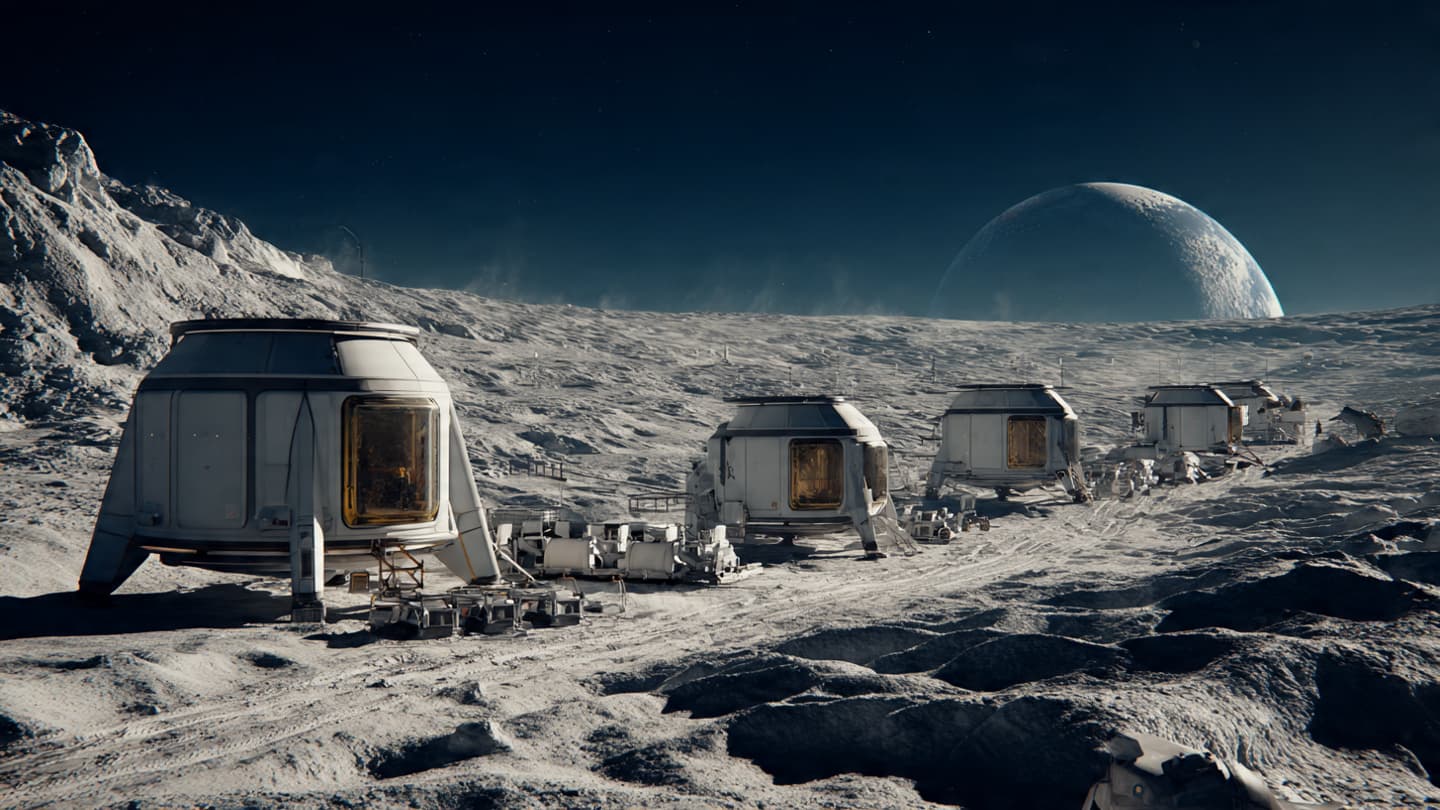
For generations, the vision of humanity returning to the moon has often been framed through the image of astronauts planting boots into pale dust beneath a dark sky. Yet as space exploration enters a new era, another possibility is taking shape more quietly: before humans settle permanently beyond Earth, machines may prepare the way long in advance.
A Colorado-based startup recently attracted significant investment after raising $30 million to develop robotic systems intended for lunar construction and infrastructure work. The company’s approach reflects a growing belief within the aerospace industry that robots, rather than astronauts alone, may handle the earliest and most dangerous stages of building a lasting moon base.
The idea is rooted in practicality. Conditions on the moon remain harsh and unpredictable, with extreme temperatures, radiation exposure, and abrasive lunar dust creating major risks for human crews. Robots can operate for extended periods without life-support systems, making them attractive tools for repetitive or hazardous tasks.
Industry analysts say robotic preparation could include transporting materials, assembling structures, excavating lunar soil, and preparing energy systems before astronauts arrive. Similar technologies are already being tested through autonomous machines used in mining, manufacturing, and remote exploration projects on Earth.
The funding also reflects renewed global interest in lunar missions. Government agencies and private companies alike are investing heavily in moon exploration, viewing the lunar surface as both a scientific frontier and a possible stepping stone for future missions deeper into space. NASA’s Artemis program, alongside international and commercial initiatives, has helped accelerate this momentum.
Advances in artificial intelligence and robotics are playing an increasingly important role in that transition. Modern autonomous systems can now navigate difficult terrain, perform precision tasks, and adapt to changing environments with minimal human intervention. Supporters argue that these capabilities may reduce mission costs while improving safety for astronauts.
Still, researchers acknowledge that many technical challenges remain unresolved. Lunar construction would require machines capable of operating reliably in low gravity and surviving long periods of isolation. Communication delays, mechanical wear, and energy limitations continue to pose serious engineering obstacles.
Even so, the investment signals how space exploration is gradually evolving from symbolic achievement into long-term planning. The first permanent structures on the moon may not emerge through dramatic televised moments alone, but through years of careful robotic labor carried out beneath a distant and silent horizon.
AI Image Disclaimer: Several accompanying visuals in this article may contain AI-generated interpretations created to illustrate future lunar technologies.
Sources: Reuters, TechCrunch, SpaceNews, Ars Technica, CNBC
Published by Banx Network. This article is part of the Banx decentralized media programme, powered by the BXE token on the XRP Ledger.