Great scientific instruments rarely begin their journeys in silence. Before groundbreaking discoveries can emerge, years of preparation, testing, and verification are required. For researchers involved in the Square Kilometre Array Observatory, that preparatory phase is now approaching a significant milestone.
Scientists from around the world are preparing for the first science verification campaign associated with the SKA Observatory, a crucial step intended to confirm the performance and scientific readiness of the world's largest radio telescope.
Science verification campaigns serve as comprehensive assessments designed to ensure that observational systems operate according to expectations. Researchers will use these initial observations to test instruments, data pipelines, and analytical methods.
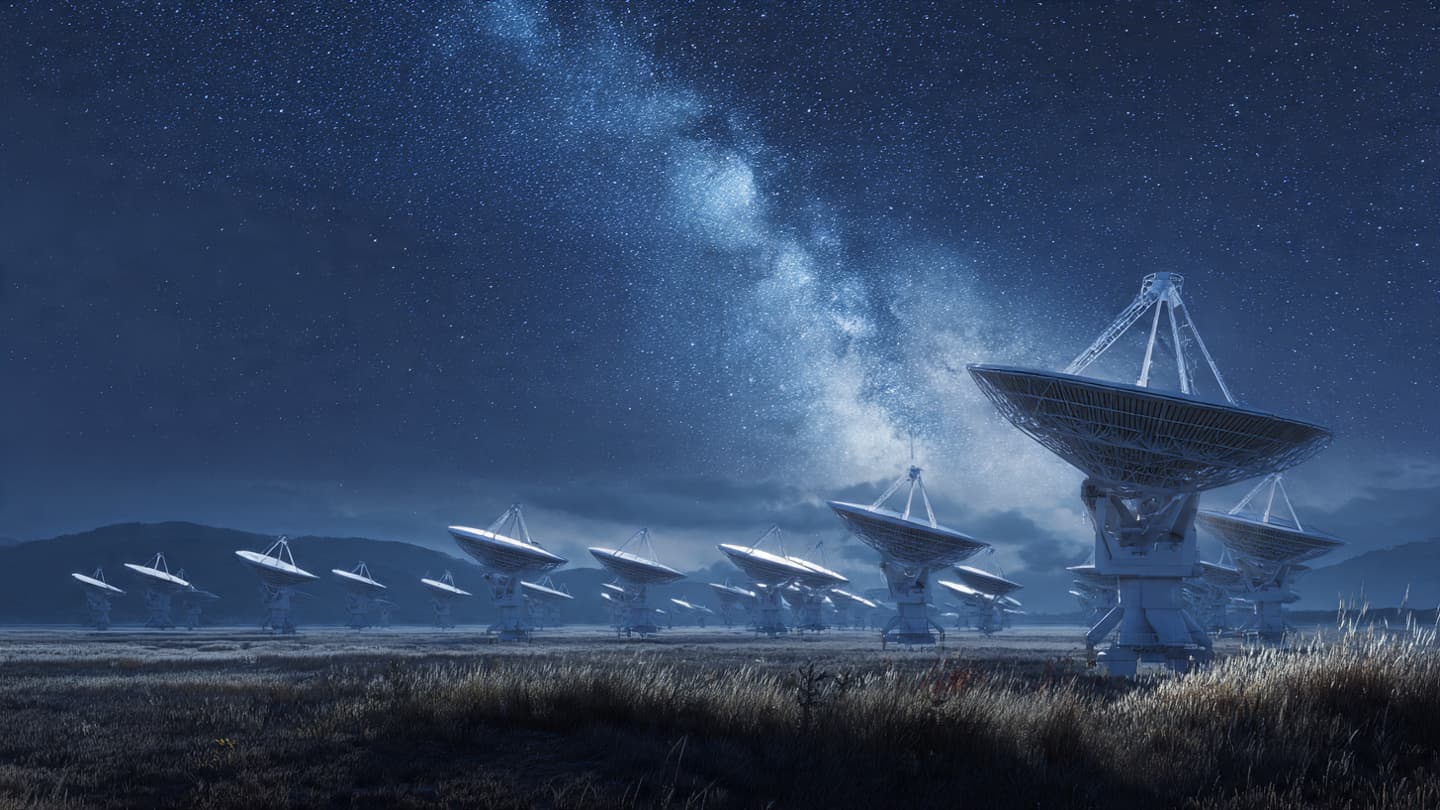
The SKA Observatory, with facilities located in Australia and South Africa, will ultimately consist of thousands of antennas working together as a single powerful radio telescope. Its unprecedented sensitivity is expected to open new frontiers in astrophysical research.
During the verification campaign, scientists will observe selected astronomical targets whose properties are already well understood. Comparing new measurements with established observations will help researchers evaluate system accuracy and reliability.
Researchers are particularly interested in assessing the observatory's ability to detect faint radio emissions originating from distant galaxies, pulsars, and interstellar gas clouds. Successful verification will pave the way for full-scale scientific operations.
The campaign also provides an opportunity to refine data-processing systems. Given the extraordinary volumes of information expected from SKA observations, efficient computational infrastructure remains essential.
International cooperation continues to define the project. Hundreds of institutions and thousands of scientists have contributed to designing, constructing, and preparing the observatory for operation.
As the first verification observations draw closer, anticipation within the astronomical community continues to grow. Scientists hope the campaign will mark the beginning of a new era in radio astronomy and lead to discoveries that deepen humanity's understanding of the universe.
AI Image Disclaimer: Images featured in this article are AI-generated visualizations intended for illustrative and educational use.
Sources Verified: SKA Observatory, Nature Astronomy, Reuters, peer-reviewed astronomy publications
Published by Banx Network. This article is part of the Banx decentralized media programme, powered by the BXE token on the XRP Ledger.