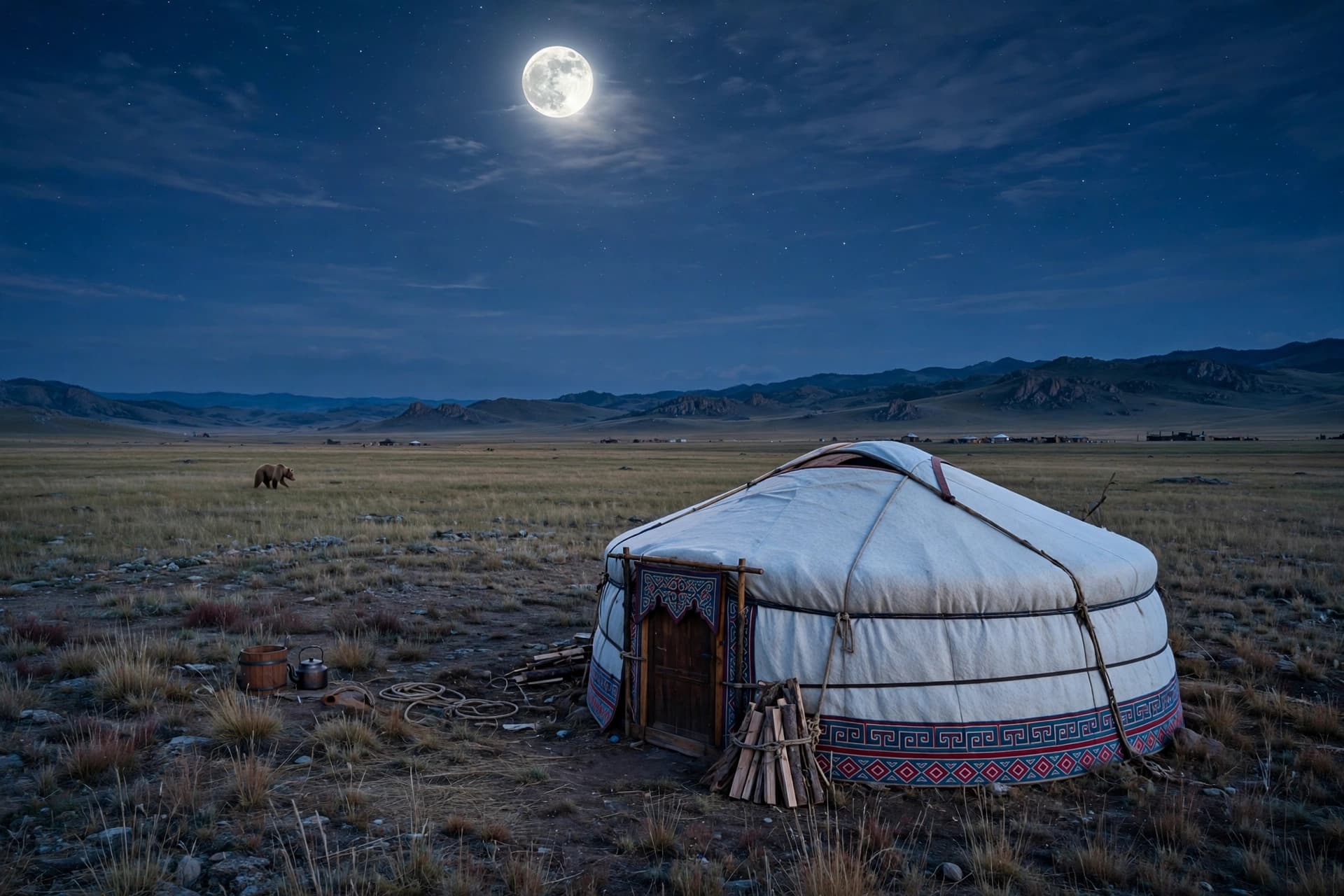
There is a particular sorrow that settles over a community when the wild enters the home—a sorrow made heavier by the knowledge that the boundary between human and animal worlds, which we treat as fixed, is in fact porous, and that the forces pushing animals toward us are often of our own making. In Ulaanbaatar, Mongolia, that sorrow has arrived. A bear attacked a family inside their ger—the traditional nomadic tent-like structure that many Mongolians call home—in the Bayanzurkh district on the outskirts of the capital. A man in his forties was killed. A woman in her fifties was seriously injured and remains in hospital with severe facial wounds .
The attack occurred overnight, around 1 a.m. on Wednesday, in an area called Burkhantyn Khoshuu, near Dugan Monastery, a location away from the main urban settlement. The bear entered the ger and attacked the occupants. The woman managed to escape and raise the alarm with neighbors; the man's body was found near the home. A team of 35 rangers was dispatched to track the bear, and it was shot and killed later that day .
What makes this tragedy particularly significant is the context in which it occurred. Bear sightings in and around Mongolian residential areas have increased dramatically in recent years. In 2018, there were just two confirmed sightings near the capital. By 2026, that number had risen to 24 in Ulaanbaatar alone. Nationwide, at least 754 bear sightings have been reported since spring, with more than 80 percent involving cubs or female bears accompanied by cubs .
Experts attribute the increase to several factors. Climate change has disrupted the bears' natural habitats, leading to food shortages. The overexploitation of natural resources has pushed bears closer to human settlements. And in at least one case, a bear that was killed in Khentii province was found to have an empty stomach—evidence of the desperation driving them toward human habitation. In response, the government banned the harvesting of nuts and berries from mountain areas for the rest of the year, and bear-hunting permits have been issued in eight provinces .
The attack is a reminder that human-wildlife conflict is not confined to remote wilderness. It reaches into the places where people live, sleep, and feel safe. For the family in Bayanzurkh, the ger that was meant to be a shelter became the site of a tragedy. For Mongolia, the death is a signal that the pressures on wildlife and the pressures on people are connected—and that addressing one without the other will not be enough.
AI Image Disclaimer: All images in this article are AI-generated and are intended for illustrative purposes only.
Sources: BBC, Xinhua, Sohu, Mail.ru
Published by Banx Network. This article is part of the Banx decentralized media programme, powered by the BXE token on the XRP Ledger.