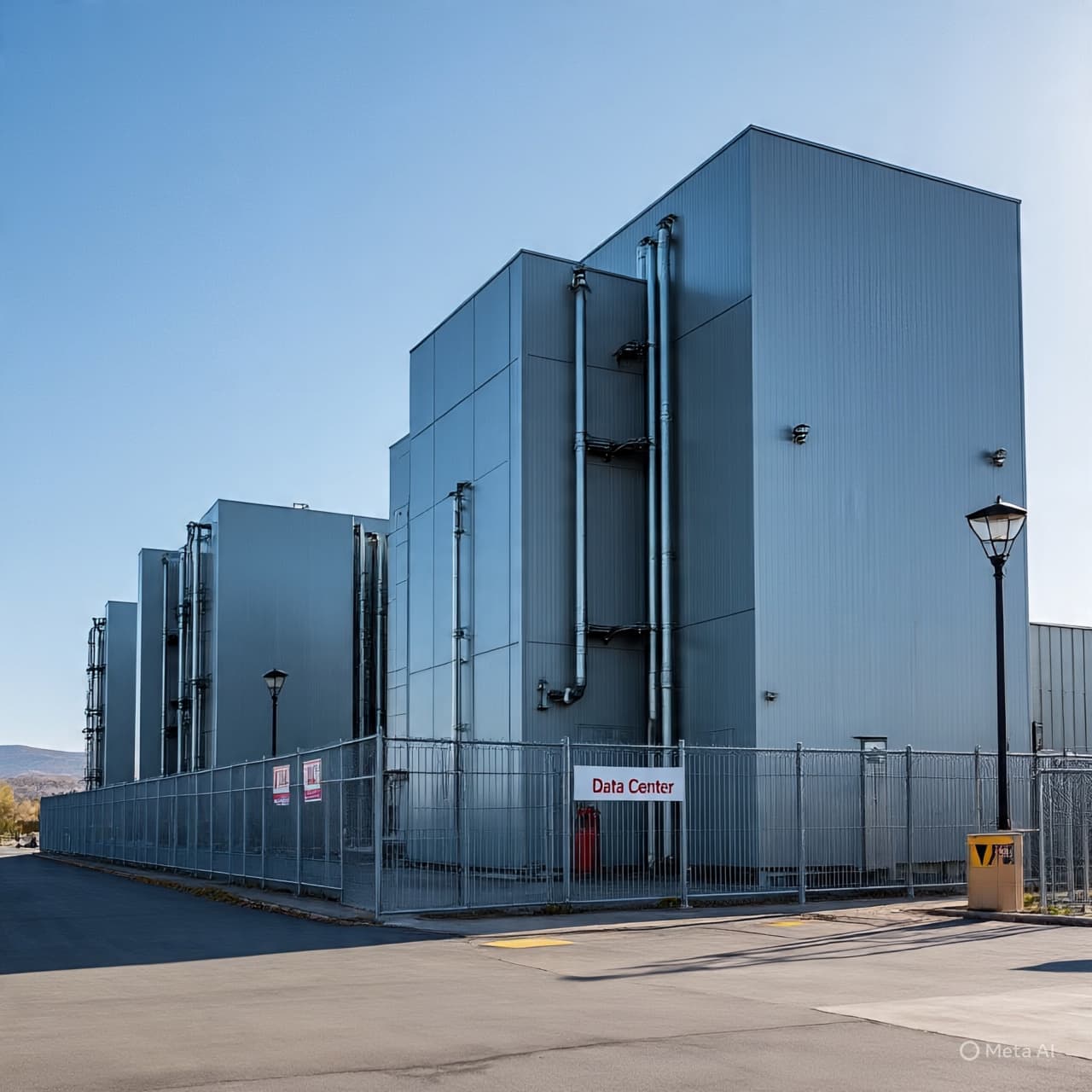
In the race to build the infrastructure behind artificial intelligence, speed has become as important as strategy. Across the United States, vast data centers are rising to meet the growing demand for computing power, each one dependent on a steady flow of advanced semiconductors. Now, policymakers in Washington are weighing whether trade policy could slow that expansion.
The White House is considering easing the impact of proposed tariffs on imported chips for some of the country’s largest technology companies, including Amazon, Google, and Microsoft. The goal, according to officials familiar with the discussions, is to avoid disrupting the rapid construction and expansion of AI data centers that rely on specialized hardware sourced from global supply chains.
The debate reflects a broader tension at the heart of U.S. economic policy. On one hand, tariffs are intended to strengthen domestic manufacturing and reduce dependence on foreign suppliers. On the other, the United States is seeking to maintain its leadership in artificial intelligence, a field where access to cutting-edge chips is critical and delays can translate into competitive disadvantage.
Cloud providers and technology firms have invested heavily in AI infrastructure over the past two years, building facilities designed to support large-scale machine learning, generative AI, and enterprise computing services. These projects often require high-performance processors and graphics units that are produced primarily outside the United States.
Officials are concerned that broad tariffs on imported semiconductors could raise costs, slow procurement, or complicate long-term planning for projects already underway. Exemptions for major cloud and platform companies are being explored as a way to protect strategic AI development while broader trade measures move forward.
The discussions also highlight how artificial intelligence has reshaped the definition of critical infrastructure. Data centers, once viewed mainly as commercial facilities, are now increasingly tied to national competitiveness, economic growth, and technological leadership.
At the same time, the possibility of targeted relief for large technology firms could draw scrutiny from policymakers and industry groups who argue that trade policy should apply evenly or prioritize domestic chip producers. The semiconductor sector has been at the center of recent industrial policy efforts aimed at expanding U.S. manufacturing capacity.
Any final decision would need to balance multiple priorities: supporting domestic industry, maintaining global supply flexibility, and ensuring that AI development is not slowed by unintended policy effects.
For the technology sector, the stakes are immediate. AI services continue to expand across industries, driving demand for computing capacity at a pace that has strained supply chains and accelerated infrastructure investment.
For Washington, the moment reflects a larger shift. Trade policy is no longer only about goods and deficits. Increasingly, it is also about the pace of innovation.
As the administration weighs its options, the outcome will signal how the United States intends to manage the intersection of economic protection, global supply dependence, and the urgent competition to build the systems that will power the next era of computing.
Published by Banx Network. This article is part of the Banx decentralized media programme, powered by the BXE token on the XRP Ledger.