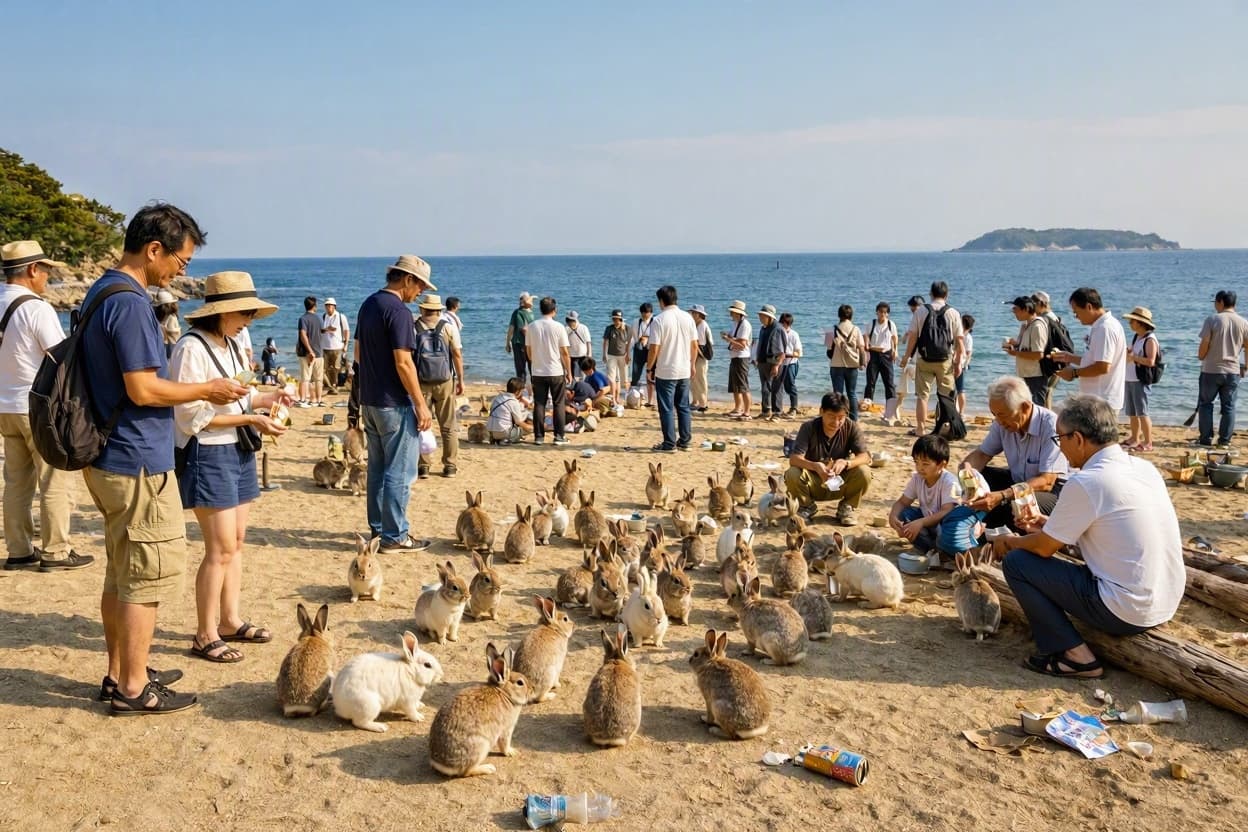
On a small island in Japan’s Seto Inland Sea, silence is no longer the default. Okunoshima, once a quiet refuge known for its dark history and serene landscapes, has transformed into a bustling destination where hundreds of free-roaming rabbits chase visitors for food. This shift from tranquility to chaos mirrors a broader trend sweeping across Japan, where the allure of unique cultural and natural experiences has led to an influx of tourists that threatens to overwhelm local ecosystems and communities. The "rabbit island" has thus become a poignant symbol of the delicate balance between appreciation and exploitation.
The island, located off the coast of Hiroshima, was originally a site for chemical weapons production during World War II, a past largely erased from public memory until recent decades. Today, it is defined by its population of over 1,000 rabbits, which were introduced for various reasons, including as test subjects and later as pets. Their proliferation, fueled by tourist feeding, has created a scene that is both charming and concerning. The rabbits, accustomed to human interaction, often swarm visitors, leading to issues of overfeeding and aggressive behavior.
Conservationists warn that the constant supply of human-provided food is altering the rabbits' natural diet and health. The island’s vegetation has been stripped bare in many areas, leaving the soil vulnerable to erosion. Furthermore, the presence of wild boars, attracted by the same food sources, has introduced a new threat to the rabbit population. The ecosystem, once balanced, is now skewed by the sheer volume of human activity and the artificial sustenance it provides.
Local authorities are grappling with how to manage the surge in visitors. In 2024, nearly 195,000 people visited the island, a number that strains its limited infrastructure. Littering, noise, and disrespect for local guidelines have become common complaints. In response, the city of Takehara is considering the introduction of a tourist tax to fund conservation efforts and improve facilities. This measure aims to mitigate the negative impacts of overtourism while preserving the island’s unique character.
The situation on Okunoshima reflects a wider challenge facing Japan’s tourism industry. Popular sites like Kyoto’s bamboo groves and Tokyo’s historic districts are experiencing similar pressures. The government has begun to implement strategies to disperse tourists to less-visited regions, but the pull of iconic destinations remains strong. The rabbit island serves as a microcosm of this national struggle, highlighting the need for sustainable tourism practices.
Efforts to educate visitors are underway. Signs urging tourists to refrain from feeding the rabbits inappropriate foods and to respect their space are increasingly visible. Volunteer groups also assist in cleaning up litter and monitoring the rabbits’ health. These initiatives rely on the cooperation of tourists, who are encouraged to view themselves as stewards rather than just consumers of the experience.
For many visitors, the encounter with the rabbits remains a highlight of their trip. The innocence and curiosity of the animals offer a moment of connection with nature. However, this joy must be tempered with responsibility. The long-term survival of the rabbit population and the integrity of the island depend on a shift in behavior from both locals and tourists.
Okunoshima’s transformation underscores the complex relationship between tourism and conservation. As Japan navigates the challenges of overtourism, the rabbit island stands as a reminder that preservation requires careful management and a collective commitment to sustainability.
AI Image Disclaimer: Please note that any accompanying illustrations for this piece are AI-generated representations intended to evoke the mood of the described events.
Sources: The Globe and Mail, Soranews24, The Straits Times, Japan Travel
Published by Banx Network. This article is part of the Banx decentralized media programme, powered by the BXE token on the XRP Ledger.