At a diplomatic gathering in the serene halls of The Hague, European leaders and Ukraine’s president took a significant step toward addressing the vast devastation left by years of war. On December 16, 2025, representatives from more than 30 countries, supported by the Council of Europe, formally established an International Claims Commission designed to assess and eventually help compensate Ukraine for the destruction of homes, infrastructure and livelihoods since Russia’s full-scale invasion began in early 2022.
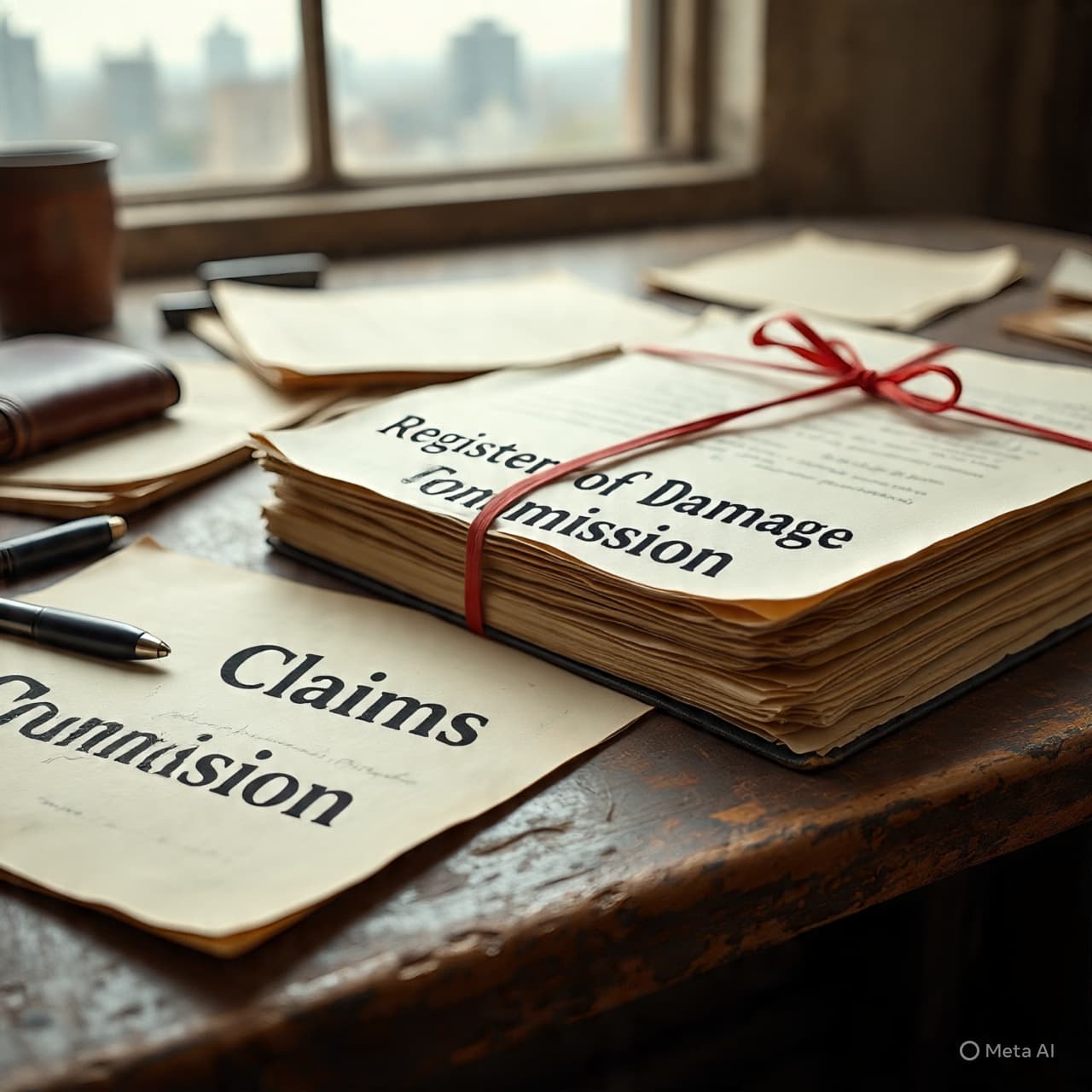
This body — born of a treaty signed in The Hague — builds on an existing Register of Damage that has already collected over 80,000 claims from individuals, businesses and public entities seeking redress for war-related loss. While the commission offers a structured mechanism for validating damage and quantifying compensation, it also reflects a broader drive among European states to uphold justice, accountability and long-term recovery for Ukraine.
Ukrainian President Volodymyr Zelenskyy, present for the launch alongside European counterparts, underscored the moral and legal imperative of holding Russia financially responsible for what Kyiv and its allies describe as extensive material and human damage. The commission is intended to give meaning to that principle by translating record-keeping on loss into an internationally recognized claims-processing system.
Yet the initiative also confronts difficult practical questions. While the commission for the first time provides a formal forum to adjudicate tens of thousands of claims, how the payouts will be funded remains subject to negotiation. Proposals discussed by European policymakers include leveraging the vast amounts of Russian state assets frozen in Europe as a potential source of compensation — though clear legal mechanisms for seizing or redirecting those funds are still unresolved.
Supporters say this commission is more than an administrative body: it is a symbol of international solidarity and a bridge between war-time suffering and the long road to reconstruction. For Ukrainians whose families, businesses and communities have been shattered by conflict, the commission represents a hope that their losses will not go unacknowledged — and that, in time, they might receive tangible restitution for what was taken. Yet the realities of diplomacy, legal hurdles and geopolitical opposition will shape how swiftly and fully that hope can be realized.
In breaking new ground, European leaders have signaled that the costs of war extend far beyond the battlefield and that collective responsibility does not end when the guns fall silent. As the commission begins its work, the world watches to see whether it can translate moral pledges into meaningful recompense.
AI Image Disclaimer Visuals are created with AI tools and are intended for conceptual representation only; they are not real photographs.
Sources (News)
• Reuters – Europe to launch international commission for Ukraine war damages.
• The Guardian – European leaders sign treaty establishing Ukraine war damages body.
• Al Jazeera – Europe establishes Ukraine reparations commission.
• AP News – Ukraine and 34 other countries approve compensation body.
Published by Banx Network. This article is part of the Banx decentralized media programme, powered by the BXE token on the XRP Ledger.