
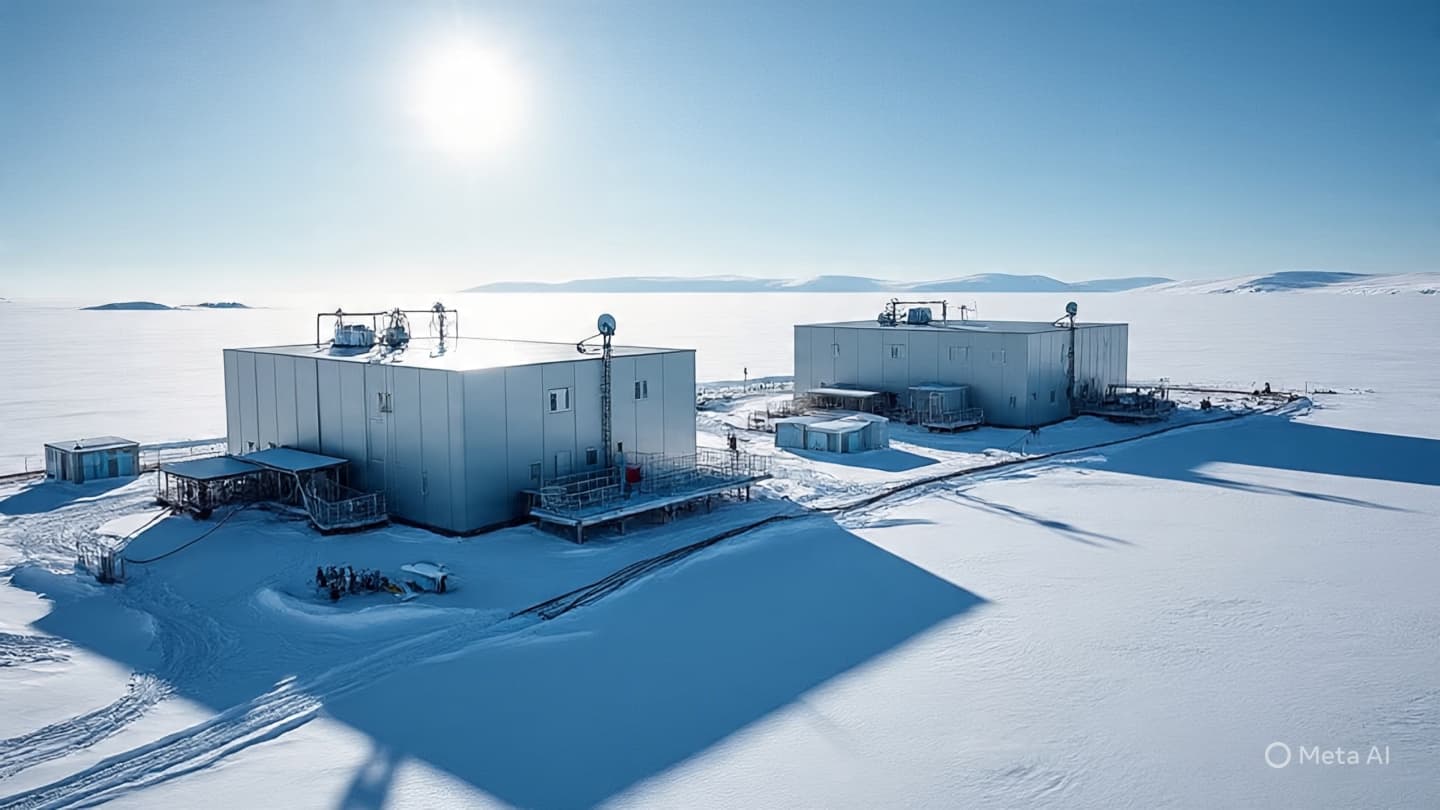
At the edge of the world, where ice meets silence and horizons stretch unbroken, collaboration often becomes the warmest presence. In Antarctica, a place defined by extremes, scientists from France and Australia have found common ground in discovery, reminding us that knowledge knows no borders.
Joint research efforts between French and Australian teams have long contributed to understanding the Antarctic environment. These collaborations often focus on climate science, glaciology, and marine ecosystems, areas critical to understanding global environmental change.
Recent celebrations highlight milestones achieved through shared research stations and coordinated expeditions. Facilities such as the Dumont d'Urville Station and Australia’s Casey Station serve as hubs for year-round scientific activity.
Researchers study everything from ice sheet dynamics to the behavior of Southern Ocean currents. These insights help scientists better predict sea-level rise and assess how polar changes influence global climate systems.
The partnership is also a testament to logistical cooperation. Operating in Antarctica requires careful planning, from transporting supplies across vast distances to ensuring safety in one of the planet’s harshest environments. Shared resources and expertise make such work possible.
Beyond scientific output, the collaboration fosters a spirit of international cooperation. Scientists from different backgrounds work side by side, exchanging knowledge and building networks that extend beyond individual projects.
The findings produced by these joint efforts contribute to global research initiatives, including climate assessments by organizations like the World Meteorological Organization. Data gathered in Antarctica often plays a crucial role in shaping international climate policy discussions.
As climate change continues to reshape polar regions, the importance of sustained research becomes increasingly clear. Collaborative efforts ensure that data collection remains consistent and comprehensive, even in challenging conditions.
In a landscape defined by isolation, the partnership between French and Australian scientists offers a quiet affirmation that shared purpose can bridge even the most distant frontiers.
AI Image Disclaimer: Some images of Antarctic research stations and landscapes are AI-generated for visual illustration.
Sources: The Guardian, ABC News Australia, CNRS, Australian Antarctic Division
Published by Banx Network. This article is part of the Banx decentralized media programme, powered by the BXE token on the XRP Ledger.



