Morning light filters through the quiet corridors of a laboratory, where much of modern medicine unfolds not in dramatic breakthroughs but in patient observation. Microscopes hum softly, screens glow with layers of molecular maps, and somewhere in that delicate universe of cells and proteins, researchers trace the threads that connect illness, memory, and time itself.
In recent work, scientists have identified a protein connected to amyotrophic lateral sclerosis, or ALS, that appears to play a deeper role in the body’s internal maintenance system. The protein, known as TDP-43, has long been associated with ALS and certain forms of dementia. Now, new findings suggest it may also act as a crucial link between the process of DNA repair and diseases that emerge when that repair falters.
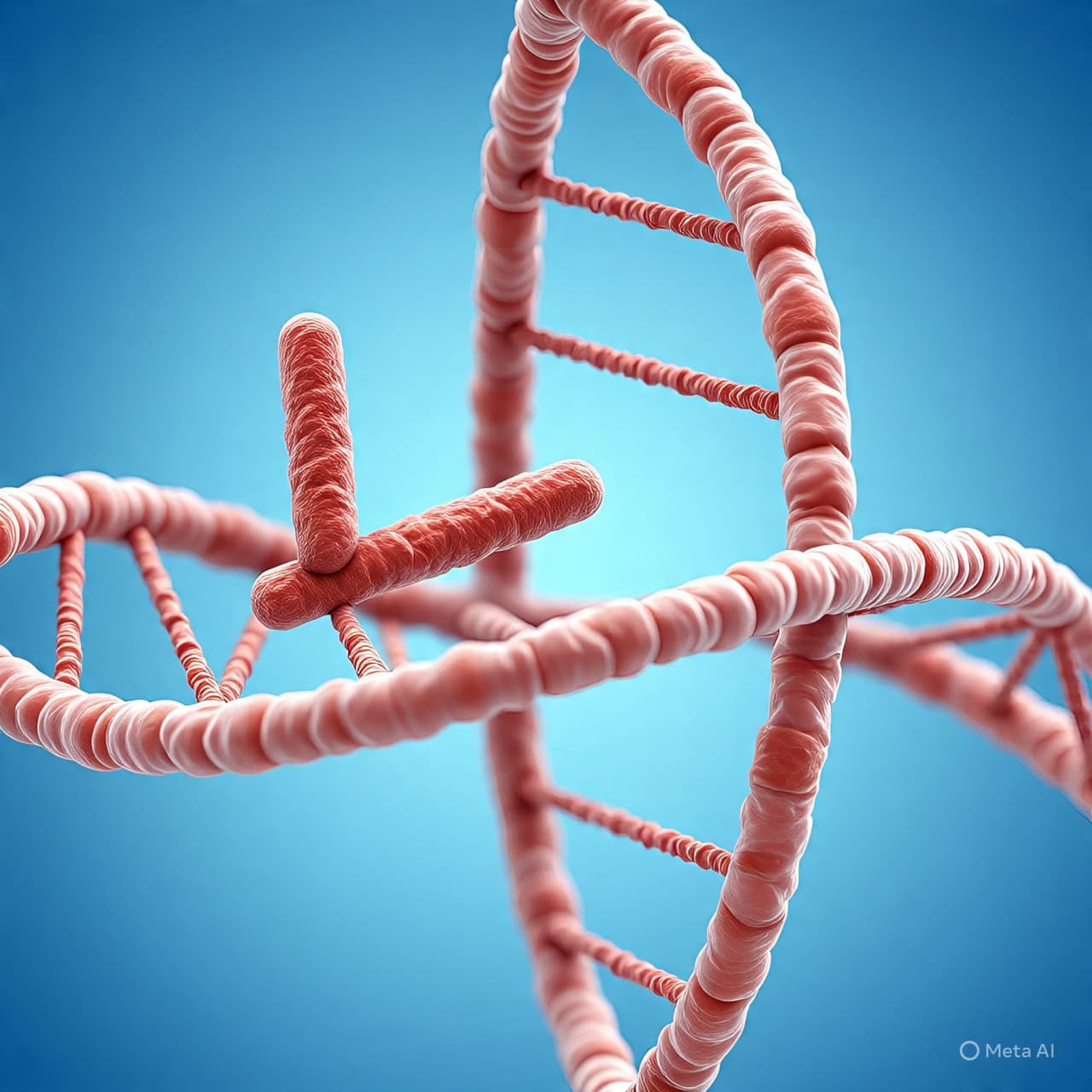
Inside every cell, DNA carries the instructions that guide life. Yet these instructions are constantly under quiet assault—from environmental stress, normal cellular activity, and the slow passage of time. To survive, cells rely on a network of proteins that detect damage and repair it before errors accumulate. When that system weakens, the consequences can echo across the body, sometimes appearing as neurodegenerative disease or even cancer.
Researchers studying TDP-43 have discovered that the protein plays a role in guiding the repair of broken DNA strands. In healthy cells, TDP-43 appears to help coordinate the response to genetic damage, ensuring that the repair process unfolds efficiently. When the protein becomes misfolded or dysfunctional—a hallmark often seen in ALS patients—this repair mechanism may falter.
The implications stretch across several fields of medicine. ALS, a progressive neurological disorder that affects nerve cells controlling movement, has long been linked to abnormal accumulations of TDP-43 inside neurons. Similar protein disruptions are also observed in some forms of frontotemporal dementia, a condition that affects behavior, language, and decision-making.
What researchers now see is a broader biological narrative. If TDP-43 helps maintain DNA integrity, then its dysfunction could gradually allow genetic damage to accumulate inside cells. Over time, this buildup may contribute not only to neurodegenerative diseases but also to cancer, where DNA errors can drive uncontrolled cell growth.
The discovery does not immediately change treatments, but it shifts how scientists think about the relationship between these diseases. Conditions once studied in separate medical domains—neurology, oncology, genetics—may share underlying molecular pathways. A single protein’s behavior could ripple outward, influencing the stability of the genome and the health of entire organ systems.
Such connections often emerge slowly. Scientific understanding rarely moves in straight lines; it grows through patterns noticed across experiments, laboratories, and years of research. A protein once studied mainly for its role in ALS now appears to sit at the crossroads of several of the body’s most complex processes.
For patients and clinicians, the findings offer a different kind of progress—not a sudden cure, but a clearer map of the terrain. Understanding how DNA repair intersects with neurodegeneration and cancer could guide future therapies designed to stabilize proteins like TDP-43 or strengthen the cell’s repair machinery.
In laboratories around the world, those quiet investigations continue. Beneath the steady glow of instruments and data screens, scientists follow the intricate choreography of molecules inside the cell. And sometimes, within that choreography, a single protein reveals how closely the stories of disease, memory, and survival are woven together.
Published by Banx Network. This article is part of the Banx decentralized media programme, powered by the BXE token on the XRP Ledger.