Exploration often begins where maps become uncertain. In the coming years, one of humanity's most ambitious destinations lies not on Earth but near the Moon's south pole, a region that scientists believe may hold important clues about the history and future of lunar exploration.
NASA's preparations for missions targeting the lunar south pole represent a major component of the Artemis program. Unlike the equatorial regions visited during Apollo, this area offers unique scientific opportunities and operational challenges.
Researchers are especially interested in evidence suggesting the presence of water ice within permanently shadowed craters. Because some locations receive little or no direct sunlight, frozen resources may have remained preserved for billions of years.
Water is valuable not only from a scientific perspective but also as a practical resource. Future explorers could potentially use it for drinking water, oxygen production, and even rocket fuel manufacturing through chemical processing techniques.
The south pole's terrain presents significant challenges. Rugged landscapes, extreme temperature variations, and unusual lighting conditions require advanced technologies and careful mission planning.
Engineers are developing specialized systems designed to support operations in these demanding environments. Navigation, communications, power generation, and mobility technologies all play critical roles in mission success.
Scientists anticipate that samples collected from the region could provide new insights into lunar history. Studying ice deposits and geological materials may help researchers better understand the evolution of the Moon and the broader solar system.
International interest in lunar exploration continues growing. Multiple countries and organizations are pursuing missions aimed at expanding scientific knowledge and developing capabilities for future space activities.
As preparations move forward, the Moon's south pole stands as both a scientific destination and a symbol of exploration's enduring appeal. The journey promises to deepen humanity's understanding of a neighboring world that still holds many secrets.
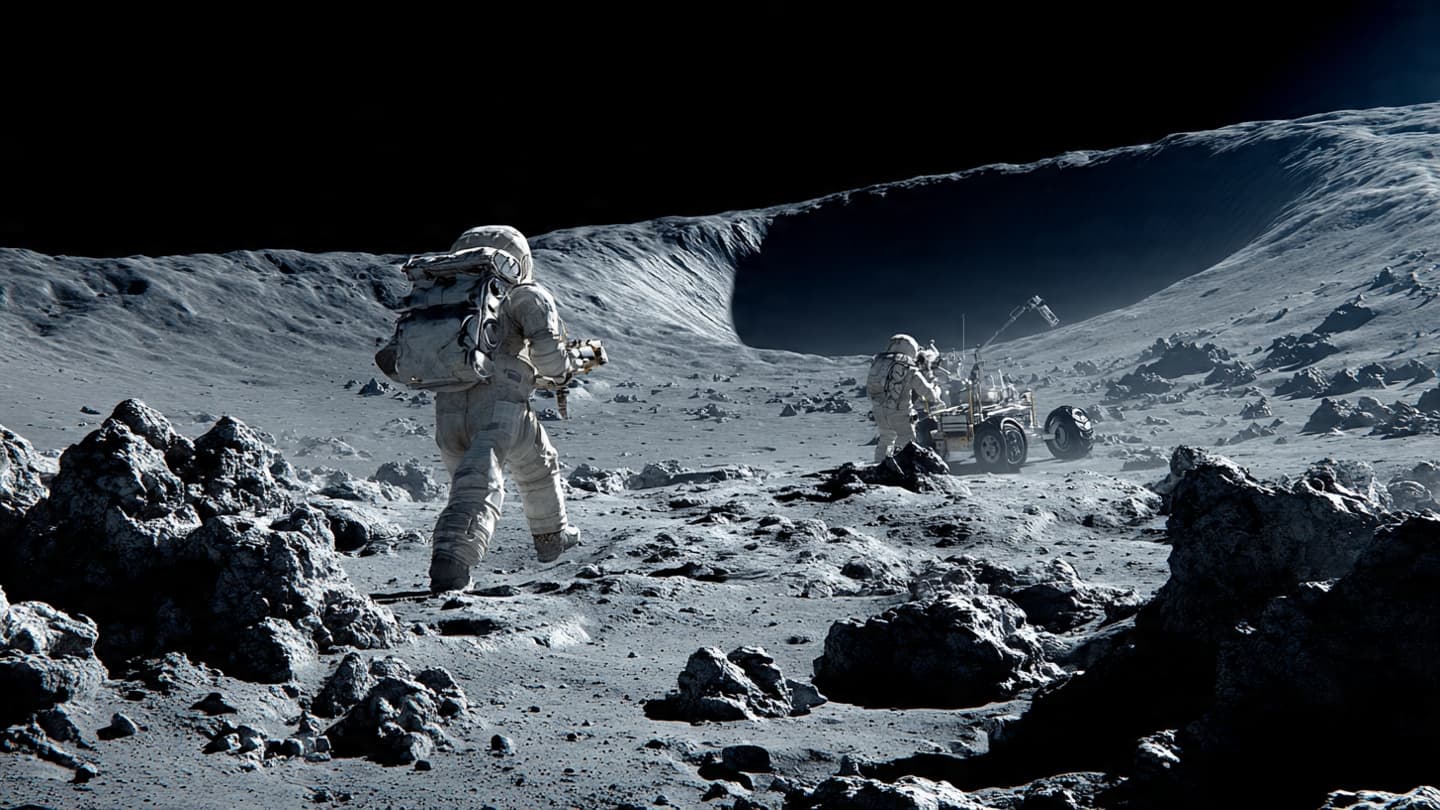
AI Image Disclaimer: The image accompanying this article was generated by AI for illustrative purposes and does not represent an actual mission photograph.
Sources (Verified): NASA, Reuters, Space.com, ESA, Scientific American
Published by Banx Network. This article is part of the Banx decentralized media programme, powered by the BXE token on the XRP Ledger.