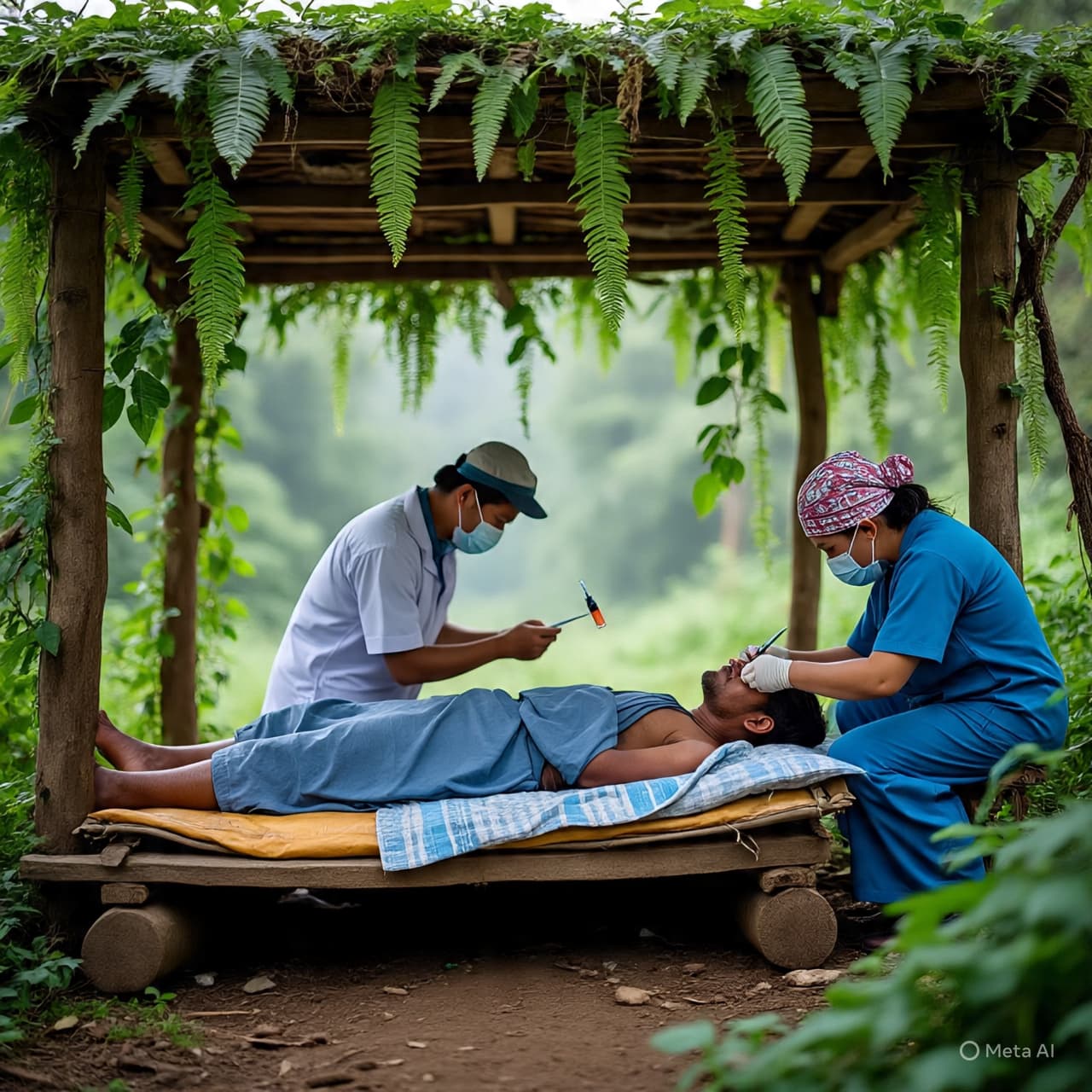
Along the winding borders of Myanmar, makeshift clinics now stand where hospitals once served entire communities. In bamboo structures and crowded rooms across neighboring countries, doctors and volunteers treat patients whose journeys began far from the examination table — in villages emptied by conflict, in towns stripped of basic services, and in a health system pushed beyond collapse.
Since Myanmar’s political crisis deepened, its public healthcare network has fractured. Hospitals once relied upon for routine care now struggle to function, while many medical professionals have fled arrest, conscription, or violence. The result has been a steady outward flow of patients — pregnant women, chronically ill civilians, injured civilians — crossing borders in search of treatment that no longer exists at home.
Along frontier regions, particularly near Thailand and other neighboring states, informal clinics have become lifelines. Often operating with limited equipment and donated supplies, these facilities serve thousands who arrive exhausted, malnourished, and fearful. Medical workers describe treating conditions long considered preventable, now made severe by delayed care and displacement.
The strain extends beyond medicine. Border clinics face constant shortages of funding, staff, and medicines, while navigating political sensitivities and legal uncertainty. Many operate in a grey zone — tolerated but not formally supported — as host countries balance humanitarian concerns with immigration pressures.
For patients, the journey is both physical and psychological. Families cross rivers and forests not knowing if treatment will be available or affordable. Children miss vaccinations. Chronic illnesses go unmanaged. Each clinic visit reflects a broader breakdown of systems once taken for granted.
What unfolds along these borders is not simply a refugee health issue, but a regional one. As Myanmar’s internal crisis continues, its consequences ripple outward, placing pressure on neighboring healthcare systems and exposing the fragility of cross-border humanitarian response.
The clinics stand as quiet witnesses to a wider collapse — and as reminders that health crises rarely stop at national boundaries.
Published by Banx Network. This article is part of the Banx decentralized media programme, powered by the BXE token on the XRP Ledger.