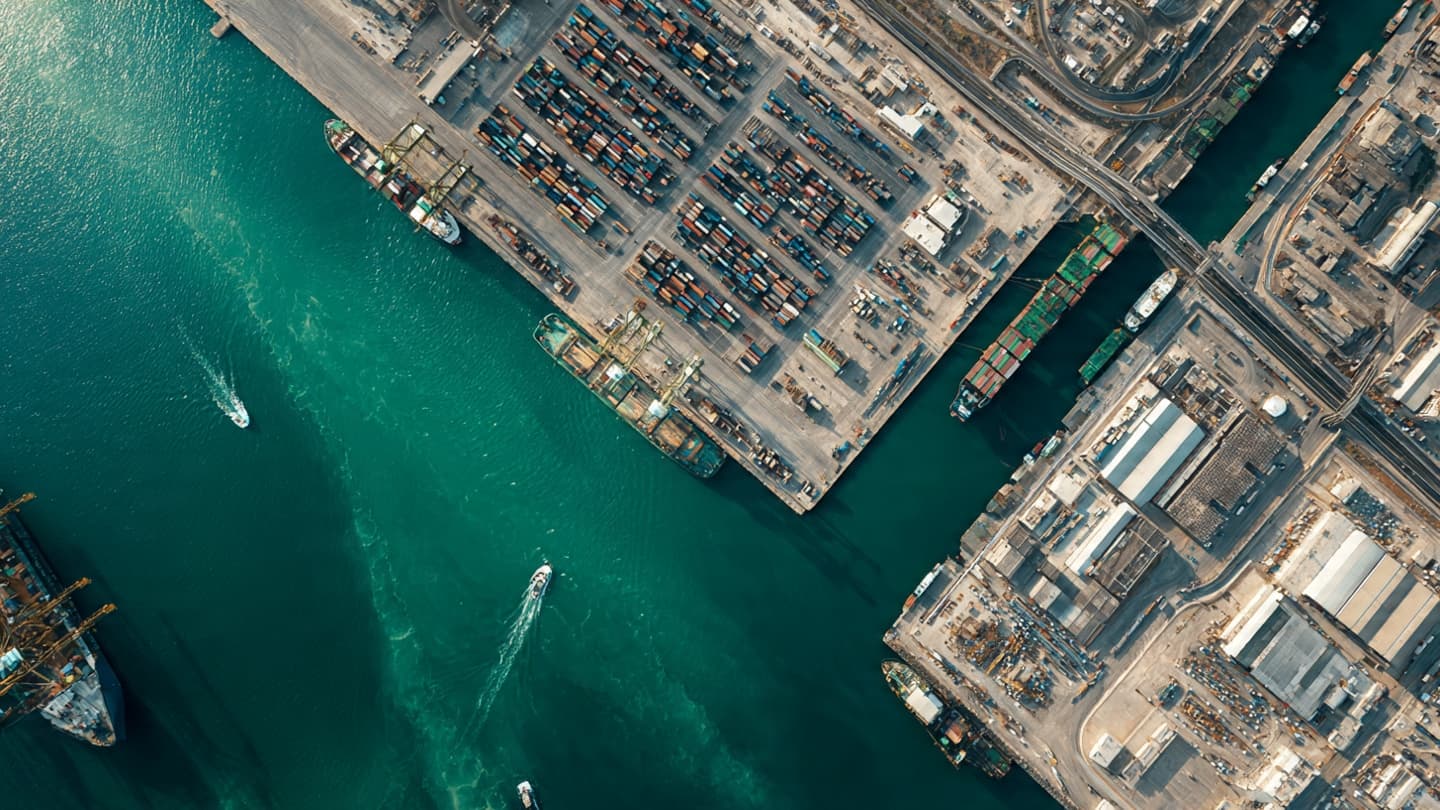
At the edge of Dubai, where the desert meets the sea, Jebel Ali has long been defined by movement. Containers arrive from distant ports, cranes lift cargo above enormous ships, and trucks carry goods inland toward warehouses and markets. It is an industrial rhythm that can seem almost permanent. Yet regional shipping disruptions are now placing that rhythm under unusual pressure.
Jebel Ali is one of the most important logistics centers in the Middle East, connecting the UAE with international supply chains. Its importance reaches well beyond Dubai itself, because goods passing through the port can continue into the wider Gulf and toward markets across the region. Any disruption around major maritime routes can therefore be felt far beyond the port’s own waterfront.
The present difficulties come as shipping companies navigate an increasingly complicated environment around the Gulf. Routes connected to the Strait of Hormuz have faced disruption, while some energy cargoes have been forced into alternative arrangements. Recent LNG ship-to-ship transfers outside the strait illustrate how operators are adapting their movements to changing maritime conditions.
For a logistics hub such as Jebel Ali, the consequences are not limited to ships themselves. Delays at sea can eventually influence container schedules, warehouse planning, trucking operations, inventory levels, and delivery times. A vessel arriving later than expected can create a chain of adjustments across several businesses that depend on predictable transportation.
Dubai’s economy has been built in part around precisely that predictability. Its ports, airports, free zones, warehouses, and roads function as interconnected pieces of a commercial system designed to move products quickly between continents. Jebel Ali sits near the center of that system, making changes in maritime traffic especially important for companies using Dubai as a regional distribution base.
The pressure also arrives at a time when global businesses are already paying close attention to transportation costs. Longer routes, additional transfers, insurance considerations, and delays can all affect the final cost of moving goods. Even when products continue to reach their destinations, the journey can become more expensive and less predictable.
Air transportation provides another part of Dubai’s logistics network. Recent flight schedules in the UAE have also been affected by regional disruptions, with airlines adjusting some services and passengers facing delays and cancellations. That creates a broader picture in which both maritime and aviation networks are having to operate with greater flexibility.
Still, ports rarely reveal the full story through a single day of activity. Containers continue to move, ships continue to dock, and businesses continue to search for alternative routes when established ones become difficult. The strength of a logistics hub is measured not only by how efficiently it operates in calm conditions, but also by how many adjustments it can absorb when circumstances change.
For Jebel Ali, the coming months will therefore be watched through the steady language of cargo volumes, vessel movements, delivery schedules, and commercial demand. Behind every container is a chain of businesses waiting for something to arrive. Along Dubai’s waterfront, that chain continues to move, even as the routes connecting it to the wider world become more complicated.
AI Image Disclaimer: The images suggested here were generated through AI and are intended to represent the maritime and logistics setting described in the article.
Published by Banx Network. This article is part of the Banx decentralized media programme, powered by the BXE token on the XRP Ledger.