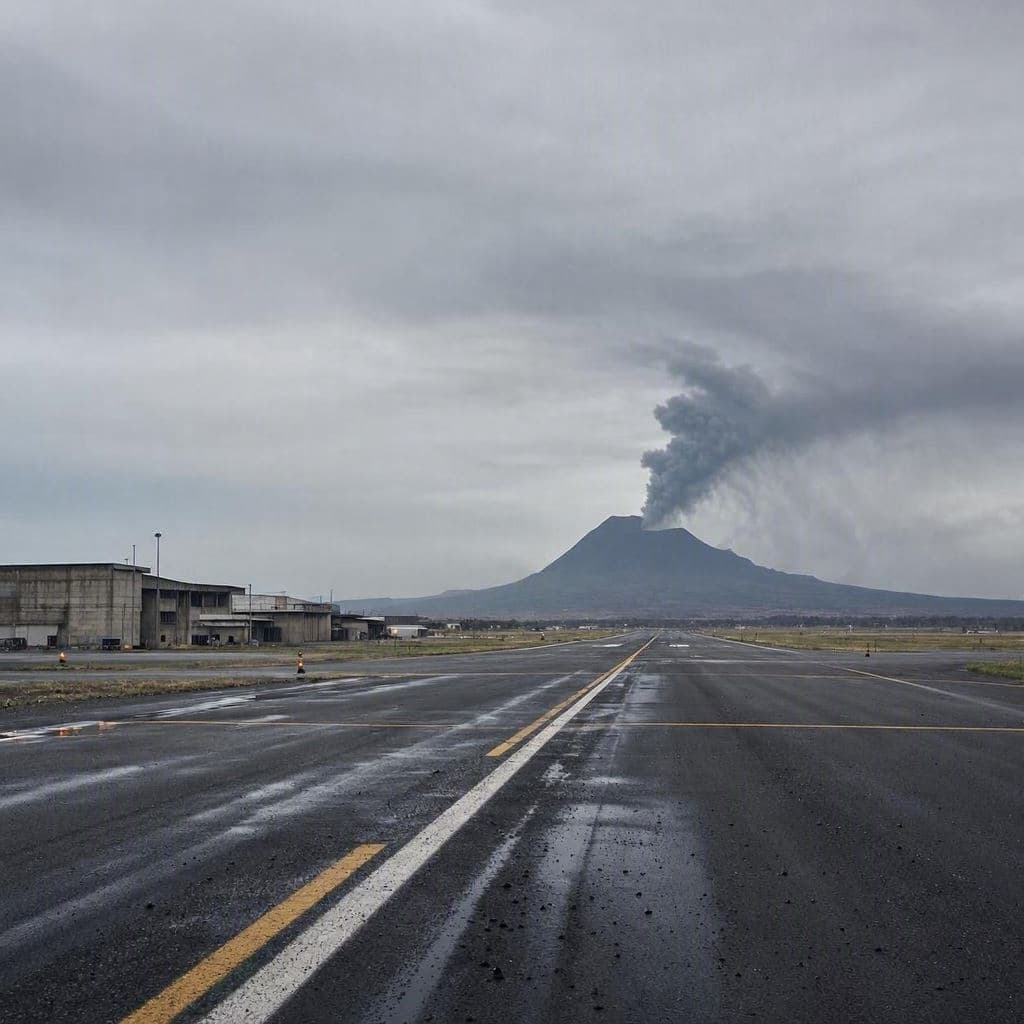
Nature operates on its own timeline, indifferent to human schedules and conveniences. In Indonesia, a nation straddling the volatile Pacific Ring of Fire, this reality is a daily companion. Recently, the eruption of Mount Lewotobi Laki-laki has disrupted air travel, forcing the closure of several airports despite signs that the volcanic activity is easing. This cautionary approach highlights the delicate balance between maintaining connectivity and ensuring public safety. It is a reminder that in the face of geological power, patience and prudence are the most valuable currencies.
Mount Lewotobi Laki-laki, located on the island of Flores, has been emitting ash plumes that drift across flight paths. Volcanic ash is a significant hazard to aviation, as it can damage aircraft engines and reduce visibility. Even as the intensity of the eruption decreases, the presence of ash in the atmosphere remains a critical risk. Authorities have decided to keep airports closed until air quality and safety conditions meet strict international standards. This decision, while frustrating for travelers, prioritizes life over logistics.
The impact on local communities and the tourism industry is substantial. Flights have been canceled or diverted, leaving passengers stranded and businesses facing losses. For a country reliant on tourism, such disruptions are economically painful. However, the government maintains that safety cannot be compromised. The closure is a temporary measure, designed to prevent accidents and ensure that the skies are clear for safe operation. It is a testament to the rigorous safety protocols adopted by Indonesian aviation authorities.
Meteorologists and volcanologists are monitoring the situation closely, using satellite data and ground sensors to track ash dispersion. Their assessments guide the decision-making process, providing a scientific basis for the closures. As the eruption eases, the density of ash particles in the air is expected to decrease, paving the way for a gradual reopening. This data-driven approach ensures that decisions are not arbitrary but rooted in real-time environmental analysis.
Travelers are advised to stay informed and flexible, checking with airlines for updates. The uncertainty of volcanic activity means that schedules can change rapidly. Patience is required, as the natural world does not adhere to timetables. Airlines are working to rebook affected passengers, offering alternatives where possible. The collective effort to manage the disruption reflects a shared responsibility between authorities, carriers, and the public.
This event also underscores the importance of disaster preparedness in Indonesia. With over 120 active volcanoes, the country is well-versed in managing volcanic risks. Regular drills, public education, and robust monitoring systems are part of the national strategy. The current airport closures are a routine part of this broader framework, demonstrating the system’s ability to respond effectively to natural hazards. It is a model of resilience in the face of recurring geological challenges.
International aviation bodies support the cautious approach, recognizing the severe dangers posed by volcanic ash. Incidents in the past, where aircraft encountered ash clouds, have led to stricter global guidelines. Indonesia’s adherence to these standards reinforces its commitment to international safety norms. It shows that local actions have global implications, contributing to the overall safety of air travel worldwide.
As the volcano settles, the anticipation of reopening grows. Communities are preparing to welcome back visitors, eager to resume normalcy. The temporary pause serves as a reminder of our dependence on stable natural conditions. It invites reflection on the power of the earth and the humility required to coexist with it. The skies will clear, and travel will resume, but the respect for nature’s force remains.
The continued closure of airports in Indonesia due to volcanic ash is a prudent safety measure. It highlights the priority of passenger security amidst natural disruptions. Let us appreciate the careful stewardship of our skies.
AI Image Disclaimer: Please be aware that images used in this context are AI-generated visualizations for illustrative purposes.
Sources: Reuters The Jakarta Post BBC News
Published by Banx Network. This article is part of the Banx decentralized media programme, powered by the BXE token on the XRP Ledger.