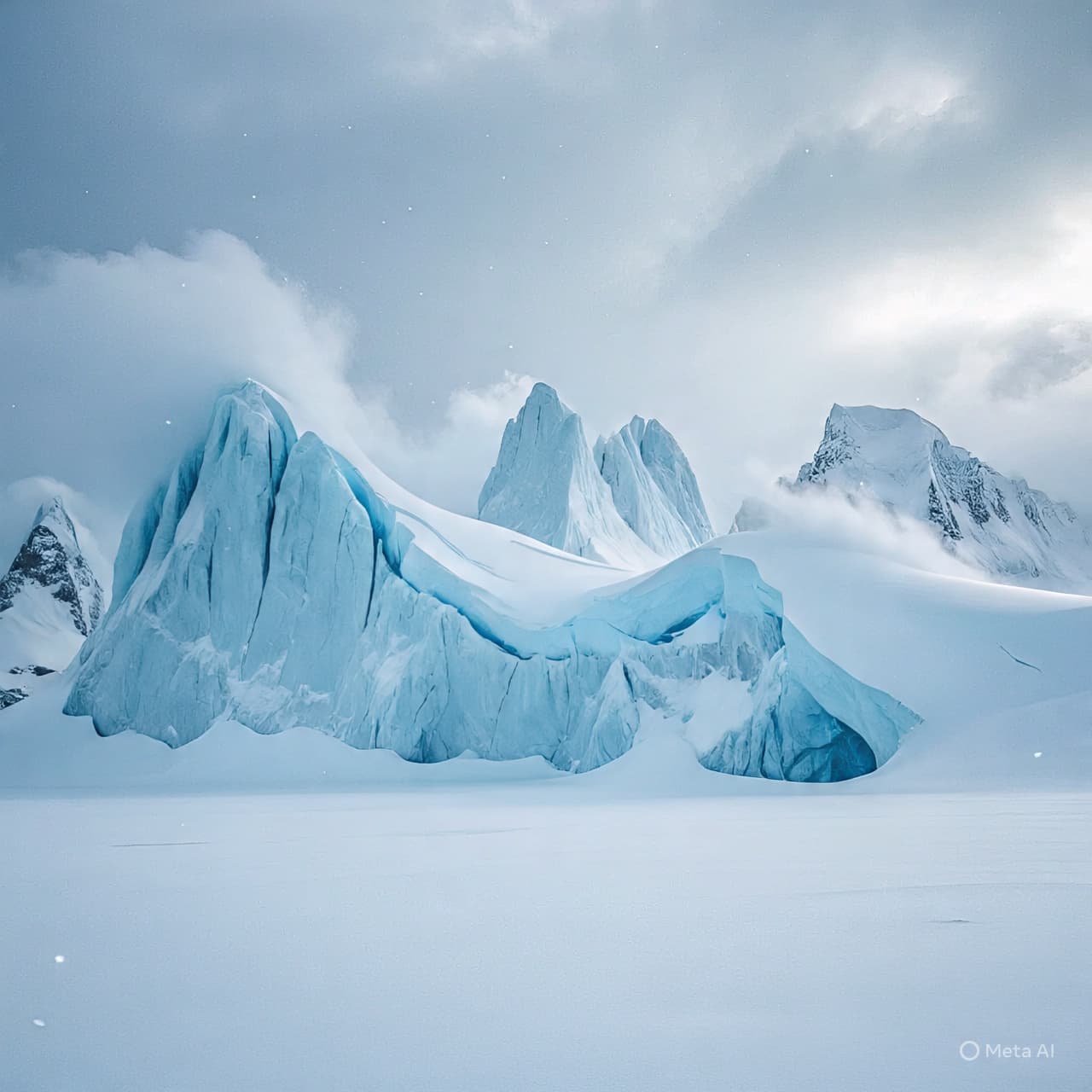
In the remote reaches of Antarctica, glaciers stretch like silent rivers of ice, vast and unyielding, reflecting the subtle light of a polar sky. Researchers recently found themselves tantalizingly close to one such glacier, only to be thwarted by the relentless weather that defines the continent. Winds whip across the ice sheet, clouds descend like curtains, and visibility drops to near zero, a reminder that even modern expeditions must negotiate forces far older and stronger than human ambition.
The glacier in question is part of a dynamic Antarctic system, where ice flows slowly toward the sea, carving valleys, calving icebergs, and shaping the landscape in imperceptible but powerful ways. Scientists aim to study its structure, movement, and potential contribution to sea-level change, but fieldwork in such conditions is fraught with risk. Even minor storms can force teams to retreat, and instruments must be protected from freezing temperatures, high winds, and drifting snow.
Observing a glacier from a distance still offers clues. Satellite imagery, radar measurements, and aerial surveys allow researchers to track ice velocity, surface changes, and the calving of icebergs into the Southern Ocean. These data complement the difficult—and sometimes impossible—on-the-ground studies, highlighting the intersection of human curiosity and environmental constraint.
Antarctica’s weather is a silent arbiter. It dictates when scientists can approach, when flights can land, and when instruments can be deployed safely. Each failed attempt is a lesson in patience, preparation, and respect for an ecosystem governed by extremes. Yet the pull of discovery remains, and teams plan to return when conditions allow, undeterred by temporary barriers.
In practical terms, researchers attempting to reach an Antarctic glacier were forced to pause due to severe weather conditions. While proximity allowed preliminary observation, access to the site for detailed study remains contingent on more favorable conditions, illustrating the challenges of polar research.
AI Image Disclaimer Visuals are AI-generated and serve as conceptual representations.
Sources (names only) National Geographic BBC News Nature Scientific American Reuters
Published by Banx Network. This article is part of the Banx decentralized media programme, powered by the BXE token on the XRP Ledger.