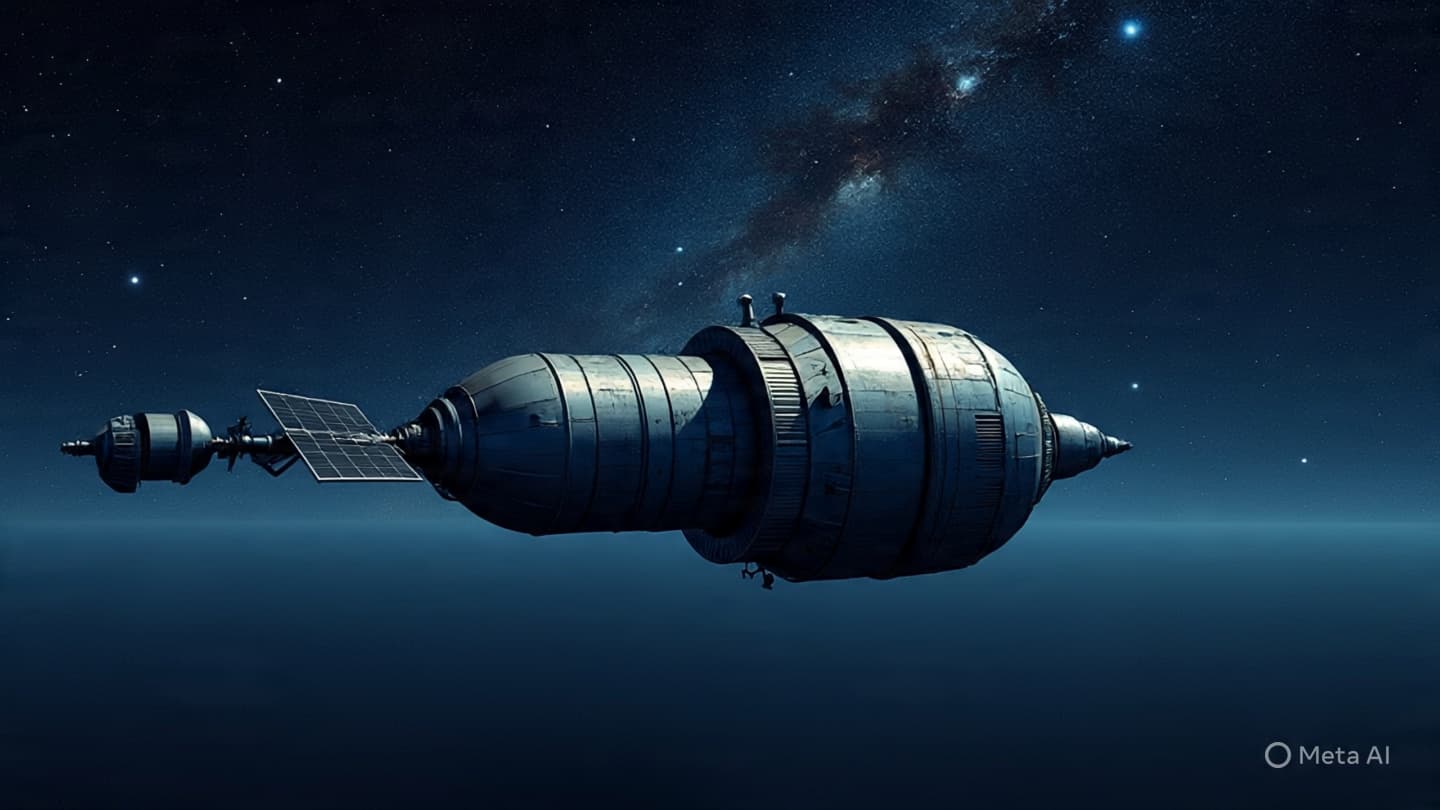
In the quiet vastness beyond the known edges of our solar neighborhood, where sunlight fades into memory, a small, enduring traveler continues its journey. Like an aging lighthouse keeper tending the last of its lamps, NASA’s Voyager 1 now moves forward with fewer instruments, yet with a purpose that remains luminous.
NASA has made the careful decision to shut down one of Voyager 1’s scientific instruments in an effort to conserve power and extend the spacecraft’s operational life. Launched in 1977, Voyager 1 has long exceeded expectations, becoming the farthest human-made object from Earth and the first to enter interstellar space.
The spacecraft operates on a finite power source derived from a radioisotope thermoelectric generator, which gradually loses output over time. To ensure that essential systems remain functional, mission engineers have periodically powered down instruments that are no longer critical to the mission’s core objectives.
The recently deactivated instrument had already provided decades of valuable data, helping scientists better understand cosmic rays and the environment beyond the heliosphere. While its shutdown marks the end of a chapter, it also reflects a broader strategy of careful stewardship.
Voyager 1’s remaining instruments continue to send back data about interstellar space, offering insights into a region never directly explored before. These measurements contribute to ongoing research about the boundary between our solar system and the wider galaxy.
Communication with Voyager 1 remains a delicate process. Signals take more than 22 hours to travel one way, requiring patience and precision from mission teams. Even small adjustments must be planned with extraordinary foresight.
The mission’s longevity is a testament to both engineering resilience and human curiosity. Few could have predicted that a spacecraft designed for a five-year mission would still be operating nearly half a century later.
Each decision to conserve power reflects a quiet negotiation with time—balancing scientific ambition with the realities of aging hardware drifting ever farther from home.
As Voyager 1 continues its silent passage, the gradual dimming of its instruments does not signal an end, but rather a careful continuation of one of humanity’s most remarkable explorations.
AI Image Disclaimer: This article includes illustrative images generated using artificial intelligence to represent space exploration concepts.
Sources: NASA, Jet Propulsion Laboratory, Space.com, BBC News
Published by Banx Network. This article is part of the Banx decentralized media programme, powered by the BXE token on the XRP Ledger.