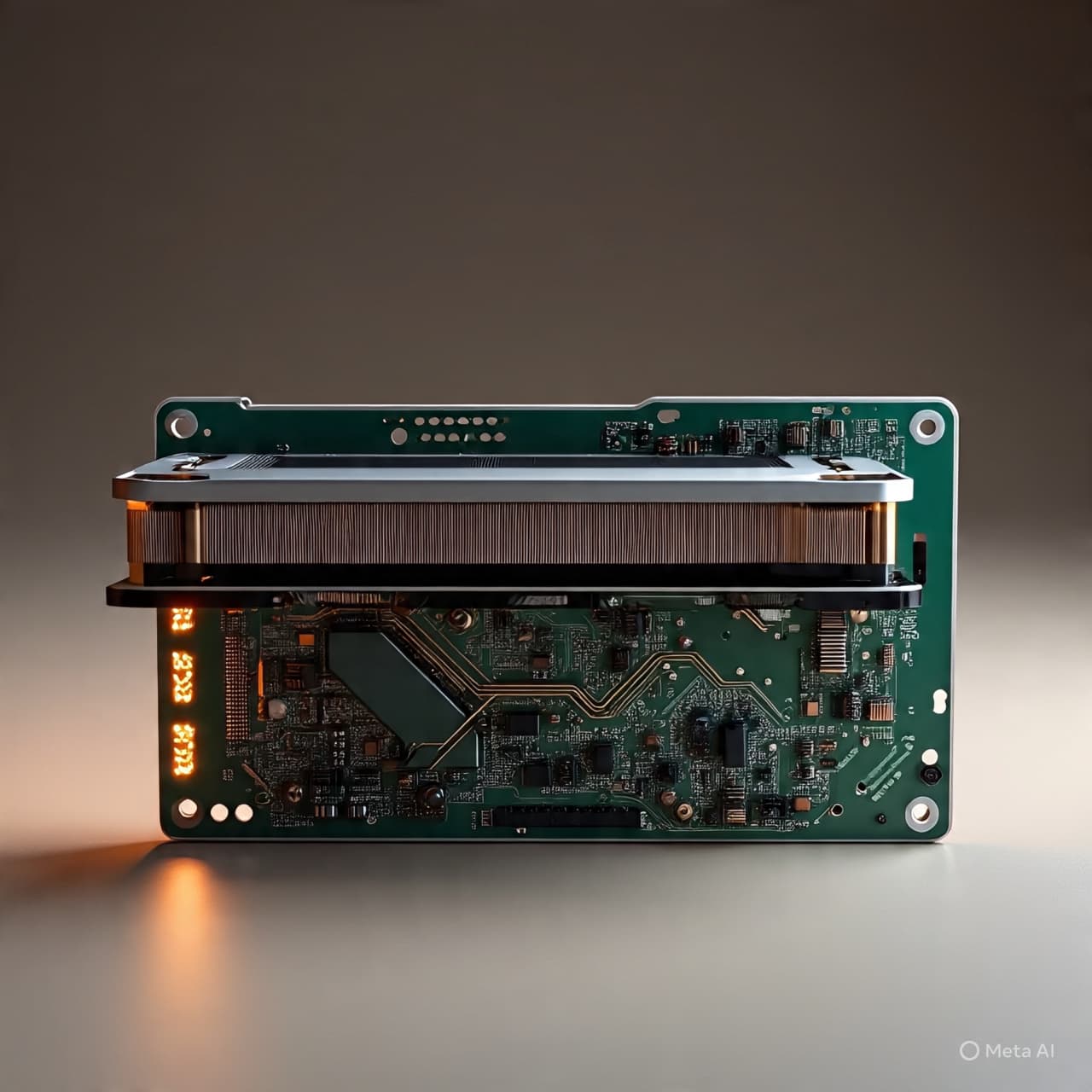
In the quiet moment between a click and a hum, our computers awaken with possibility. For builders and gamers alike, a graphics card is not just a slab of silicon and circuitry it is a ticket to imagined worlds, a prism through which light and shadow dance. And among these companions of creation and play, the RTX 5070 Ti once stood like a bridge between performance and promise, a middle ground where ambition met affordability.
Yet sometimes, the forces that shape our tools are as invisible as the signals that flow through them, and just as unbidden winds can alter the course of a sailboat, so too can market currents shift the fate of a much-anticipated piece of hardware.
This year, in the soft but insistent background noise of global supply chains, a familiar challenge has returned: memory shortages. The very silicon that empowers our machines the fast, capacious VRAM that feeds high-resolution textures and rich frames has grown scarce. Chips that once seemed abundant have become jewels, their scarcity reshaping what manufacturers are able to build and ship.
Asus, a name that carries weight in the landscape of PC components, has confirmed that its production of the RTX 5070 Ti along with the 16 GB version of the RTX 5060 Ti is now regarded as end of life due to these constraints. What remains on store shelves and in distributors’ warehouses will likely be the last of these models from Asus; new units are no longer being made.
To anyone who has dreamed of high-frame-rate gaming or awaited a brisk yet balanced GPU, this shift may feel like a soft closing of a door. It is not, however, the abrupt slam of finality. Nvidia itself has stated that it continues to ship all GeForce SKUs and is working with partners to manage memory supply pressures. So while Asus’s decision reflects one manufacturer’s response to pressing shortages, the broader ecosystem still moves forward, even as it recalibrates.
In practical terms, this means that graphics cards once seen as attainable stepping stones may now become rarities, their prices gently drifting upward as availability dwindles. Models with smaller memory configurations such as 8 GB variants appear less affected and likely to continue flowing through distribution channels more steadily.
It is a moment of transition, perhaps inevitable as demand grows for memory-heavy tasks beyond gaming from AI workloads to creative content and beyond and the global supply tightens its belt. For builders and buyers, the lesson is familiar: timing, supply, and a pinch of patience are always part of the journey between desire and reality.
In measured news that touches both hearts and hardware, Asus’s move to wind down the RTX 5070 Ti’s run comes amid broader industry adjustments tied to memory scarcity. Other models that rely on abundant VRAM are seeing similar pressures, and while manufacturers pursue solutions, affected GPUs will likely become harder to find and more expensive in the near term.
AI Image Disclaimer
Visuals are created with AI tools and are not real photographs; they are intended for conceptual representation only.
Source Check
1. The Verge 2. Engadget 3. PC Gamer 4. PCWorld 5. GameSpot
Published by Banx Network. This article is part of the Banx decentralized media programme, powered by the BXE token on the XRP Ledger.

.jpg&w=3840&q=75 "The Artemis Revolution: How NASA Plans to Build Humanity's Future on the Moon")