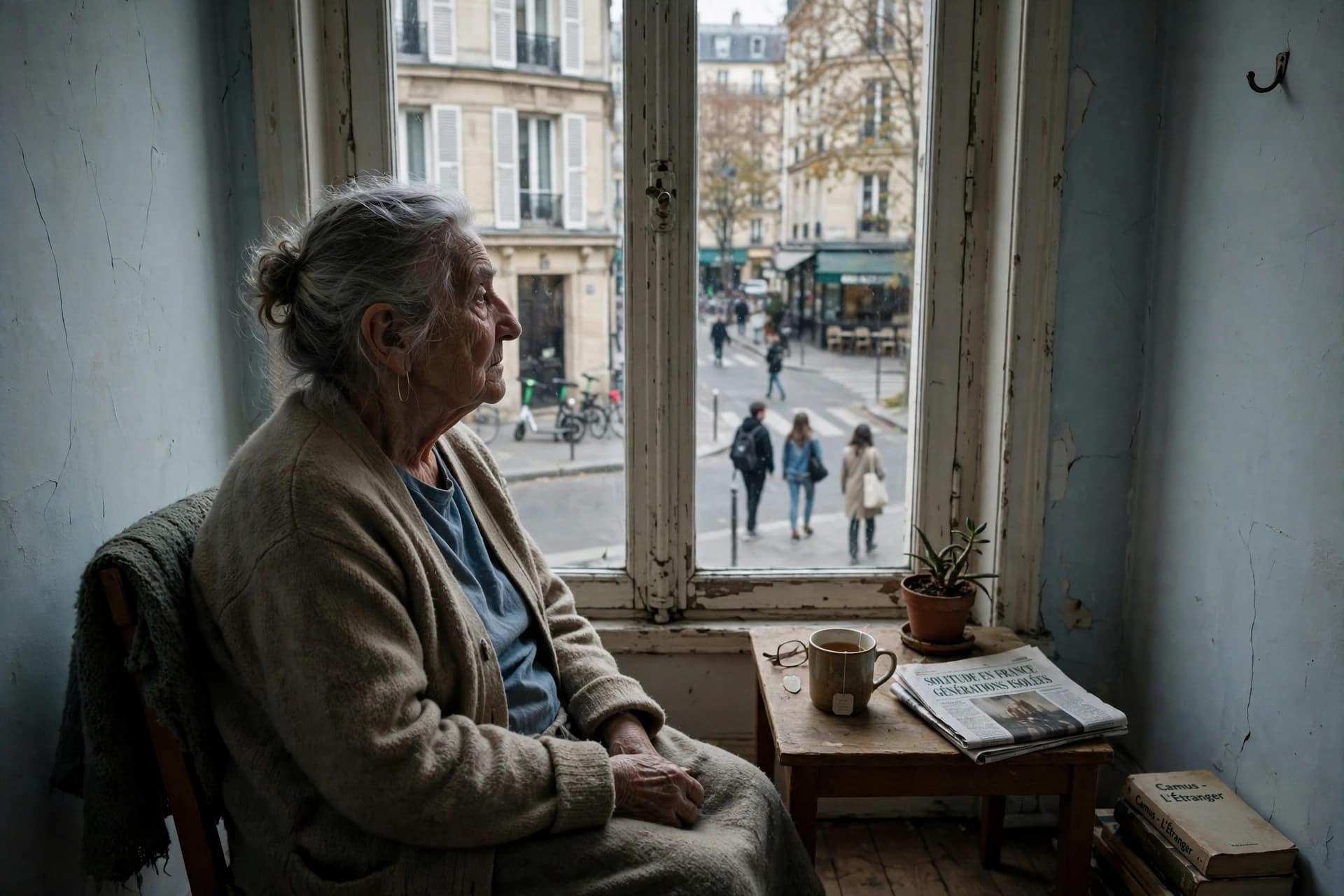
A city can be full of people and still contain quiet rooms. Cafés may be busy, trains crowded, and streets constantly moving, yet a person can experience a very different landscape from the one visible around them.
In France, nearly one in four people reported feeling lonely in 2025, according to research examined by Le Monde. The issue has increasingly entered discussions about public health because loneliness can affect both psychological and physical well-being.
Loneliness is different from simply being alone. A person may spend time alone without experiencing distress, while someone surrounded by others may still feel disconnected. Researchers generally describe loneliness as a subjective gap between the social connection a person wants and what they experience.
The experience appears particularly significant among young people and older adults. Students, people living alone, single parents, and socially marginalized groups can face different circumstances that make maintaining meaningful social connections more difficult.
Research has associated persistent loneliness with a range of health concerns, including depression, anxiety, cardiovascular disease, and cognitive decline. The World Health Organization has increasingly recognized social connection as an important element of overall health.
The years following the COVID-19 pandemic have also changed the way people interact. Remote work, digital communication, and changes in community life can make it easier to remain connected in some ways while reducing opportunities for regular face-to-face contact in others.
For older adults, the circumstances can be different again. Retirement, the loss of friends or partners, reduced mobility, and living farther from family can gradually shrink everyday opportunities for social interaction.
Possible responses therefore extend beyond medical treatment. Le Monde reported approaches including local activities, volunteering, social prescribing, university programs, and psychological interventions designed to help people rebuild or strengthen social connections.
The French experience reflects a broader international discussion about the relationship between social connection and health. Loneliness may be difficult to see from the outside, but its effects can become visible through changes in mental health, physical health, and participation in everyday life.
AI Image Disclaimer All visuals are AI-generated conceptual illustrations created to accompany the article and do not represent actual photographs.
Published by Banx Network. This article is part of the Banx decentralized media programme, powered by the BXE token on the XRP Ledger.