In the half‑light beneath a verdant canopy, there exists a rhythm as quiet and constant as any heartbeat — the forest breathing. Not in human lungs or animal chests, but in the exchange of gases deep within soil and leaf, where microbe and root weave an unseen ebb and flow of carbon and life. For much of human history, that rhythm felt steady and predictable, a pulse so vast it seemed intertwined with the breath of the world itself. Yet now, in scattered groves from boreal expanse to distant tropical hillside, that breath is changing — as subtle and pervasive as dusk spreading over a still afternoon.
What is called soil respiration — the release of carbon dioxide from the decomposition of organic matter and the respiration of roots — has long been a central thread in the tapestry of the global carbon cycle. In a healthy woodland, it is like a slow chant, a deep hymn echoing the turn of the seasons and the quiet work of life beneath leaf and bark. But in recent years, scientists have noticed a shifting cadence. Across forests from Europe to China and the eastern United States, excess nitrogen carried on wind and rain — a by‑product of fertilizer use, fossil fuel combustion, and industry — has begun to rewrite this silent song. In forests once limited by the lack of nitrogen, a little extra can act like nourishment: microbes multiply, roots stretch deeper, and soil respiration quickens. But as more nitrogen accumulates, the effect does not simply continue. Instead, it bends, and in some places falls off altogether, as ecosystems reach a threshold where further nitrogen becomes toxic to the communities of soil life, reducing respiration and altering carbon flows in ways that are not yet fully understood.
This complexity, a pattern of rise and descent, suggests that forests do not respond to change uniformly. Some ecosystems — those still starved of nitrogen — experience an uptick in carbon release from their soils as microbes and roots awaken to newfound fertility. Elsewhere, however, long‑term saturation can push soil communities past their comfort zones, leading to stunted microbial activity and a collapse of that familiar respiration pulse. These divergent pathways reveal that beneath the surface of soil and litter, the forest’s breath may quicken in one place and falter in another, blending a mosaic of responses that defies simple explanation.
Yet the breath of forests is shaped by even more than nitrogen alone. The slow warming of air and soil can sharpen or soften that respiration, as warmer temperatures tend to accelerate the biological processes that release CO₂, while drying soils can constrain nutrient uptake and slow the turnover of organic matter. In a world where heat waves and droughts grow more frequent and intense, these forces impose new stresses on the soil’s living fabric, altering how, when, and how much forests exchange carbon with the atmosphere.
Seen together, these shifts in soil respiration hint at a broader transformation in the way forests interact with Earth’s climate. Soil respiration is immense — releasing far more carbon than humans emit through fossil fuels each year — and even small changes ripple through global carbon balances. Whether forests breathe a little more deeply due to nutrient enrichment or a little less as soil life falters, the consequences extend beyond the whisper of the woods into the rising currents of atmospheric change.
This interplay of nutrient deposition, warming air and soil, and shifting moisture reflects a world in flux. Forests are not static; they respond to the quiet layering of human influence, from the nitrogen that drifts on rain to the heat that lingers long after the sun has passed. The result is a new pattern of breath, one that scientists are just beginning to map and understand, stitched together from thousands of measurements and years of global observation.
In clearer scientific terms, recent research has shown that nitrogen deposition — which has roughly tripled since the Industrial Revolution — affects soil respiration differently depending on the forest’s nitrogen status. In nitrogen‑limited areas, added nitrogen can increase soil respiration, while in nitrogen‑saturated forests it may decrease it sharply, altering a major component of the global carbon cycle. Scientists combine vast datasets, machine learning models, and high‑resolution nitrogen maps to predict how these changes unfold at a planetary scale, revealing regionally varied responses that reshape our understanding of forest carbon dynamics.
AI Image Disclaimer
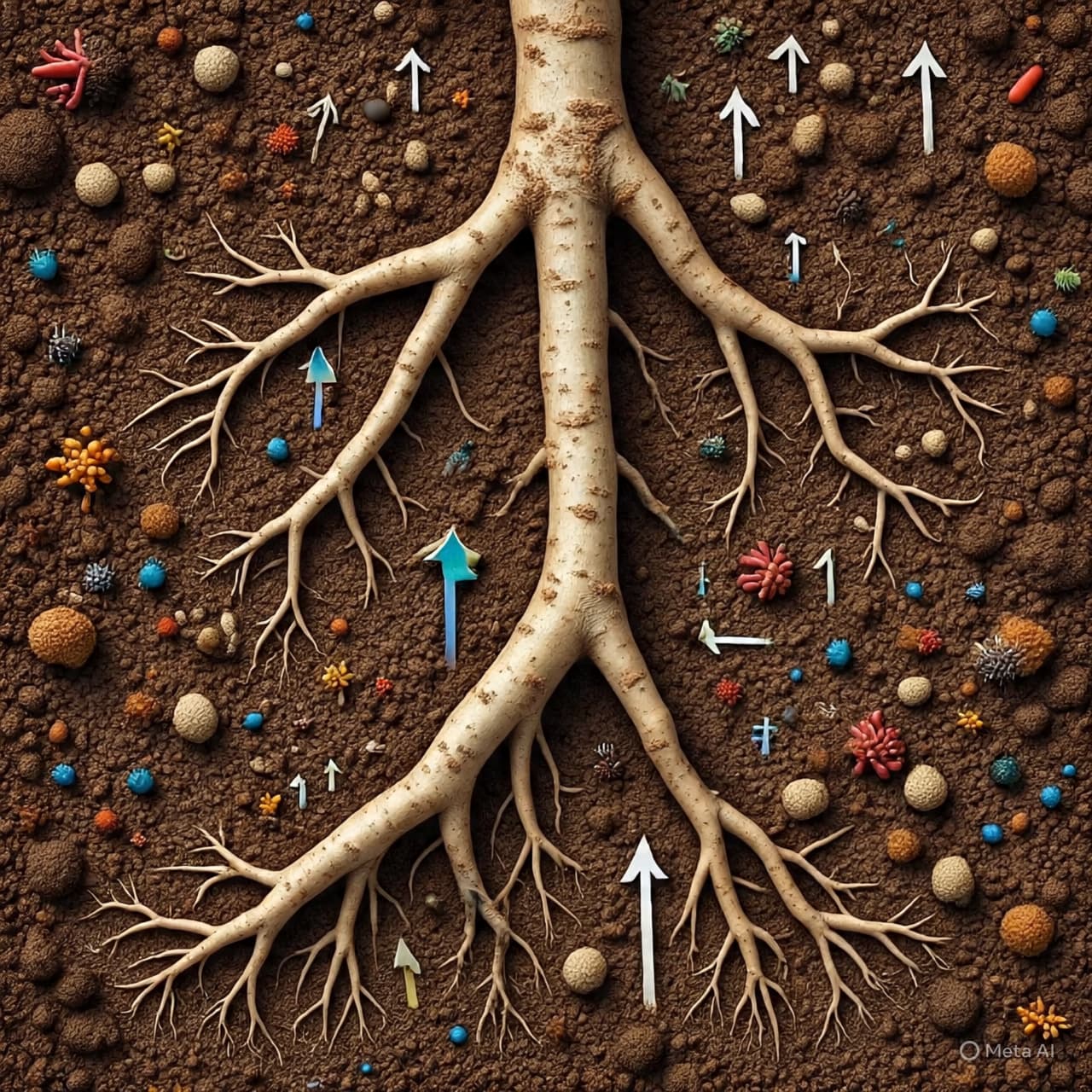
Illustrations were created using AI tools and are not real photographs.
Sources (Media Names Only)
Aarhus University University of California Riverside Earth.com
Published by Banx Network. This article is part of the Banx decentralized media programme, powered by the BXE token on the XRP Ledger.