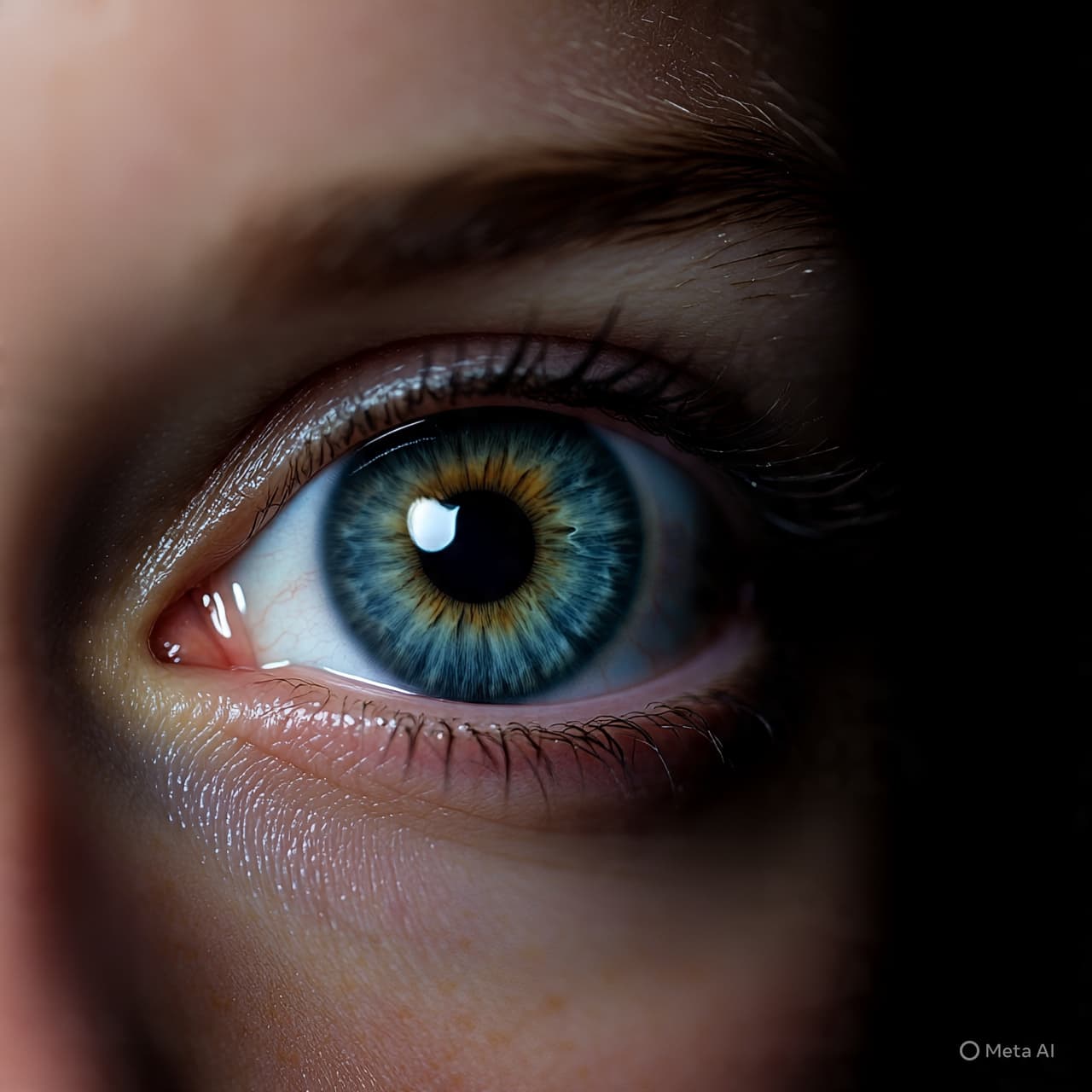
The sun slides down the horizon, painting the landscape with muted shades that seem both familiar and strange. In these moments of fading light, the ordinary world takes on a gentle ambiguity, where shapes blur and movement whispers across the peripheral edges of vision. It is here, in this liminal space, that the eye confronts its own limits — and, for some, finds a kind of awakening known as twilight vision.
Twilight vision, or the capacity to see under low-light conditions, is a subtle and layered process, shaped by the delicate balance of rods and cones in the retina. In the low glow between day and night, cone cells, responsible for color perception, yield their dominance, while rod cells, more sensitive to dim light, come into play. Scientists have long studied this transition, noting that the visual system is less about static sight than about motion, contrast, and the slow accumulation of light across the retina. In essence, seeing at twilight is a patient act, a dialogue between fading illumination and the eye’s own responsive machinery.
Recent research has begun to illuminate the factors that enhance or limit this dim-light perception. Nutrients like vitamin A, previously understood in the context of general eye health, are now recognized as pivotal for rod cell function, while age, ocular health, and genetic differences shape how effectively the eye adapts to twilight. Beyond biology, environmental cues — the softening of color, the subtle rise of shadows, the reflection of scattered light — influence how the world presents itself to the observer. Even in the absence of bright illumination, motion and shape emerge with surprising clarity, suggesting that the visual system prioritizes certain signals over others when light wanes.
The human experience of twilight vision is as much poetic as it is physiological. Walkers in a fading park notice the gentle sway of branches, the rustle of small animals, the way edges soften yet remain distinct. Drivers on quiet roads perceive the gradual fading of streetlights, the shimmer of reflective signs, and the urgent need for the eyes to recalibrate, to catch detail as the world itself seems to slow. This adaptation, both automatic and fragile, speaks to the intricate choreography of the human eye, constantly negotiating between the imperatives of survival and the pleasures of perception.
In scientific terms, studies continue to probe how rod and cone cells, combined with neural processing in the retina and brain, facilitate vision under dim conditions. Experiments measuring sensitivity thresholds, adaptation times, and the effects of nutrients and genetic factors provide insight into what enhances or impairs twilight vision. Such findings have implications for public safety, occupational requirements, and understanding visual disorders, bridging the poetic sense of dusk with tangible, real-world application.
In sum, twilight vision is a reminder of the eye’s resilience and adaptability, a quiet testament to the interplay of biology and environment. As researchers map the mechanisms and nuances of seeing in low light, our appreciation for the subtle artistry of perception deepens, bringing into focus the soft clarity that emerges when day surrenders to night.
AI Image Disclaimer
Visuals are AI-generated and serve as conceptual representations.
Sources (Media Names Only)
Nature Scientific American Journal of Vision American Academy of Ophthalmology Proceedings of the National Academy of Sciences
Published by Banx Network. This article is part of the Banx decentralized media programme, powered by the BXE token on the XRP Ledger.