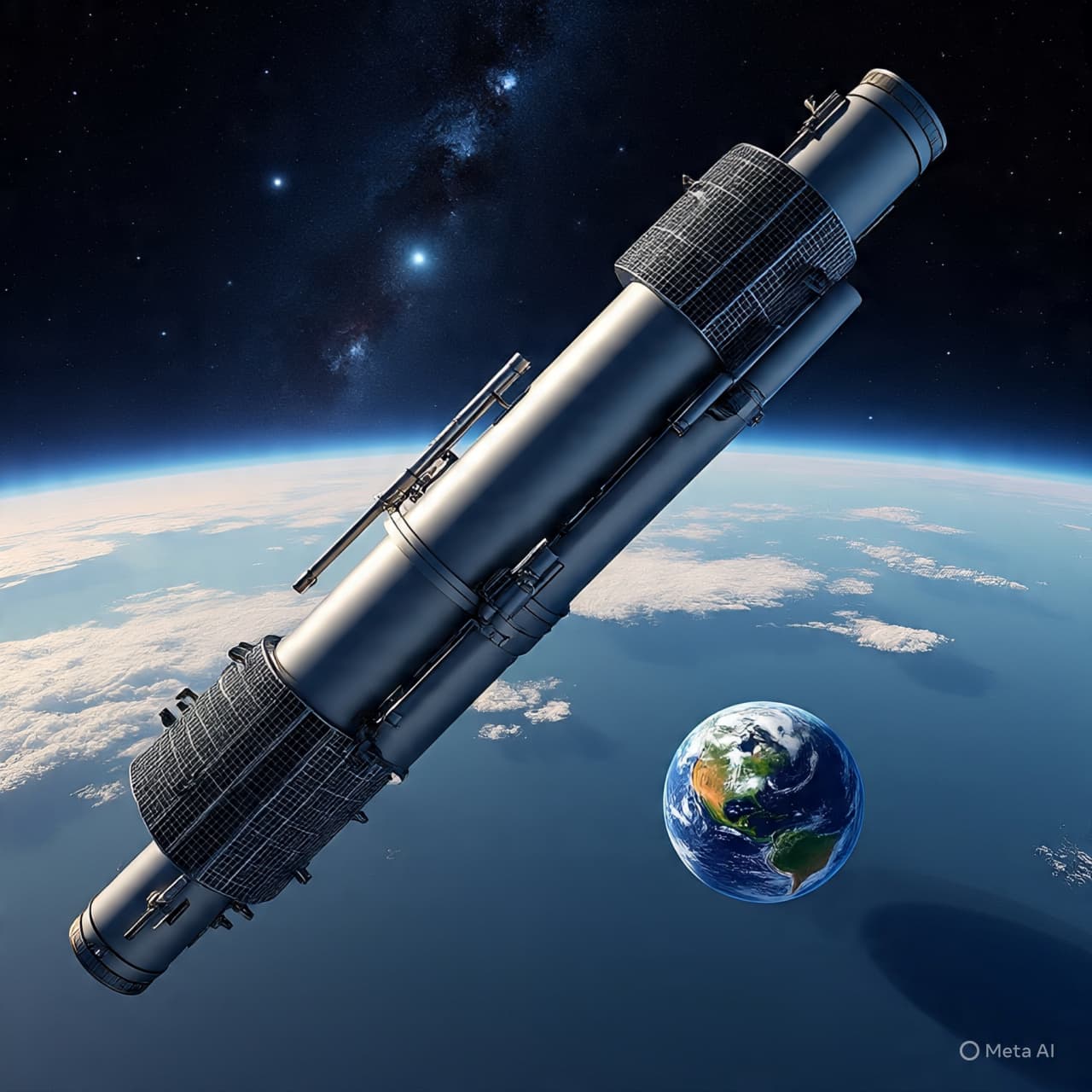
Above the gentle curve of Earth, a new sentinel drifts into orbit, its instruments poised to transform what humanity can see. NASA has deployed an orbital telescope designed to perform feats previously constrained by atmosphere and distance, bringing the universe into sharper focus and revealing phenomena that have long remained elusive.
The telescope’s mission is ambitious. Equipped with advanced imaging systems and sensors capable of observing a broad spectrum of light, it will scan regions of the cosmos in unprecedented detail. Scientists anticipate that it will detect faint objects, monitor dynamic processes, and provide critical data for studies ranging from planetary formation to distant galaxies. Its vantage point beyond Earth’s atmosphere eliminates the distortions of air, allowing observations of clarity and depth that ground-based telescopes cannot achieve.
Deploying the instrument has involved meticulous engineering. The telescope’s sensors, mirrors, and support systems were carefully tested on Earth to endure the rigors of launch and the vacuum of space. Once in orbit, it was calibrated and aligned with extreme precision, ensuring that even subtle light variations from distant objects can be measured reliably.
Beyond its technical prowess, the telescope represents a broader step in space exploration: the continuous human drive to extend our perception, to capture the invisible, and to quantify the unknown. Data from the telescope will inform not only academic research but also practical applications in satellite navigation, space weather forecasting, and the search for potentially habitable worlds.
Astronomers and enthusiasts alike anticipate discoveries that may challenge current understanding, reveal unexpected structures, or illuminate faint cosmic events. Each observation is a small expansion of human knowledge, a reminder of how technology and imagination converge in the pursuit of insight.
In practical terms, NASA’s newly deployed orbital telescope is now operational and will begin conducting its science missions, observing distant objects and phenomena with capabilities surpassing previous telescopes, offering unprecedented detail and resolution from its position above Earth’s atmosphere.
AI Image Disclaimer Visuals are AI-generated and serve as conceptual representations.
Sources (names only) NASA Space.com The Verge Reuters BBC News
Published by Banx Network. This article is part of the Banx decentralized media programme, powered by the BXE token on the XRP Ledger.