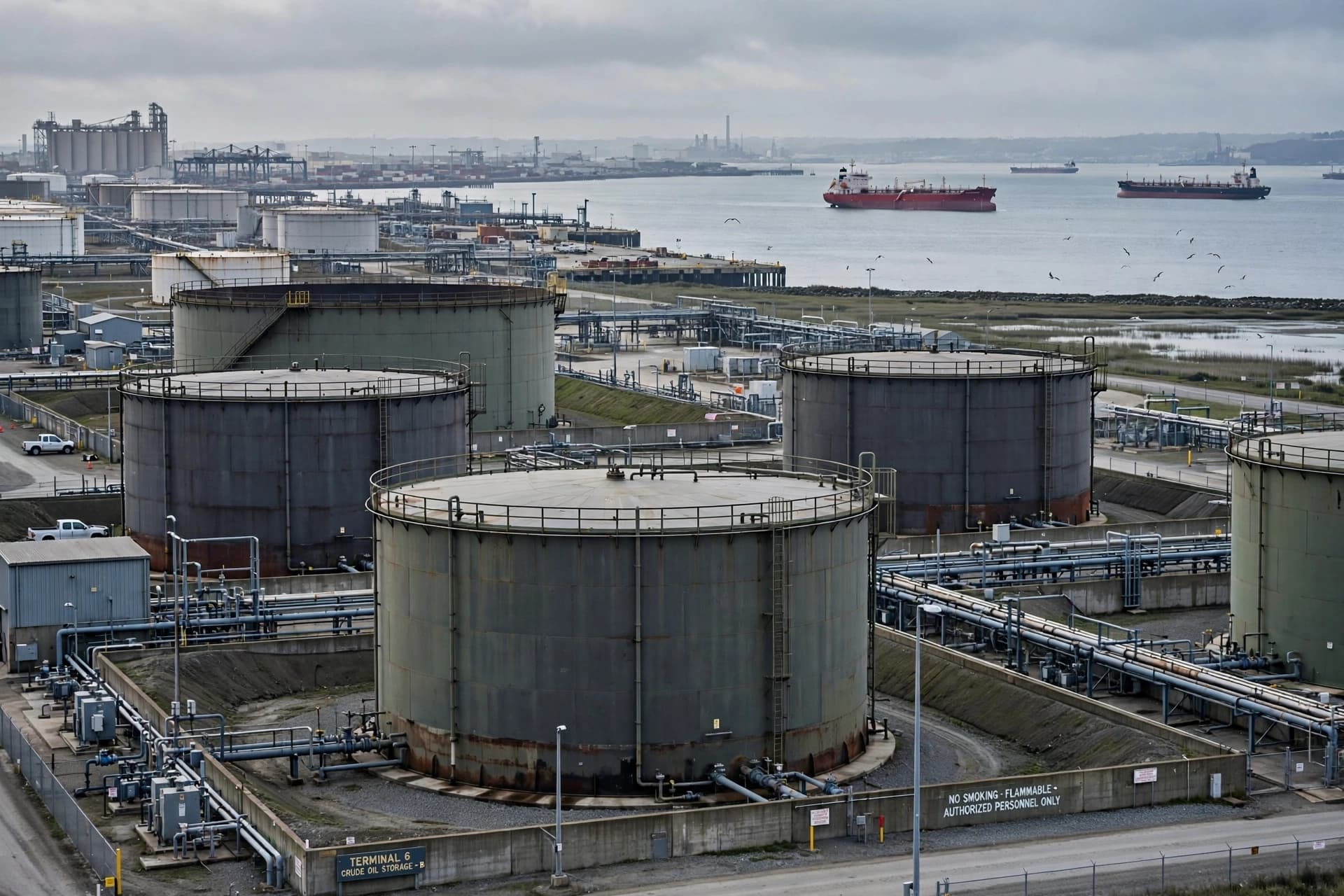
The EIA now expects Brent crude to average about $98 a barrel in 2026, an 8% increase from its previous forecast. For the fourth quarter, the agency expects Brent to average around $105 a barrel. The revisions reflect continued disruption to global oil flows and the difficulty of rebuilding inventories while demand for fuel remains substantial.
The situation is closely connected to the continuing conflict involving Iran and disruptions around the Strait of Hormuz, one of the world's most important energy routes. The waterway has historically carried roughly one-fifth of global oil supplies, making any interruption there capable of creating consequences far beyond the region itself.
Yet the story is not simply one of oil disappearing from the world market. Middle Eastern exports have been recovering, and alternative routes and adjustments by producers have helped restore part of the lost flow. Reuters reported that Gulf oil exports excluding Iran had recovered to more than 81% of pre-war levels, showing how quickly energy markets can adapt when normal routes become difficult.
The deeper concern is what happens to inventories. Oil stored around the world acts as a kind of cushion, giving refiners and consumers time to absorb temporary disruptions. When those reserves decline rapidly, the cushion becomes thinner. A new interruption can therefore carry a greater psychological and financial impact.
Diesel has become an especially important part of the picture. The fuel powers trucks, ships, trains, agricultural machinery and heavy equipment, meaning its price can influence the cost of moving goods across economies. The EIA expects diesel prices to remain elevated before easing later as supply conditions improve.
For consumers, the effect may not always appear immediately. Energy costs travel through supply chains gradually, moving from fuel suppliers to transportation companies and eventually into the prices of goods and services. The process is often quiet, but it can become visible in household budgets when higher costs persist for long enough.
There are signs that some pressure could eventually fade. The EIA expects oil production disruptions in the region to decline as conditions stabilize, while U.S. crude production is projected to reach a record 14.3 million barrels per day in 2027. Those developments could provide additional supply and help replenish inventories.
For now, however, the market remains caught between recovery and vulnerability. Oil is flowing again through several routes, but inventories have been depleted and logistics remain complicated. The numbers suggest that the global energy system has adapted without entirely escaping the consequences of disruption.
That may be the quieter lesson in the latest forecast. Energy security is not determined only by how many barrels are produced, but also by how easily they can travel, where they are stored and how much reserve remains when circumstances suddenly change. For markets and households alike, the coming months will show whether that remaining cushion is enough.
AI Image Disclaimer: These visuals were generated with AI and are intended solely as conceptual representations of global oil markets, energy infrastructure, and petroleum transportation.
Sources: Reuters U.S. Energy Information Administration
Published by Banx Network. This article is part of the Banx decentralized media programme, powered by the BXE token on the XRP Ledger.