In the far north, where silence stretches across ice and sky, change does not arrive with noise. It comes in subtle shifts—melting edges, thinning layers, and now, the quiet emergence of lakes where solid ice once stood. Greenland, long regarded as one of Earth’s most stable frozen landscapes, is beginning to reveal a more fluid story.
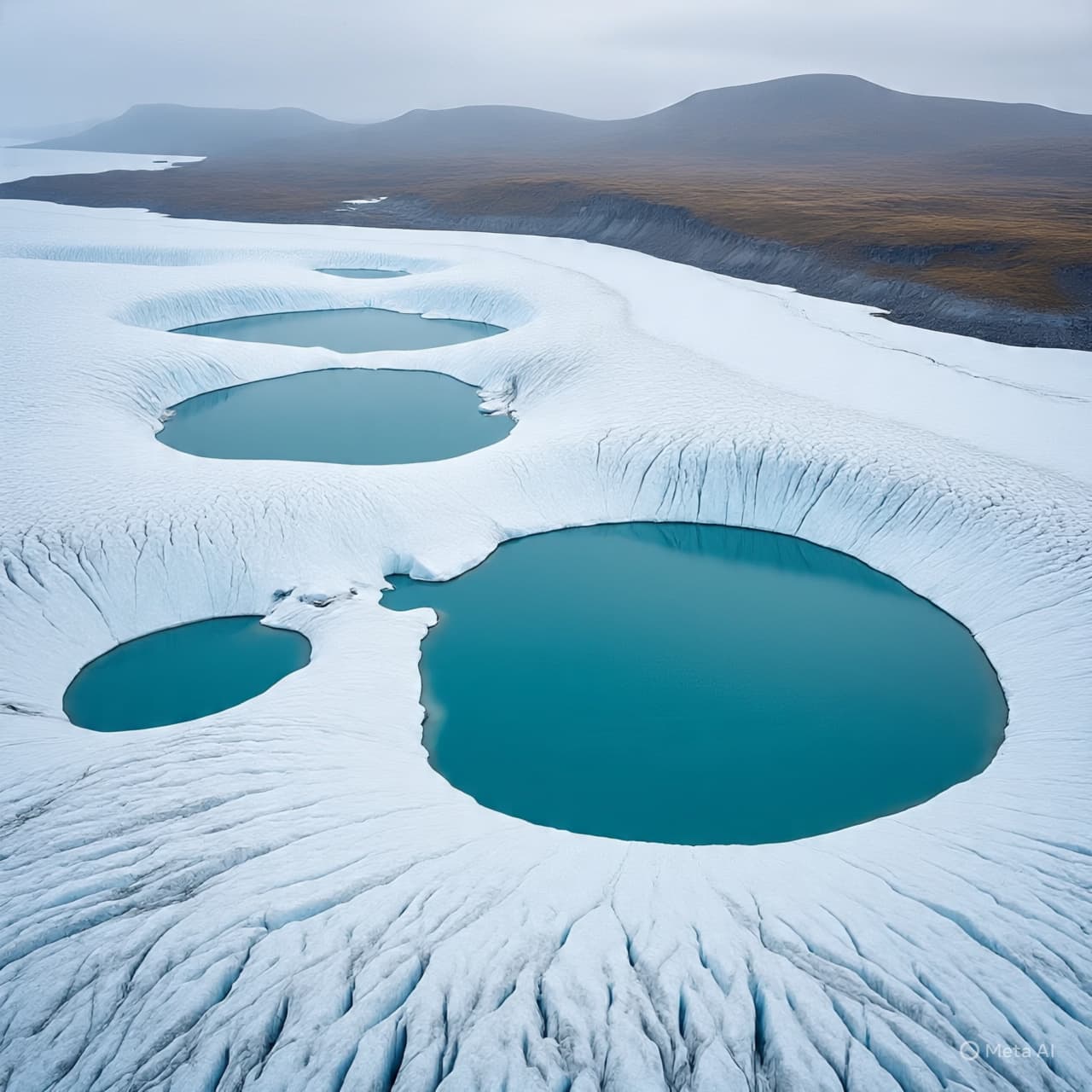
Scientists have observed the formation of lakes along the edges of Greenland’s melting ice sheet, and these bodies of water are doing more than simply reflecting the sky. They are influencing the movement of the glaciers themselves, accelerating their flow toward the ocean in ways that were not fully anticipated.
These lakes form as surface ice melts during warmer seasons, collecting in depressions and fractures. Over time, the water seeps downward through cracks, reaching the base of the glacier. There, it acts as a lubricant, reducing friction between the ice and the الأرض beneath it, allowing the glacier to slide more quickly.
This process, while subtle in isolation, becomes significant when multiplied across vast regions. Faster-moving glaciers contribute to increased ice loss, which in turn raises global sea levels. The connection between a small lake and a distant coastline may seem abstract, but in climate systems, such links are often deeply intertwined.
Researchers are using satellite imagery and on-the-ground measurements to track these developments. What they are finding suggests that the dynamics of ice sheets are more complex than previously understood. The presence of meltwater is not just a symptom of warming—it is an active participant in reshaping the landscape.
The implications extend beyond Greenland itself. As glaciers accelerate, they release more ice into the ocean, contributing to rising sea levels that affect coastal communities around the world. The changes occurring in this remote region ripple outward, touching places far removed from the Arctic.
Yet, there is a quiet lesson embedded in this transformation. It speaks to the sensitivity of natural systems, to how even small changes can cascade into larger consequences. It also underscores the importance of observation—of paying attention to shifts that might otherwise go unnoticed.
Scientists continue to refine their models, incorporating these new findings to better predict future changes. While uncertainties remain, the direction is becoming clearer: the interplay between water and ice is more dynamic than once believed.
In the end, Greenland’s emerging lakes are not just features of a changing landscape. They are signals—gentle but persistent—inviting us to reconsider how we understand the balance of our planet.
AI Image Disclaimer Visuals are created with AI tools and are not real photographs.
Source Check BBC The Guardian NASA Climate Nature Climate Change National Geographic
Published by Banx Network. This article is part of the Banx decentralized media programme, powered by the BXE token on the XRP Ledger.