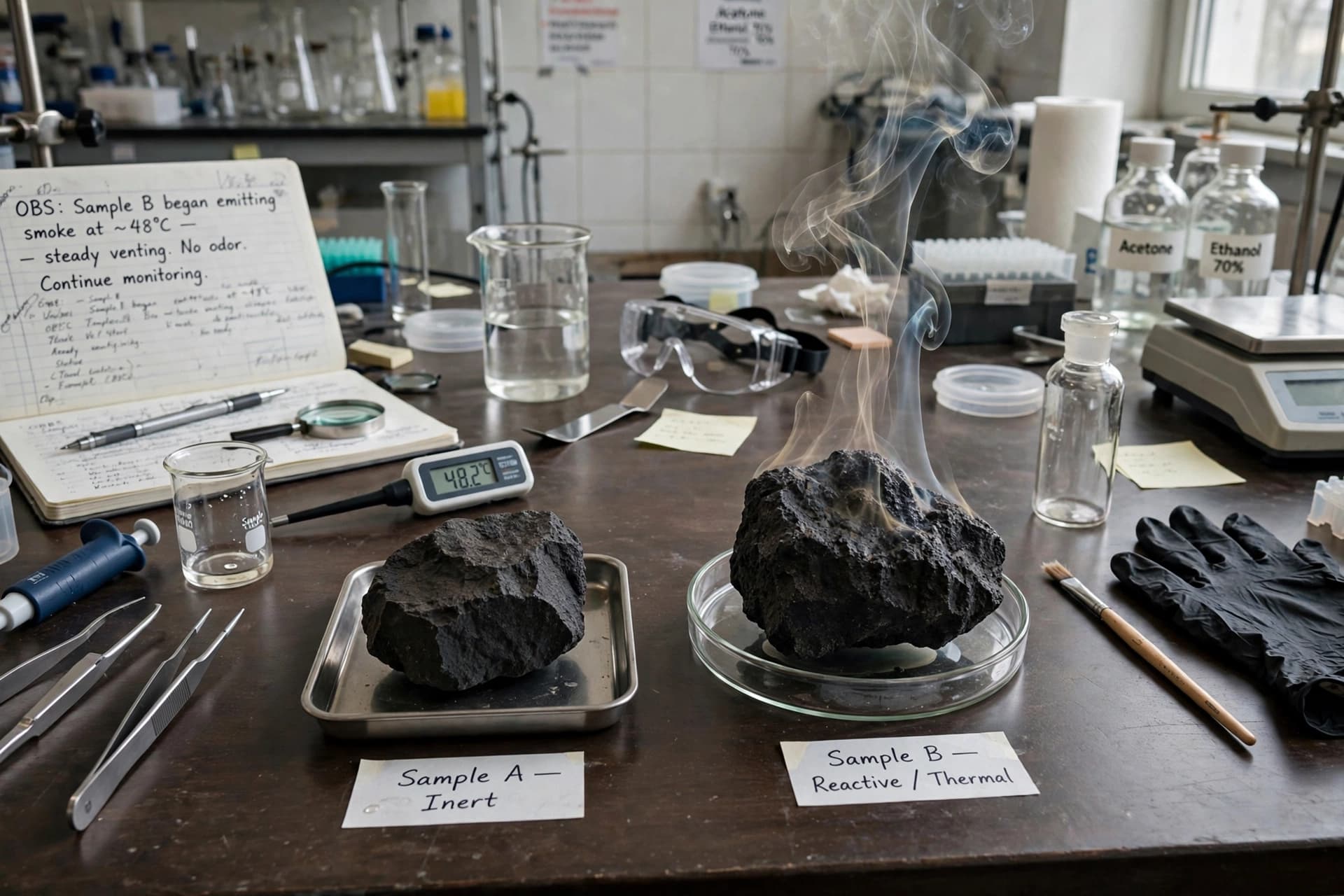
Long after the turbines fell still and the silence settled over Chernobyl’s concrete corridors, the ghostly architecture of Reactor 4 remained a monument to a moment when human design faltered and retreat became necessary. In that quiet domain where ionizing radiation still lingers like a silent wind, life has not merely endured — in unexpected ways, it has adapted. In the depths of the ruined reactor, scientists have found a black fungus whose relationship with radiation seems almost like a quiet dialogue between organism and environment, each nudging the other in a slow dance of change.
The fungus, Cladosporium sphaerospermum, was first noted in the late 1990s growing on the walls and surfaces of the contaminated shelter around the destroyed core. Among a community of melanized fungi, it stood out not for retreating from radiation’s embrace, but for seeming to thrive in its presence. Melanin, the dark pigment that gives these organisms their color, is known to absorb radiation and help shield cells from damage — a trait that, in this extreme setting, takes on new significance.
Researchers who have studied these fungi in the lab have observed that exposure to ionizing radiation doesn’t inhibit growth in the way one might expect from a hostile environment. Instead, some melanized fungi grow more robustly under radiated conditions than under ordinary background levels. This phenomenon has intrigued scientists because it hints at a process not unlike how plants use chlorophyll to harvest light, except here the energy comes not from the sun but from the very radiation that once drove life away.
This process, sometimes called radiosynthesis, remains a hypothesis rather than a proven metabolic pathway, and researchers emphasize that the exact mechanics of how these fungi convert or respond to ionizing radiation are not yet fully understood. It’s unclear whether the energy from radiation directly fuels growth or merely alters cellular chemistry in ways that enhance survival and proliferation. Still, the observation that these fungi flourish where few other organisms can invites reflection on the resilience and plasticity of life.
Beyond the quiet wonder of adaptation itself, the presence of these fungi raises questions about future applications. Some scientists have suggested that understanding how melanin interacts with radiation could lead to novel ways of protecting humans in high‑radiation environments — perhaps even in space, where cosmic rays pose a serious challenge to long‑duration missions. Others ponder whether such organisms might aid in the bioremediation of radioactive sites, turning a legacy of danger into a potential tool for healing.
In the end, what emerges from Chernobyl’s silent halls is not a simple tale of survival, but a reminder of life’s capacity to find motion and meaning even in the presence of forces once thought inimical. The black fungus grows where few would predict, and in doing so asks us to reconsider the boundary between adversity and opportunity. In scientific terms, researchers have documented that melanized fungi like Cladosporium sphaerospermum not only withstand high levels of ionizing radiation within the Chernobyl reactor ruins but may grow more vigorously in its presence, a phenomenon under investigation as part of the broader study of radiotrophic organisms and their potential uses in environments ranging from contaminated zones on Earth to the deep reaches of space.
AI Image Disclaimer
Visuals are AI-generated and serve as conceptual representations.
Sources (Media Names Only)
Daily Galaxy ScienceAlert Times of India International Business Times Wikipedia – Radiotrophic Fungus
Published by Banx Network. This article is part of the Banx decentralized media programme, powered by the BXE token on the XRP Ledger.