Before sunrise along a quiet plain, where the horizon’s slow light meets long shadows, there is a sense of time deep enough to embrace all that ever was and all that might yet unfold. In such stillness we find a reminder that life — and all that it contains — is woven from a tapestry of epochs far greater than the span of our own awareness. Yet recent scientific suggestions invite a curious reflection: might the seeds of consciousness — that intangible sense of being — trace their lineage to times before life itself emerged, carried not in cells but in dust from the earliest reaches of the solar system?
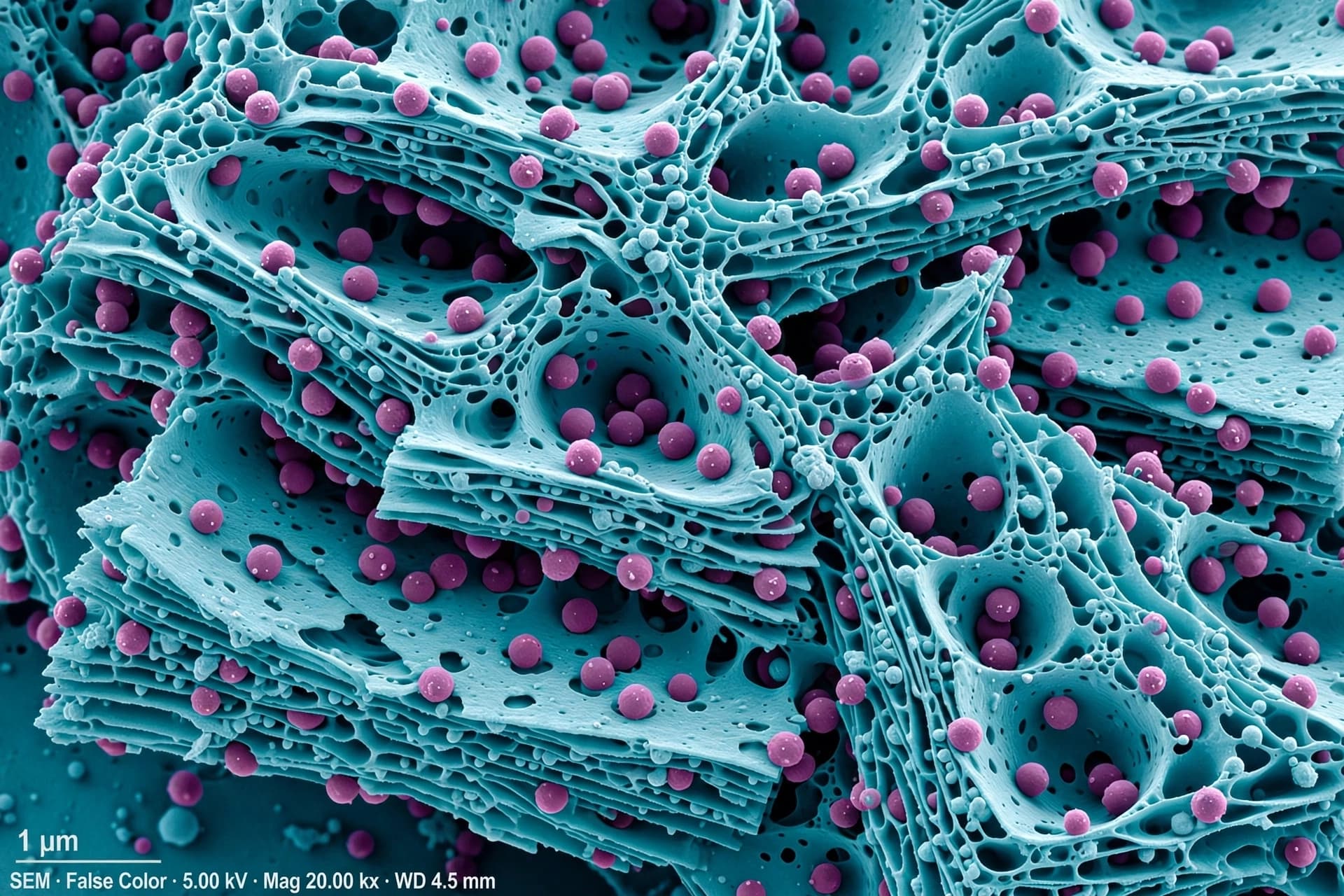
In the annals of space exploration, a modest sample of dust — a mere 121 grams brought home from the ancient asteroid Bennu — has become an unlikely fulcrum for one such question. Scientists originally sought in this fragment clues about the origins of Earth’s chemistry and perhaps even the primordial steps toward biology. Instead, some observers have pointed to unusual molecules within the cosmic grains, noting that their structure could suggest formations once associated with complex organization — the very kind that, in living systems, underlies awareness and responsiveness.
This line of reasoning nudges us gently toward territory that sits at the confluence of biology, physics, and philosophical inquiry. We know deep within evolutionary science that consciousness — a term that spans from simple sensory responsiveness to self‑aware reflection — is deeply rooted in the complex nervous systems of living creatures. Yet to imagine that the ingredients or patterns associated with consciousness might predate life itself challenges the common narrative of emergence. It invites us to ponder whether certain physical arrangements in the universe, long before Earth’s first cells stirred, carried the potential for something we later discerned as awareness.
Across the broader landscape of scientific thought, the origins of consciousness are neither settled nor simple. Some theories posit that consciousness emerges from biological complexity — neurons firing, networks interacting, experiences coalescing into a sense of self. Others, extending deeper into theoretical realms, consider whether proto‑forms of consciousness might be woven into the very structure of the universe, waiting for matter to assemble in ways capable of expressing them. These hypotheses are part of an ongoing quest — one that stretches from the philosophical to the empirical — to understand how subjective experience arises.
That quest, in turn, is mirrored by contemporary scientific urgency. Researchers across disciplines warn that as technologies like artificial intelligence and brain emulation advance, our grasp of consciousness — what it is and how it might be detected — has real implications for ethics, law, and our understanding of life itself. In focusing on the very edges of the question, from dust in space to the neural orgware of sentient beings, science acknowledges both the vastness of the unknown and the depth of human curiosity.
In clear terms, scientists examining ancient asteroid material from Bennu have noted molecules that some suggest could inform questions about consciousness — not as a living phenomenon but as patterns that may have existed before biological life emerged. These ideas remain highly speculative and are part of broader dialogues in neuroscience, physics, and philosophy about how consciousness arises, evolves, and might ultimately be defined.
AI Image Disclaimer
Visuals are AI‑generated and serve as conceptual representations.
Sources (Media Names Only)
Yahoo News Popular Mechanics ScienceDaily
Published by Banx Network. This article is part of the Banx decentralized media programme, powered by the BXE token on the XRP Ledger.