
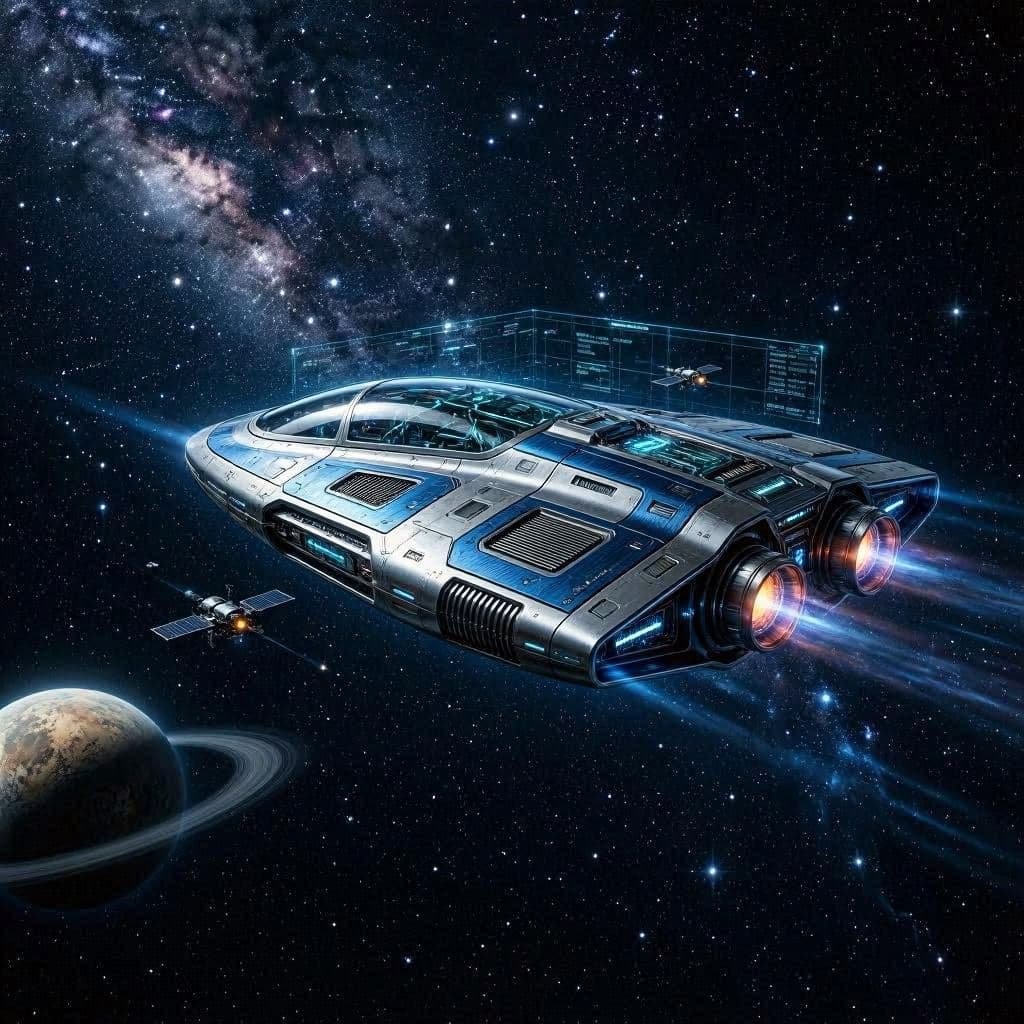
Space exploration has always been shaped by human imagination and engineering achievement. From the first satellites to missions reaching distant planets, every step beyond Earth has required new ideas and advanced technology. Today, artificial intelligence is becoming an increasingly important tool as NASA and researchers explore new ways to improve space development and scientific discovery.
Artificial intelligence has the ability to process large amounts of information, identify patterns, and support complex decision-making. In space research, these capabilities may help scientists and engineers analyze data more efficiently and design systems that can operate in challenging environments.
NASA and other space organizations are exploring how AI can support different areas of exploration. Applications include spacecraft operations, scientific analysis, mission planning, and the development of advanced engineering solutions.
One important area of interest is autonomous technology. Space missions often operate millions of miles away from Earth, where communication delays make real-time human control difficult. AI systems could help spacecraft respond more quickly to changing conditions.
Researchers are also studying how artificial intelligence can improve the design and testing of aerospace systems. Advanced computer models can help engineers evaluate possibilities before physical prototypes are created, potentially reducing development time.
However, scientists emphasize that AI remains a supporting tool rather than a replacement for human expertise. Human judgment, creativity, and careful scientific evaluation continue to play essential roles in space exploration.
The use of AI in space development also reflects a broader transformation happening across science and technology. As computing power continues to grow, researchers are finding new ways to combine human knowledge with digital capabilities.
NASA’s exploration of artificial intelligence represents another chapter in humanity’s search for innovation beyond Earth. The partnership between science and technology may help create new opportunities for future missions across the solar system.
AI Image Disclaimer: The images included in this article are AI-generated illustrations created to represent artificial intelligence applications in space exploration.
Sources Verification Check: Verified sources available from: NASA, Reuters, IEEE, MIT Technology Review
Published by Banx Network. This article is part of the Banx decentralized media programme, powered by the BXE token on the XRP Ledger.



