In the quiet fields of northern Poland, where history lies buried beneath layers of soil, archaeologists have uncovered a grave that tells a story of fear and folklore. The remains of a young woman, dating back to the 17th century, were found with a sickle placed across her neck and a padlock on her foot. These unusual artifacts suggest that she was buried as a "vampire," a practice intended to prevent her from returning from the dead. This discovery offers a fascinating glimpse into the beliefs and anxieties of post-medieval society.
The excavation, led by researchers from Nicolaus Copernicus University, took place in the village of Pień. The woman, nicknamed "Zosia" by the team, was likely in her late teens or early twenties when she died. The placement of the sickle was precise, positioned so that any movement would result in injury, effectively pinning her to the earth. The padlock on her toe served as a symbolic barrier, locking her spirit in the grave. Such measures were common in regions plagued by epidemics and sudden deaths.
During the 17th century, Europe faced waves of plague and other diseases that claimed lives unpredictably. People who died young, especially women, were often suspected of becoming vampires if they had not lived a "virtuous" life or if their death was untimely. These burials were not acts of malice but of protection, driven by a deep-seated fear of the unknown. The community sought to safeguard themselves from what they perceived as supernatural threats.
Forensic analysis has revealed that Zosia was likely healthy before her death, with no signs of trauma that would suggest murder. Her cause of death remains unknown, but it was likely natural. The elaborate burial rites indicate that her community viewed her as a potential danger, reflecting the superstitions of the time. It is a poignant reminder of how fear can shape cultural practices and rituals.
The discovery has sparked interest among historians and anthropologists, who study these "anti-vampire" burials to understand social dynamics in the past. They provide insights into how communities dealt with mortality and uncertainty. By examining these graves, researchers can reconstruct the mental landscape of our ancestors, revealing their hopes, fears, and coping mechanisms. It is a bridge between the present and the past.
Reconstruction efforts have even allowed scientists to visualize Zosia’s face, bringing a human element to the archaeological find. She appears as a typical young woman of her time, far removed from the monstrous image of vampire lore. This humanization helps to contextualize the burial, shifting the narrative from horror to empathy. It reminds us that she was a person, not just a subject of superstition.
Such findings are rare but significant, adding depth to our understanding of European folklore. They challenge modern perceptions of the past, showing that belief in the supernatural was a practical part of daily life. For the people of Pień, these rituals were a way to exert control over an uncontrollable world. It was a form of spiritual hygiene, ensuring the safety of the living.
As the investigation continues, Zosia’s story serves as a testament to the enduring power of myth. It connects us to a time when the boundary between life and death was thin and porous. For archaeologists, it is a treasure trove of information; for the rest of us, it is a reminder of the shared human experience of fear and the desire for protection. In the end, she is no longer a vampire, but a voice from history.
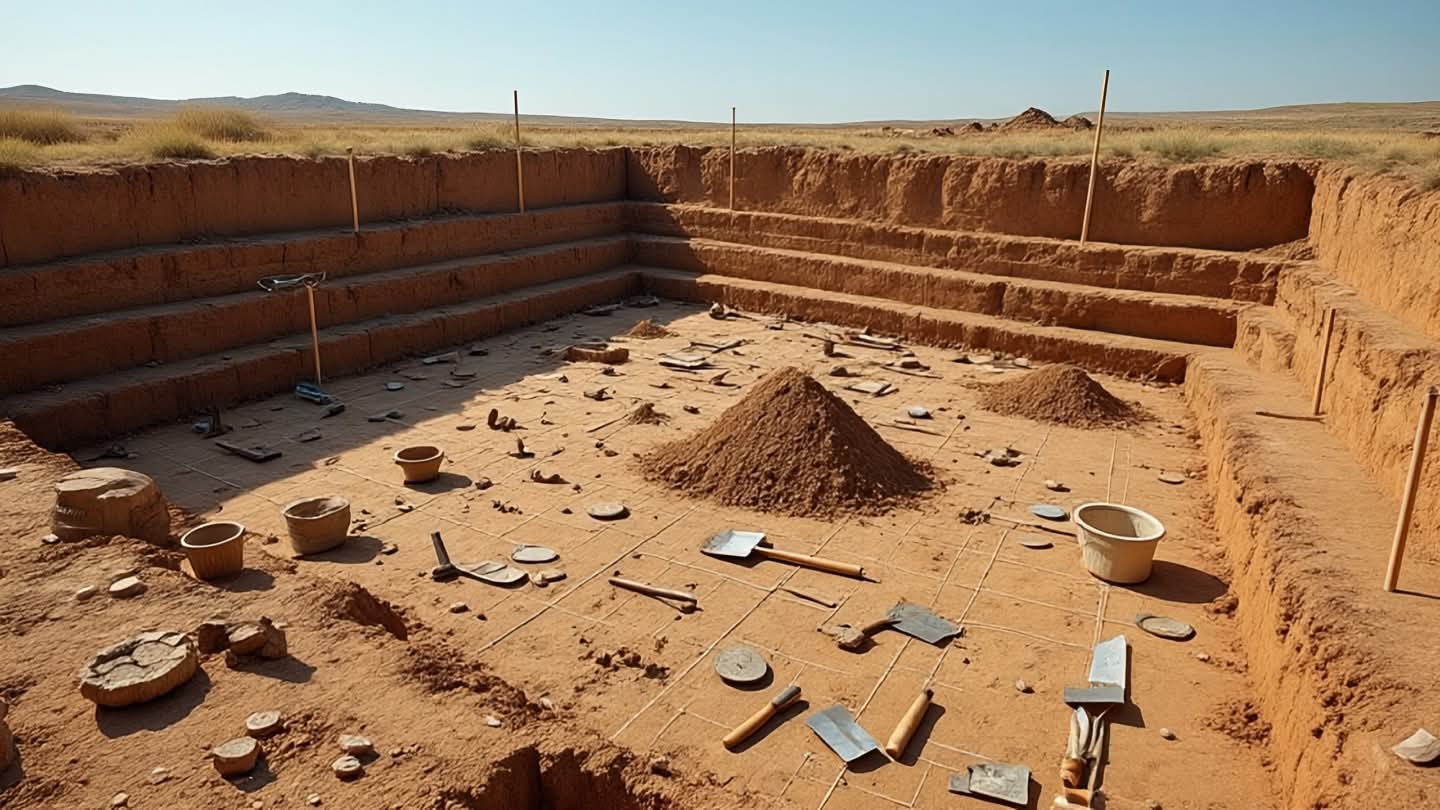
AI Image Disclaimer: Visuals in this article are AI-generated illustrations of archaeological sites and abstract representations of historical artifacts, designed to visualize the theme of discovery without depicting real skeletal remains or graphic imagery.
Sources: CNN, Heritage Daily, PBS Secrets of the Dead, Atlas Obscura
Published by Banx Network. This article is part of the Banx decentralized media programme, powered by the BXE token on the XRP Ledger.